






OPPO’s experience — a central Auckland customer‑service ad drawing roughly 2,500 applicants while the company employs about 27 people locally — is a vivid snapshot of a broader market dynamic: cvnznews.com editor Mike Bain looks at why many jobseekers are chasing fewer advertised roles in major centres, while regional employers like the Bay of Plenty report both vacancies and specific hiring challenges. The data and employer reports suggest the phenomenon is systemic rather than a one‑off.
Auckland — When OPPO New Zealand managing director Morgan Halim posted a customer‑service vacancy for a central Auckland role, he expected a healthy response. The company usually treats 500 applicants as a large pool. Instead the ad has attracted about 2,500 applications and counting, a number that stunned the small local team of 27 and underlines a wider squeeze in the national labour market.
The role is entry level, based in the Auckland CBD, and asks for demonstrated customer‑service experience; call‑centre experience is listed as an advantage. OPPO recently repatriated a call‑centre operation from Malaysia and Halim said entry‑level roles consistently draw far more interest than specialist vacancies such as content‑creator positions. Halim and his HR partner will screen the large applicant pool, with final shortlisting handled by HR, the hiring manager and himself; commute and location are important considerations for a CBD‑based team.
A national picture: more jobseekers per vacancy
The OPPO example is not an isolated curiosity. Official labour statistics show unemployment has risen in recent quarters, and analysts say the number of applicants per advertised role has climbed well above pre‑pandemic norms. Stats NZ reported an unemployment rate of 5.3 percent in the September 2025 quarter, and that rate rose to 5.4 percent in the December 2025 quarter, the highest level since 2015. Those figures translate to roughly 160,000–165,000 people classified as unemployed in late 2025.
Economists and job‑site data point to two linked trends: fewer job ads than before the pandemic and many more applicants chasing each vacancy. That combination pushes application volumes per ad to record levels and helps explain why a single entry‑level posting can attract thousands of responses. The government’s economic snapshot for the September 2025 quarter shows GDP growth in some sectors even as labour‑market slack has increased, a sign that hiring patterns are uneven across industries.
Jobseekers on the ground — why many won’t move
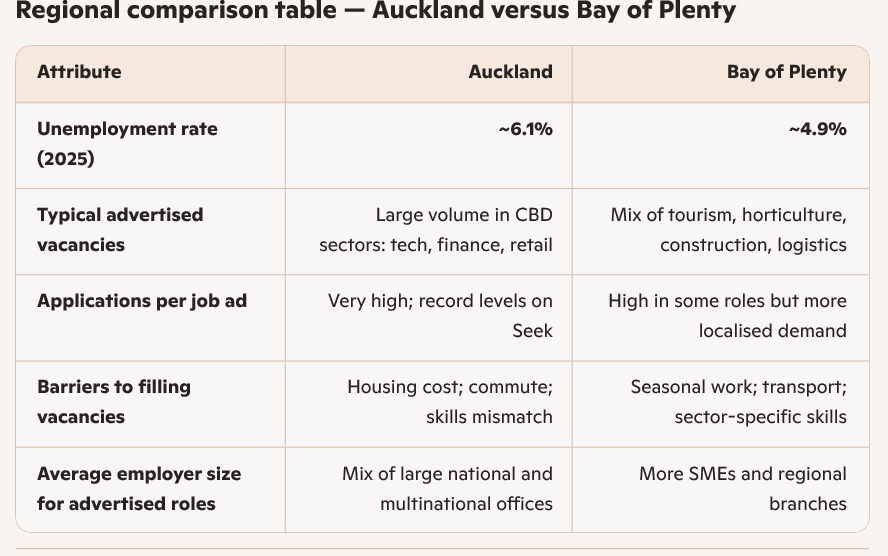
To understand why regional vacancies can coexist with high national unemployment, cvnznews.com spoke to jobseekers and regional employers.

Hannah Turnbull 28, Tauranga has retail and hospitality experience and says the Bay of Plenty has “lots of hospitality and warehouse roles.” She’s had interviews locally and has been able to find casual work. But she’s reluctant to move to Auckland for entry‑level roles because higher rents and travel costs would erase any wage gains, and family commitments make relocation unattractive. Hannah still applies for Auckland ads that promise training or career progression, but she says the time and cost of commuting, plus childcare responsibilities, are major deterrents.
Hannah’s experience highlights a practical reality: relocation is not just a function of job availability; it’s a calculation of net benefit. For many entry‑level roles, the financial and personal costs of moving outweigh the potential gains, so workers remain in regions where jobs may be available but not always the right fit.
Regional employers say the problem is often skills and seasonality
Mark Barron, who runs a Bay of Plenty based logistics firm reports steady applicant flow for hands‑on roles and says he can hire when he offers competitive hourly rates and flexible shifts. But he also sees skills and reliability gaps: many applicants lack required licences (forklift, heavy vehicle), consistent work histories, or the willingness to work unsociable hours. Seasonal spikes during harvest and export windows create short, intense hiring needs that are hard to meet with a general pool of jobseekers.
Mark’s view is echoed by other regional employers: vacancies persist not because there are no people willing to work, but because the right people with the right skills and availability are scarce. Transport and childcare constraints further narrow the pool for shift work.
Why the mismatch persists
Several structural factors help explain the disconnect between advertised demand in some regions and the surge of applicants for urban roles:
- Geography and housing costs. High rents and property prices in major employment centres make relocation costly and risky for workers without secure, higher‑paying roles.
- Skill mismatch. Many vacancies require licences, certifications, or sector‑specific experience that unemployed jobseekers do not possess. Employers face training costs and turnover risk.
- Seasonality and timing. Regional industries such as horticulture and logistics hire in concentrated bursts, which does not align with the steady availability of jobseekers.
- Practical barriers. Limited public transport, long commutes, and childcare responsibilities make some advertised roles inaccessible to otherwise willing candidates.
- Fewer advertised roles overall. Job‑site and analyst data show job ad volumes remain below pre‑pandemic levels in some sectors, increasing competition per vacancy.
What employers and policymakers can do
Employers and policymakers have several levers to reduce mismatch and make vacancies more fillable:
- Targeted training and micro‑credentialing. Short, employer‑aligned courses can upskill local workers quickly for in‑demand roles.
- Relocation and travel support. Temporary housing subsidies or travel allowances can make short‑term moves feasible while workers test new roles.
- Flexible hiring pathways. Offering staged training, part‑time to full‑time transitions, and on‑the‑job certification widens the candidate pool.
- Better vacancy signalling. Job platforms and regional employment services can prioritise local candidates for local roles and tailor outreach to communities with matching skills.
- Seasonal workforce planning. Coordinated hiring windows and pre‑season training can help regional employers meet concentrated demand.
OPPO as a bellwether
OPPO’s experience — a single customer‑service ad drawing roughly 2,500 applicants while the company’s local team numbers 27 — is a vivid snapshot of a market under pressure. It shows how entry‑level roles in major cities have become focal points for jobseekers, even as regional employers struggle to fill specialised or seasonal vacancies. The phenomenon appears systemic rather than isolated: official unemployment figures and labour‑market commentary point to elevated applicant volumes and persistent mismatches across regions and sectors.
What this means for jobseekers
For people like Hannah, the practical advice is to weigh total compensation and costs — not just advertised wages. Consider commute time, childcare, housing, and training opportunities. For regional jobseekers, targeted upskilling and clear pathways to certification can make local vacancies more accessible; for urban jobseekers, realistic expectations about competition and the value of niche skills will improve prospects.