






Sahar Ghadirian – Twinkl Teaching Blog – Twinkl
Do you know how to talk to your child about difficult topics? Prepare yourself with this informative guide, which features 10 top tips to help you have tough conversations with your students. Our recommendations are age-appropriate and cater to kids in preschool all the way up to high school, so you’ll find plenty of useful advice here!
We all know the world can be a scary place, but it is equally beautiful. Among the sadness and despair is love and humanity. That is why we need to protect our children’s social and emotional health from the uncertainty, and provide the correct tools to help them deal with an overload of distressing subjects.
Confront how to talk to your child about difficult topics using this supportive blog full of discussion prompts and guidance, which allows your learners to make sense of the world around them. Issues such as war, illness, death, climate disasters, and bullying can often seem an even greater challenge to address with students. And while it may initially seem hard, if you adopt honesty, transparency, and active listening, your children will feel more secure and reassured.
So, grab a cup of coffee and let’s take a look at some steps to help you discuss tough topics with your kids.
Understand your child’s perceptions.
Firstly, it’s necessary to understand the stage at which your child is at. Their perceptions reflect their developmental age, which makes it easier for you to assess the level of depth you want your conversations to go. Preschoolers take things a lot more literally compared to middle or high school students. Remember that life experiences also factor into their perceptions, as well as age. Ultimately, you need to be sensitive to your child’s emotions, so you don’t trigger any feelings you aren’t fully aware of.
Use simple vocabulary and explain with accessible, unprejudiced terms.
Most young kids don’t have the capacity to comprehend many of the abstract concepts, causes, and consequences involved in complex topics. But they will certainly be aware of a bad situation if it affects them and those around them. From preschool all the way up to high school, children are sensitive to parents’, caregivers’, and teachers’ emotional states. It’s common that your worry becomes their own worry. So while this makes it more complicated to explain big issues, you must use simple vocabulary and unprejudiced terms to reassure your children. Reaffirming words and gestures are key, such as saying, “It’s okay to feel scared. It’s okay to feel sad. We all feel it, but you are safe. We are safe.”
It’s vital to break down difficult issues into their simplest terms. Whether it be violent crime, a pandemic, the start of a war, or hate crime, simplify the situation in a way that is unprejudiced and unbiased. Avoid describing a person’s gender, sexual identity, appearance, ethnicity, weight, financial status, and so on.

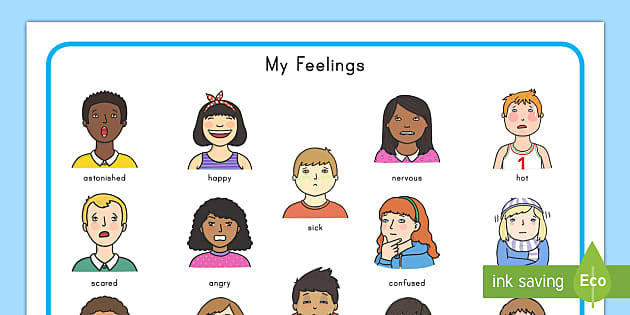
Twinkl Tip: Why not recall a recent situation of theirs when something difficult happened? Maybe it left them feeling sad, shocked, mad, or afraid? To help you with this, take a look at our teacher-created My Feelings Word Mat. This great activity educates your students about their emotions. Recognizing when other people are sad will help them better understand and communicate their thoughts and feelings when difficult topics arise. Our resource features an image for each feeling, so your class knows what to look for.
Eliminate and avoid distractions.
If you want to know how to talk to your child about difficult topics in the best way possible, you have to turn off any distractions. Switch off the movie you’re watching, the television show, music, cellphones, and computers. It’s essential to remove any distractions, as it emphasizes that the conversation you’re about to have is a priority and your sole focus. Most of all, take a break from the news. It could be something disturbing your kid viewed in the news that has instigated this conversation you’re now having. And we all know that watching the news can really amplify fear and make you and your children more anxious about some terrible things going on in the world. Why don’t you limit or manage your exposure to it? Engage in physical activity instead, or do something together that will lift your spirits up while you work through and process the difficult topic.

Did you know? We have this wonderful What To Do if You’re Upset by the News PowerPoint? This presentation highlights the importance of taking a break and removing distractions. It provides support to your students and helps them deal with tough situations and emotions. Cater to their social and emotional health, and know how to be there for children who are upset by a big news event.

Wait for the most appropriate moment.
Choosing the right moment to have a discussion with your kids is important. It’s highly likely that if your child has heard something distressing, that they’ll come up to you and let you know. But this isn’t always the case, especially if they’ve seen something frightening and are in a state of shock or fear. If the latter is true in your situation, you may notice signs where your child is acting differently. Are they more reserved? Are they angry? Irritable? Above all, you can try to figure out if they want to discuss a problem or have a conversation with you, especially if they drop hints, or they gesture with their body language. If they don’t bring it up, don’t feel you have to broach difficult topics until they ask.
If you want to address a complex subject, find a quiet moment in the day. If it’s at school, perhaps choose when you’re winding down after recess, or if you’re at home, maybe after dinner? Ultimately, this needs to be a time and place where your child can be the center of your attention. Start by acknowledging that the topic isn’t easy to talk about, but explain why it’s necessary to speak about it.


Create a safe space for conversation.
A way to automatically make your kid feel safe before a serious discussion is by saying, “We are about to have a hard discussion, but I’m not angry, I want you to feel free to ask me anything you want.” This space must be respectful, and you must explain your reasoning for bringing up the topic in a simple and sensitive way.
Don’t avoid the truth, but don’t go too much into detail. Above all, be honest and mindful.
It’s completely natural as a parent, caregiver, or educator to keep your child protected by hiding bad news from them. We understand that you don’t want to cause unnecessary worry by revealing potentially upsetting information. However, we can’t always prevent our children from being sad. While you may shelter them, they will most likely find out bad news at school, or from the news on their phone. Social media has breaking news in real time, and this can be even more scary and confusing for them. By sitting your kids down and informing them about difficult topics in a supportive atmosphere at home or at school, you eliminate the risk of further confusion and mixed signals. Here, your child can ask questions, and you can answer them as much as you can.
Remember: You don’t have to give graphic details. Tell the truth and be transparent by laying out the facts at a level they can understand.


Be an active listener and share your own values.
Knowing how to talk to your child about difficult topics is as much about being an active listener as well as a good talker. Make sure you don’t ignore your children’s questions after you have had your initial discussion. Avoiding your students’ questions or lying is harmful, and leaves kids feeling unimportant and almost worthless. It’s vital to address and acknowledge your child’s thoughts, fears, and comments.
A great way to be an active listener and make your student feel seen is to share your own values. Letting your children know where you stand on issues and why you hold certain values helps you be a role model. Particularly for your older kids, explain why you must show tolerance and acceptance. This shows them how to be respectful of others’ differences.
Sharing your feelings with your kids shows them you’re human, and even though you’re upset at a difficult topic, you can continue talking, being kind, listening, and answering questions.
Offer respectful responses.
Encourage your students to talk openly, and make it clear that you value their opinions and what they have to say. Why not set ground rules, such as not interrupting and respecting each other’s points of view? This keeps the discussion space safe and welcoming. Find common ground and support your child’s understanding by responding in reassuring ways. Use uplifting and inspiring vocabulary to make them feel better about sharing their thoughts.


Encourage critical thinking.
Asking questions and being inquisitive is an invaluable skill for learners. It will help them throughout their life, so be aware that you’re not discouraging your kids from being curious. Ask open-ended questions to get your class to think more deeply about serious topics.
Below, we have listed seven questions which will get your kids thinking about difficult topics more critically:
- “Let’s say you’re the president, or you’re in charge of the school. What issue would you solve first, and how would you do it?”
- “Why did you choose to solve this problem?”
- “How did you feel and what did it make you think when you heard about this [difficult topic]?”
- “Why do you think you felt this way?”
- “Do you reckon everyone thinks the same view as you? Why would someone think differently?”
- “What would you do if you were in a really difficult situation?”
- “What choices would you try to make?”

Look for the positives.
After talking to your children, try to consider solutions. Many teens can be cynical, but they can also have an idealistic and untarnished way of thinking. It’s not easy to be optimistic all the time, and while not every cloud has a silver lining, there are always positive ways to view a situation. Perhaps it’s the rallying together of people from different backgrounds after a humanitarian crisis? Not everyone has the same views and opinions, but in times of tragedy, everyone has a common goal, which is to help. It could be donating money, clothes, food, or housing refugees. In the wake of climate disasters, death, and illness, people show their kindness. They are more mindful of looking after the planet, sign petitions, protest, and give their time. This empathy and understanding is a common outpouring after a bad event, and it’s important to remind your child that the world isn’t just full of doom. At the end of your conversation, reassure them that they’re loved, that you’re available to answer any more questions and talk about this topic again, and you’re there to look out for them.

Five handy conversation starters and phrases:
Add these discussion prompts to your teacher toolkit whenever you want to know how to talk to your child about difficult topics.
- “Is this a good time to talk about what you heard at school/on the news? When is a better time for you?”
- “If your fear and worry had a color, what would it be?”
- “I can sense you’re finding it difficult, let’s work together on this.”
- “Shall we go for a walk and talk about what just happened?”
- “It’s okay to feel overwhelmed by everything.”
- Twinkl Tip: In times of distressing global events, we all need to try a little harder to look after ourselves and not let our worries consume us. Of course, we should stay informed and up to date, but we need a balance, and setting some boundaries is a great form of self-care. Why not display our Look For the Helpers Quote Poster on your bulletin board or at home to support your child’s wellbeing? This inspiring quote by American television host Fred Rogers is a beautiful resource that reminds your class to look outside tragedy and devastation, and remember the good that still exists in the world.
- *****
- We hope the recommendations and resources featured in our How to Talk to Your Child About Difficult Topics Blog offer some helpful tips and ways for you to approach your kids when complex situations arise. Whether you’re in the classroom or at home, you can adopt these conversation prompts to tackle important and challenging topics.
- If you have your own tips and advice you’d like to discuss with other parents, caregivers, and teachers, or your children have any questions and thoughts you’re struggling to answer, then we’d be delighted to hear them.