




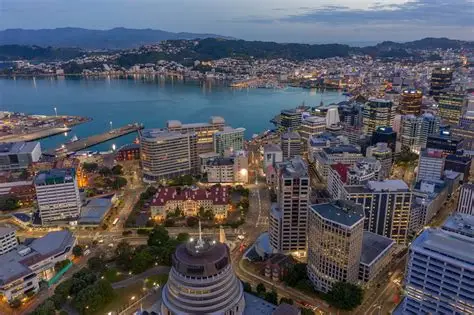
Wellington’s south coast has once again been slapped with “unsafe for swimming” warnings — a mere two days after Mayor Andrew Little waded into Lyall Bay to prove, with great confidence, that everything was fine.
On Wednesday, officials announced the beaches could reopen. But by Friday afternoon, the Land Air Water Aotearoa (LAWA) website had updated much of the south coast — along with most of the inner harbour, including Oriental Bay — to “unsuitable for swimming”. Large parts of the Miramar Peninsula were downgraded to “caution advised”.
Overnight rain appears to have tipped the balance. LAWA routinely warns against swimming for 48 hours after heavy rainfall due to stormwater contamination, which can include untreated wastewater. Wellingtonians know the drill by now: when it rains, the pipes complain.
Asked about the sudden reversal, Mayor Little stuck to his earlier talking points. “Conditions can change rapidly,” he said. “My message has been to check the LAWA website before swimming.” He added that the system is “working”, noting that he remains “perfectly healthy” after his much‑publicised dip — a statement that will no doubt reassure the thousands who weren’t planning to drink the seawater anyway.
Public health officials, however, remain firm: do not gather shellfish or kaimoana anywhere from Ōwhiro Bay to Breaker Bay. Shellfish can stay contaminated for weeks after sewage exposure, long after the mayor’s swim has faded from memory.
Wellington Water Update
Wellington Water confirmed at 2.30pm that screened wastewater continues to be discharged through the long outfall pipe. Crews at Moa Point are still assessing damage, managing odour, and stabilising network flows. Bulk solids have been removed, with final clean‑up underway.
Beaches from Ōwhiro Bay to Breaker Bay are open for shoreline swimming only. Tarakena Bay remains off‑limits due to its proximity to the short outfall pipe. Activities further offshore — surfing, diving, anything involving immersion — remain “at your own risk”.
Residents are again reminded to flush only the “three P’s: pee, poo, and paper” to help reduce unscreened waste entering the system during wet weather.