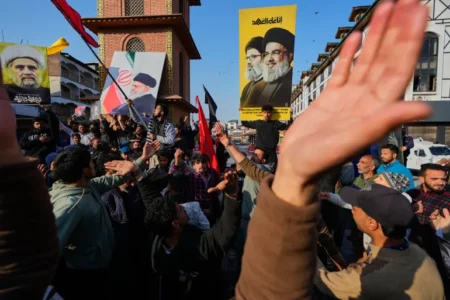




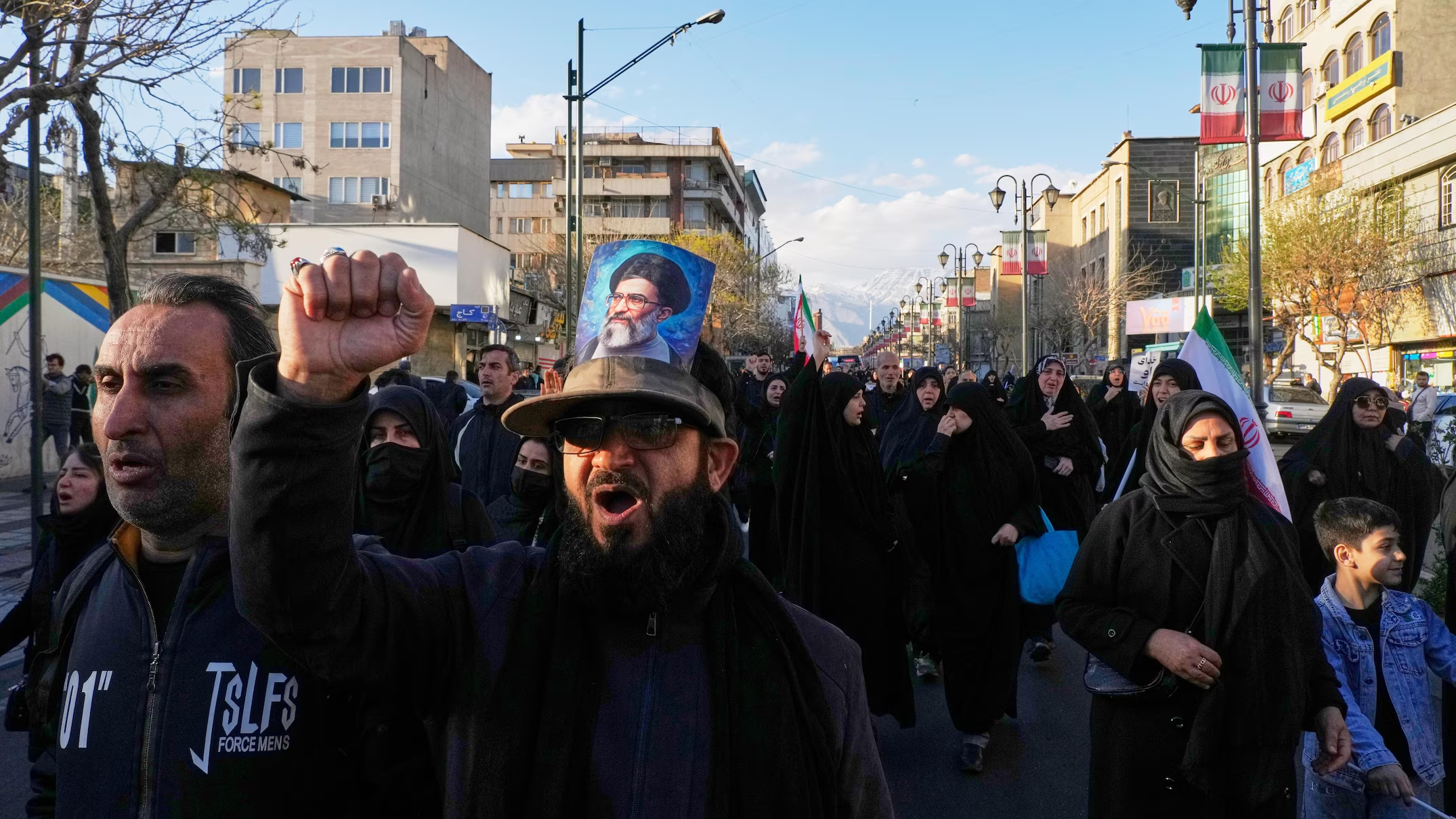
Breaking News: Iran’s new Supreme Leader has been named as Mojtaba Khamenei, the son of Ayatollah Ali Khamenei, according to Iranian Opposition outlet Iran International.
Iran, proxies seen plotting attacks on US after Khamenei killing
The Iranian regime and its terrorist proxies are likely to launch targeted attacks, including cyber operations, against the United States following the killing of Iranian Supreme Leader Ali Khamenei, according to a U.S. Department of Homeland Security assessment.
The Feb. 28 DHS intelligence assessment, reviewed by Reuters, says Iran-aligned “hacktivists” are expected to step up low-level operations such as website defacements and denial-of-service attacks.
“Although a large-scale physical attack is unlikely, Iran and its proxies probably pose a persistent threat of targeted attacks in the Homeland, and will almost certainly escalate retaliatory actions—or calls to action—if reports of the Ayatollah’s death are confirmed,” the DHS report states.
Homeland Security Secretary Kristi Noem said she was coordinating with federal intelligence and law enforcement partners to “monitor and thwart any potential threats to the homeland.”
The Israeli and U.S. militaries carried out preemptive airstrikes targeting the Islamic Republic on Saturday morning to neutralize the threat posed by Tehran, killing Khamenei in the opening shot of the air campaign that Washington dubbed “Operation Epic Fury.”
Qatar’s Foreign Ministry said Iran’s attacks have crossed “every red line” and condemned the strikes which targeted civilian areas and facilities.
Iran did not just target military facilities but all of Qatari territory including Doha airport and gas facilities, Qatar’s Foreign Ministry told reporters on Tuesday
Qatar also shot down two Iranian fighters jets who entered its airspace on Monday.
“Red lines have already been crossed,” Majed Al-Ansari, a spokesperson for the Qatari Foreign Ministry, told reporters.
“The attack on our sovereignty, the blatant attack on our people, on the security and safety of our nation has already crossed every possible red line. And therefore we have taken all possible measures and we reserve the right to retaliate,” he added.
Doha’s current main focus right is protecting its people and residents living in Qatar who represent 140 nationalities, he stressed.
Possible retaliation
Al-Ansari said there are currently no open lines of communication with Iran. He made it clear that retaliation is firmly on the table as Iran attacked Qatar’s infrastructure and residential areas, not just US military targets.
He also stressed that “Qatar is able to stop any entity that is trying to attack or inflict harm,” emphasising that the country is prepared and has “enough air-defence missiles to deal with any attack.”
“When it comes to possible retaliation, like I said, all options are with our leadership. But we have to make it very clear. Attacks like these will not go unanswered, and cannot go unanswered,” Al-Ansari said.
“When Iran struck Qatar the first time, in the span of the 12 day war, we said very clearly at that time this will merit retaliation from our side and we reserve the right to retaliate, and the only reason we did not retaliate at that time was because we prioritized regional security and the possibility of a ceasefire, but the fact that this is happening again right now and our sovereignty is being challenged in this way, means this cannot go unanswered another time,” he added.
Al-Ansari said Iran’s attacks on Qatar’s LNG facilities forced their temporary closure which now creates “a grave danger to international economies.”
Meanwhile, Qatar’s airspace remains closed. More than 8,000 transit passengers are currently stranded and are being hosted inside the country.