





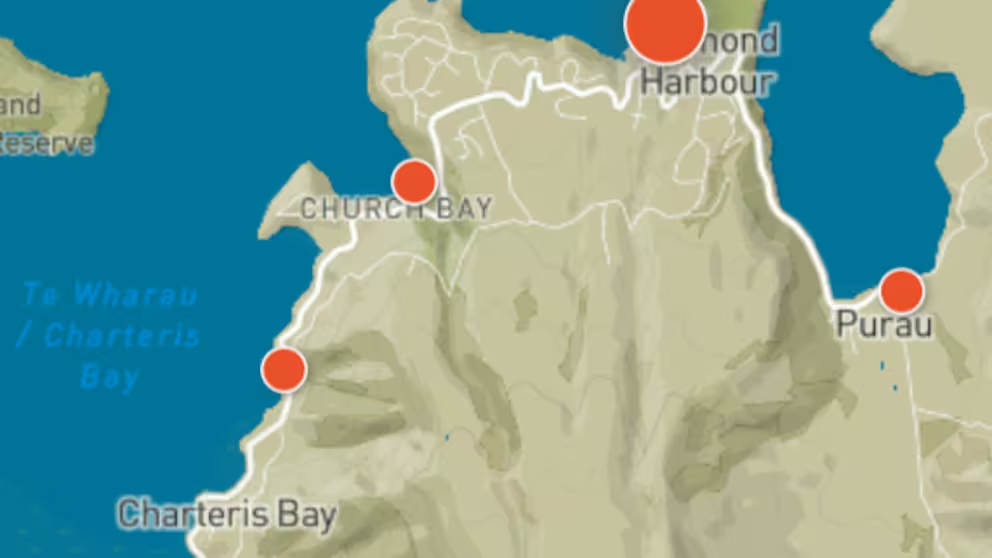
A fresh sewage scare in Canterbury has renewed scrutiny of New Zealand’s ageing wastewater systems, as questions mount over why treatment plants across the country continue to fail.
Health warnings were issued across several Lyttelton Harbour bays after raw sewage entered the water last weekend, prompting authorities to close popular swimming spots including Corsair Bay, Cass Bay and Rāpaki Bay. The contamination was traced to an overflowing septic tank after bottles were flushed down public toilets, causing faecal bacteria levels to spike above safe guidelines.
Although warnings have since been lifted following improved water‑quality tests, the incident has highlighted ongoing pressures on Whakaraupō/Lyttelton Harbour, where wastewater from broken or leaky pipes and old septic tanks is already recognised as a significant environmental stressor.
The Canterbury spill comes as Wellington continues to grapple with a catastrophic failure at the Moa Point wastewater treatment plant, where 70 million litres of raw sewage have been discharged into the sea near a marine reserve. Conservation officials warn the spill is putting marine species at risk, and repairs could take months.
Wellington Water has cautioned residents that odour from the crippled plant may worsen as emergency works continue, with clarifier tanks at risk of turning septic if not stabilised. Authorities have urged the public to avoid the south coast, with a rāhui in place from Ōwhiro Bay to Breaker Bay.
These failures are not isolated. Government reviews have repeatedly warned that New Zealand’s wastewater networks are deteriorating, with burst pipes and sewage spills becoming increasingly common as infrastructure ages. The Water Services Reform Programme notes that communities face rising costs to maintain and upgrade systems to meet environmental standards.
The situation also raises legal questions. Farmers have previously faced prosecution and fines for discharging effluent into waterways—yet urban wastewater failures often result in warnings rather than penalties. With spills now affecting major cities and coastal ecosystems, pressure is growing for consistent accountability across rural and urban sectors.
As Lyttelton Harbour recovers and Wellington battles an ongoing crisis, one thing is clear: New Zealand’s wastewater woes are no longer localised mishaps but symptoms of a national system under strain.