



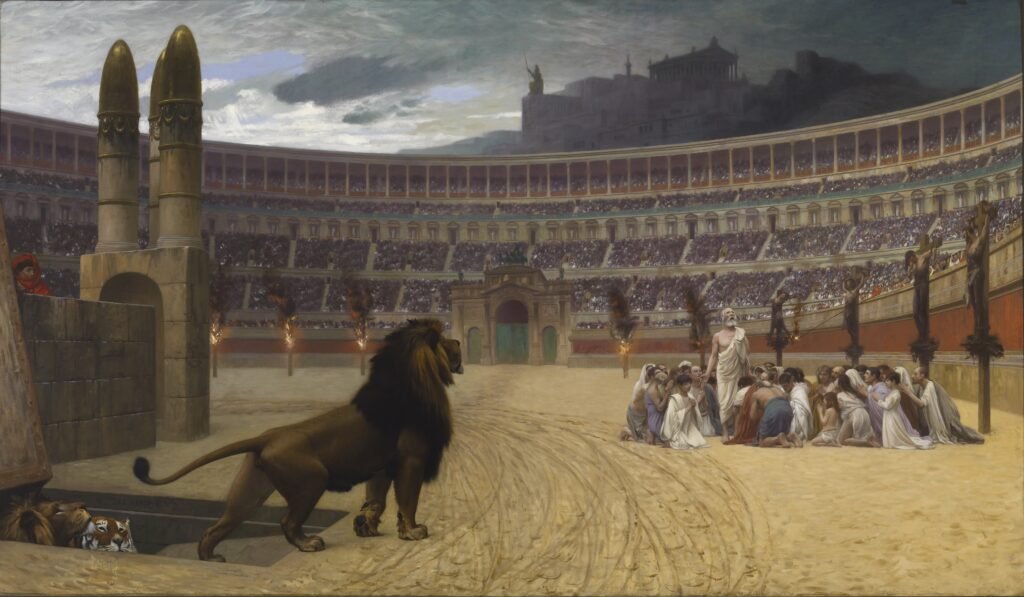
Supplied by Global Christian Relief.
As you read about Christian persecution, you might wonder what it looks like. It can take many forms:
A woman in India watches as her sister is dragged off by Hindu nationalists. She doesn’t know if her sister is alive or dead.
A woman in Nigeria runs for her life. She has escaped from Boko Haram, which kidnapped her. She is impregnanted and, when she returns home, her community will reject her and her baby.
A group of children are laughing and talking as they come down to their church’s sanctuary after eating together. Instantly, many of them are killed by a bomb blast. It’s Easter Sunday in Sri Lanka.
These are not isolated tragedies. They are examples of Christian persecution happening in our world today.
About Christian Persecution Today
The people described above don’t live in the same region or even on the same continent. But they share an important characteristic: They are all Christians, and they suffer because of their faith.
Christian persecution today includes threats, discrimination, imprisonment, displacement, and religious violence. In many countries, believers face persecution simply for following Jesus Christ.
What each of these examples has in common: threats, discrimination, and violence. Often this violence begins at the top, with controlling authoritarian regimes. Other times, it results when a region’s dominant culture attempts to control the population.
Regardless of the cause, followers of Christ around the globe are pursuing worship at great risk to themselves and their families.
These violent events did not end for good during the third and fourth centuries. Hostility against followers of the Christian faith has been ongoing for centuries. In fact, Christianity is the most persecuted religion today.
The persecution of Christians remains one of the most pressing religious freedom crises in the world. Globally, millions suffer persecution each year.
Learn more about the realities of Christian persecution by reading the stories of real believers all over the world.
Defining Christian Persecution
Christian persecution takes many forms, so what is Christian persecution? It is defined as any hostility experienced as a result of identification with Jesus Christ.
From Sudan to Afghanistan, from Nigeria to North Korea, from Colombia to India, followers of Christ are targeted for their faith.
In what ways are Christians being persecuted? They are attacked. They are discriminated against at work and school. They risk sexual violence, torture, arrest, and much more.
Religious persecution of Christians can include imprisonment, forced conversion, church destruction, legal discrimination, and social ostracism.
But the pain and the tragedy are not the whole story. James 1:2-4 says, “Consider it pure joy, my brothers and sisters, whenever you face trials of many kinds because you know that the testing of your faith produces perseverance.”
That joy is what we see when we hear about helping believers all over the world who suffer because they serve Jesus. God cares for His people, and He will never leave or forsake them.
Why Does Christian Persecution Happen?
Many reasons underlie the persecution of Christians today. Sometimes, religion may be tied to ethnic or cultural identity. In other places, governments that thrive on power view Jesus as competition and those who follow Him as threats to their control.
Still other areas put such a high value on their majority religion that any other faith is seen as something to be rooted out and violently oppressed.
Understanding the reasons Christians are persecuted helps us respond wisely and compassionately. Here are some of the main reasons Christians are targeted for following Jesus:

1. Authoritarian governments who view Christianity as a threat to power
In some countries, Christian persecution takes place under authoritarian governments. In places like North Korea or Eritrea, authoritarian governments seek to control all religious thought and expression. Their actions are part of a comprehensive plan to tightly oversee all aspects of political and everyday life.
These governments often see allegiance to Jesus Christ as competition with loyalty to the state. When religious freedom is denied, Christians face persecution for worshipping outside government control.
2. Suspicion of anything outside the majority cultural faith
In some places, majority populations harbor great hostility toward nontraditional and minority religious groups. These groups are viewed as foreign or non-native to the culture. For example, in Niger, more than 98% of the population is Muslim. Thus hostility comes more from society than from the government.
In India, Hindu nationalists claim that to be Indian is to be Hindu. As a result, non-Hindus – religious minorities like Christians and Muslims – are targeted for abuse.
In these environments, persecution against Christianity often grows out of nationalism, cultural identity, or fear of religious change.
3. Extremist groups that want to destroy Christians
In some areas of the world, radicalized extremist groups wage war against anyone who doesn’t adhere to their specific interpretation of their religion.
For instance, in places like the Middle East and Nigeria, Islamic extremist groups terrorize communities and churches. They have been observed killing those they consider to be “infidels” (often in coordinated bombings). Women are kidnapped and raped. Homes and churches are burned down. Their victims even can be fellow adherents of a religion, such as Boko Haram attacks on Muslims in Nigeria. Regardless, they always target Christians out of hatred for other faiths.
These groups intentionally persecute Christians in an effort to eradicate Christianity from entire regions.
4. Official and cultural domination of a single religion
Many places around the world have instilled laws to tightly control or even discourage Christians from openly practicing their faith. These laws exist in service of a dominant religion.
In places like the Maldives or Saudi Arabia, Islam is such a dominant religion that trying to worship Jesus openly can be unheard of, especially outside prescribed (and restrictive) settings.
In places like Pakistan, the laws are guided by Islamic law. In such cases, if a Christian is accused of “blasphemy,” they can be sentenced to death.
Christians in Iran are only allowed to worship in churches that don’t speak the language of everyday Iranians. And in places like Malaysia, rules restrict conversion from Islam for certain ethnic groups.
5. Religious freedom is a disrespected human right
Freedom of religion, like all freedoms of thought and expression, is an inherent human right. Our beliefs help define who we are. They serve as a foundation for what we contribute to our societies.
However, many people today live under governments that abuse or restrict freedom of religion. Christians in such areas face persecution, suffer deeply, and are denied basic freedoms.
For instance, in Eritrea, there are violations of the freedom of expression, assembly, and religious belief and movement. This is in addition to extrajudicial killings, enforced disappearances, extended detention, torture, and indefinite national service. The lack of basic human rights leads many Eritreans to flee the country.
FAQ: Understanding Christian Persecution
1. What is Christian persecution?
Christian persecution is any hostility, discrimination, or violence directed at believers because of their faith in Jesus Christ. It includes imprisonment, physical attacks, legal discrimination, and social rejection.
2. Why do Christians face persecution today?
Christians face persecution for many reasons, including authoritarian governments, extremist violence, cultural hostility, and lack of religious freedom protections.
3. Where does the persecution of Christians happen most often?
Persecution today is severe in parts of North Korea, Nigeria, Afghanistan, India, Iran, and other regions where Christians suffer religious violence or legal restrictions.
Freedom from Persecution is a Human Right
In 1948, the United Nations General Assembly adopted the Universal Declaration of Human Rights. This declaration came as a result of the treatment of the Jews in Nazi Germany. The document states that every person is entitled to basic human rights. This reaffirmed the dignity and worth of all human beings regardless of a person’s race, color, sex, language, religion, political or other opinions, national or social origin, property, birth, or other status.
In 1966, the United Nations developed the International Covenant of Civil and Political Rights (ICCPR) in addition to the Universal Declaration of Human Rights. Article 18 of the ICCPR focuses on four elements of religious freedom:
- Everyone shall have the right to freedom of thought, conscience, and religion. This right shall include freedom to have or to adopt a religion or belief of his choice, and freedom, either individually or in community with others, and in public or private, to manifest his religion or belief in worship, observance, practice, and teaching.
- No one shall be subject to coercion, which would impair their freedom to have or to adopt a religion or belief of their choice.
- Freedom to manifest one’s religion or beliefs may be subject only to such limitations as are prescribed by law and are necessary to protect public safety, order, health, morals, or the fundamental rights and freedoms of others.
- The States party to the present Covenant undertake to respect the liberty of parents and, when applicable, legal guardians to ensure the religious and moral education of their children in conformity with their own convictions.
When countries restrict religious freedom – including the free expression of Christianity and free worship of Jesus – they are rejecting this vital human right, which is built into the conscience of every human being and has been validated time and time again throughout history.
What is Global Christian Relief Doing about Christian Persecution?
Our vision for Global Christian Relief (GCR) is to create the most extensive covert network serving persecuted Christians. We serve Christians from North Korea and Iran to Afghanistan and Sudan – everywhere God’s people are threatened, vulnerable, or alone.
Our goal at Global Christian Relief is simple: to meet the needs of millions of persecuted believers so they can be a light for the gospel in their communities and advance the Great Commission.
We’ll do this through:
- Visionary projects: We’re working alongside partners in the field for long-term impact. We want to help the church stand strong — and partner with the local believers, who know what the Church needs to thrive.
- Global access: We want to take you into the countries where it’s hard to live for Jesus and connect you with your brothers and sisters who are risking everything to follow Him.
- Expanded networks: We will serve God’s people wherever the need is greatest. No matter what. No matter the boundaries.
- Impact and stories: When you give to Global Christian Relief, you deserve to know where your dollars are going and who they’re helping. We are committed to sharing the unheard stories of persecuted believers so you can see exactly how your support impacts the persecuted church.
- The Frontline Partner program: Our Frontline Partners enable us to be nimble and meet the always-changing needs of our persecuted family. Through your monthly Frontline Partner gift, you’ll help meet both short- and long-term needs.
Through strategic partnerships, emergency aid, security training, trauma care, and spiritual support, we help Christians who face persecution to stand firm in their faith.
Donate today to help meet long-term needs of at-risk believers everywhere