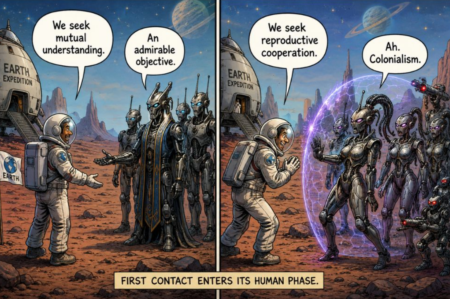



Noah Franklin/Staff Writer PNW News
They expected sunshine, ancient cities, and an unforgettable vacation.
Instead, thousands of passengers aboard an LGBTQ-themed cruise received an unexpected lesson in geopolitics.
When the ship was denied entry into Turkey, organizers scrambled to salvage the itinerary by arranging an alternative stop in Egypt. But that plan quickly unraveled as well. Two countries. Two closed ports. Two unmistakable messages. For many passengers, the biggest surprise wasn’t the inconvenience–it was the realization that being welcomed as tourists eager to spend money did not outweigh how those nations viewed the public identity of many aboard.
Some passengers expressed disbelief on social media. Why wouldn’t these countries welcome thousands of visitors bringing millions of tourism dollars?
The answer reveals something much bigger than a canceled vacation.
For years, Western progressives have built a broad coalition around causes they believe represent justice and equality. LGBTQ activism, pro-Palestinian demonstrations, democratic socialism, anti-colonial movements, and other left-wing causes have increasingly been presented as natural allies. Pride parades regularly feature Palestinian flags. “Queers for Palestine” has become a familiar slogan on college campuses and city streets.
But one simple question is rarely asked:
What do the people you’re marching beside actually believe?
The cruise answered that question more clearly than any political debate ever could.
Many Americans’ understanding of Islam comes through the lens of Western politics. They see progressive Muslim politicians, activists, and public figures who emphasize diversity, coexistence, and inclusion. Those voices certainly exist, and many sincerely advocate those values.
But they are not necessarily representative of traditional Islamic teaching or the legal and cultural realities that still exist across much of the Muslim world.
In numerous Muslim-majority countries, homosexual conduct remains illegal or is met with severe social stigma. Pride marches are not annual celebrations but unthinkable events. Public advocacy for LGBTQ causes can result in arrest, harassment, or worse depending on the country. Even where laws are less severe, social acceptance often remains extremely limited.
The assumptions many Western activists take for granted simply do not exist in large portions of the Islamic world.
The cruise passengers encountered that reality firsthand.
Ironically, conservative Christians are often portrayed as uniquely intolerant because they continue to uphold the historic biblical teaching that God’s design for sexual relationships is found within marriage between a man and a woman. Entire denominations have split over the issue, while many progressive churches have chosen instead to fully affirm LGBTQ relationships and even celebrate them.
Yet while Christians are frequently criticized for their beliefs, many of the same activists have enthusiastically embraced political movements whose traditional religious foundations are, in many respects, even less accepting of homosexuality.
That contradiction rarely receives serious attention.
The conflict becomes even more striking when Israel enters the conversation.
At many Pride events across the West, Palestinian flags are prominently displayed alongside rainbow flags. Yet Israel remains the one nation in the Middle East where LGBTQ individuals enjoy broad legal protections and where Tel Aviv hosts one of the world’s largest Pride celebrations. By contrast, Hamas has long rejected homosexuality, and many surrounding nations maintain laws or social norms that make open LGBTQ life extraordinarily difficult.
This raises an uncomfortable question: how did so many political alliances form without examining whether their members actually share the same core values?
Perhaps the answer is that many modern coalitions are built less on shared convictions than on shared opponents. If enough groups oppose the same perceived enemy–whether capitalism, conservatism, Israel, or Christianity–their profound differences are often overlooked.
Until reality intervenes.
The passengers aboard that cruise weren’t protesting. They weren’t demanding legal reforms. They weren’t attempting to export Western politics. They were simply arriving as openly LGBTQ tourists.
That alone was enough to close two ports.
The lesson isn’t really about one cruise ship.
It’s about the danger of assuming that political slogans accurately reflect the beliefs of the people standing beside us. A rainbow flag and a Palestinian flag may wave together at a rally in New York, Seattle, or London. But outside the Western political bubble, those symbols often represent worldviews that are fundamentally at odds with one another.
Sometimes it takes an unexpected detour to expose a contradiction that years of slogans have managed to conceal.