


Colin Ambler/cvnznews.com
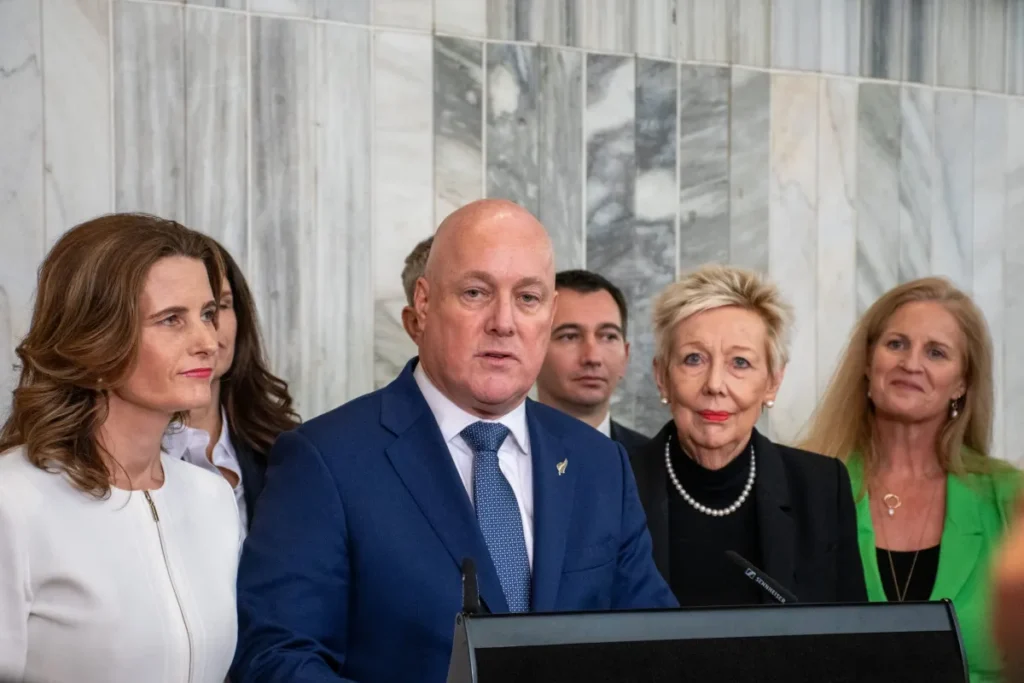
Christopher Luxon didn’t leave the caucus room at midday — he owned it. The place had that classic post‑meeting buzz: too much fluorescent light, too much caffeine, and too many people pretending they weren’t watching every micro‑expression. Three hours of internal stock‑take had just wrapped, but Luxon walked out like the only person in the building who already knew exactly how the day would end.
The cameras were lined up, hungry. The country was tuned in, waiting for signs of wobble or weakness. They didn’t get any.
Luxon didn’t look like a man emerging from political turbulence. He looked like a CEO stepping back onto the floor after reminding the board who runs the company. Shoulders squared. Pace steady. Senior ministers flanking him like a leadership team that had just reconfirmed the org chart.
The confidence vote was done. The message was unmistakable: the caucus wasn’t just backing him — they were following his lead. No drama. No hesitation. No cracks. Luxon stood there as the person in charge, the one setting direction, the one the team had chosen to keep steering the ship.
His remarks were tight, controlled, and deliberately brief. Seventy‑five seconds of clarity. He talked about the stakes, the progress, the mission. Economic growth. Law and order. Education. Healthcare. The basics — the things he keeps hammering because he believes they’re the foundation of everything else.
But beneath the policy lines was the real headline: Luxon is still the one calling the shots.
He framed the election as a choice between forward momentum and backward drift. He positioned his government as the team with the plan, the discipline, and the drive. And he delivered it all with the tone of someone who doesn’t need to convince his own people — because they’ve already made their decision.
Then he ended it with a line that wasn’t casual at all, even though he said it like it was: “We’re going back to work.”
Translation: meeting over, leadership affirmed, direction set.
The boss has spoken.