




Colin Ambler/cvnznews.com
The Government’s plan to ban under‑16s from social media has triggered an immediate and public split within the coalition, with both NZ First and ACT announcing they will formally “agree to disagree” and vote against the proposal.
Prime Minister Christopher Luxon and Education Minister Erica Stanford unveiled the Online Safety Bill on Monday, describing it as a necessary response to escalating harm caused by social media platforms. The Bill would require high‑risk platforms such as Instagram, TikTok, Snapchat and Facebook to verify users are over 16, assess child‑safety risks, and face penalties of up to 10 percent of global revenue for failing to comply. It also establishes a new online safety regulator within the Department of Internal Affairs.
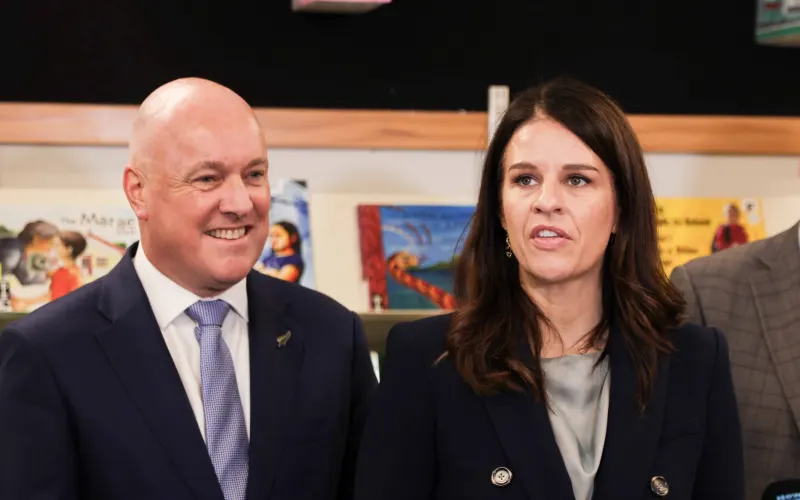
“We simply cannot accept the harm being done to a generation of New Zealand children,” Prime Minister Christopher Luxon.
Luxon said social media was exposing young people to “harmful content, addictive technology and pressures they are not equipped to deal with”, citing data showing one in three teens spend more than five hours a day online. Stanford emphasised that the Bill targets platforms, not parents or children, and would create a long‑term framework that adapts to emerging technologies, including AI companion platforms.
“Teenagers are remarkably good at getting around restrictions on the internet. Any system strong enough to reliably stop them will inevitably start asking a lot more of everybody else.- David Seymour Act
But within an hour of the announcement, NZ First issued a sharp rebuttal, saying the ban was National’s policy alone. The party said it shared concerns about online harm but believed the proposal was unworkable without banning VPNs or enforcing digital identification. NZ First warned the Bill risked “a soviet era outcome” that would erode privacy and parental rights, arguing Australia’s similar attempt had “colossally failed”.
ACT also rejected the ban, calling it “an unserious solution to a serious problem”. Leader David Seymour said teenagers would easily circumvent restrictions, and any system strong enough to stop them would inevitably impose intrusive identification requirements on all New Zealanders. Seymour warned the ban could push young people into “darker corners of the internet” and reduce their willingness to seek help.
With two coalition partners refusing support, the Bill faces a difficult path through Parliament.