

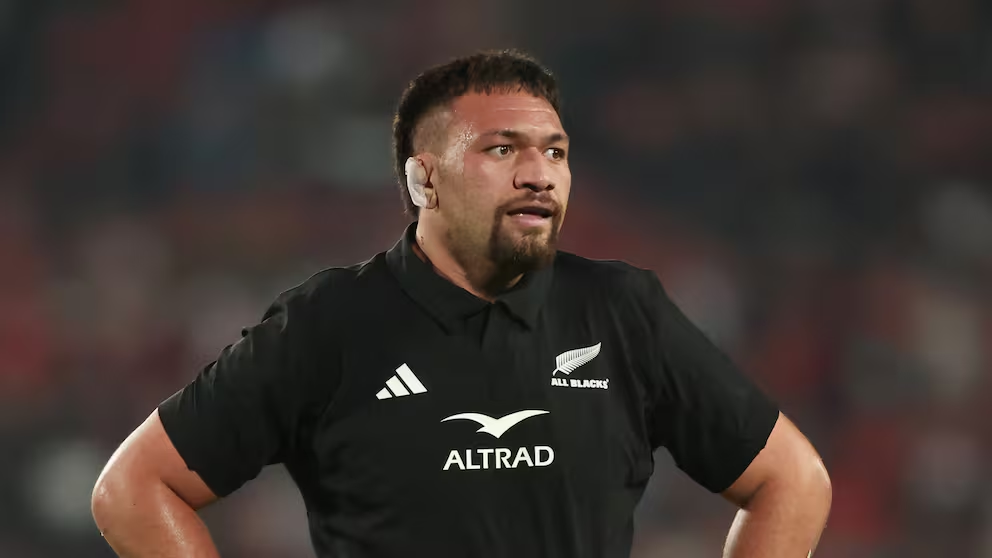
Mike Bain/cvnznews.com
When Tonga‑born All Black Saula Ma’u walked off Ellis Park after his shock debut, he didn’t talk about scrums, tactics, or the scoreboard. He didn’t boast about helping the All Blacks overturn a 35–17 deficit to win 41–35. He didn’t talk about his own strength or talent.
Instead, fighting back tears, he thanked God.
“I just want to say thank you to the Heavenly Father for the blessings He gave me to wear the black jersey,” Ma’u said, voice breaking as the emotion of the moment overtook him. For a young man who left Havelu village at 15, worked his way through Auckland Grammar, Otago, and the Highlanders, this wasn’t just a sporting milestone — it was answered prayer.

Two weeks earlier he was playing NPC rugby. Suddenly he was in South Africa, called in as injury cover, standing in the cauldron of Ellis Park wearing the most famous jersey in world rugby. “It feels unreal,” he said. “A dream come true… and I want more of it.”
But what stood out wasn’t the dream — it was the gratitude. In a sporting world obsessed with self‑promotion, Ma’u’s first instinct was worship. He thanked God, then thanked his family, his village, his partner, his parents, and the All Blacks coaches who believed in him. Then he cried.
It’s becoming a quiet pattern in the All Blacks: men unafraid to acknowledge the One who gives the talent. Captain Ardie Savea is often seen lifting his eyes heavenward after matches, publicly thanking God for strength, protection, and opportunity. Now Ma’u joins that chorus — another Pasifika man whose faith is not a footnote but a foundation.
Officially All Black #1242, Ma’u said he only hoped he made his family and village proud. But his testimony made something else clear: in a world chasing glory, some players still know where glory truly belongs.
And that is the story worth telling.