


Sarah McMillan/cvnznews.com
Two former charter schools have been placed under commissioners after the Ministry of Education uncovered serious financial and governance failures — including an illegal board, mounting debt, and questionable payments for curriculum “intellectual property.”
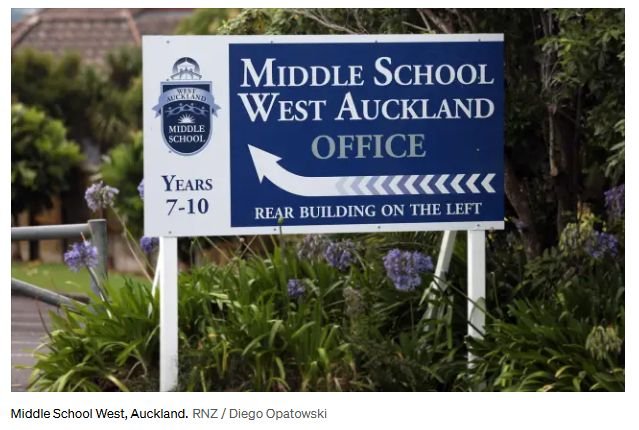
Documents released under the Official Information Act show Middle School West Auckland (MSWA) and South Auckland Middle School (SAMS) were both in deep trouble. The ministry found low cash reserves, arrears on payroll, and procurement practices so weak that forensic accounting was considered.
At SAMS, officials said the board was operating illegally and had been paying $50,000 a year for the right to use a teaching model that should have been free under its designated character. The ministry warned the payments — totalling $150,000 over three years — were high‑risk and lacked any evidence of value for money. It also noted the board ignored the sale of that curriculum IP to a private company, continuing payments regardless.
MSWA, meanwhile, had racked up $183,000 in debt to the ministry after repeatedly bouncing payrolls. Less than 40 percent of its students attended regularly, prompting statutory intervention. Officials said the school’s board “did not understand its governance responsibilities” and was “unwilling and incapable” of fixing problems.
Both schools were originally founded by the Villa Education Trust under the charter‑school model introduced by National, later converted to state‑integrated “designated character” schools when Labour abolished charters in 2018. The trust was deregistered last year, but its legacy of complex contracts and management fees continues to haunt the schools.
The ministry’s reports also reveal tangled relationships with private education companies. Villa’s education business was sold to Being AI, then to Crimson Education, while SAMS attempted to shift its special‑character oversight to Elim Christian Education Trust — a move rejected because the school must remain secular. The ministry later ruled the board’s composition illegal after Elim members were added “through an unknown process.”
Commissioners have now replaced both boards. Payments for management services have stopped, and investigations into curriculum contracts are underway.
The ministry says the interventions aim to stabilise finances, restore lawful governance, and ensure students receive proper teaching — a reminder that when ideology meets administration, it’s often the children who pay the price.