


Sarah McMillan/cvnznews.com
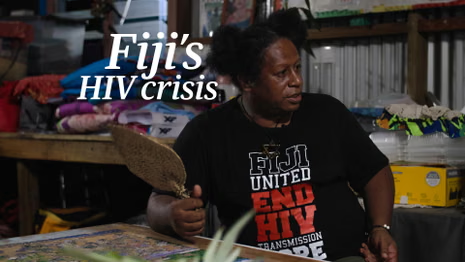
Once known as a tropical holiday destination, Fiji is now battling a rapidly escalating HIV emergency linked to sexual transmission and a growing illicit drug problem, prompting fears across the Pacific and drawing support from New Zealand and Australia.
Fiji has declared a national HIV emergency after an alarming explosion in infections that health authorities say is being fuelled by both sexual transmission and the increasing use of injectable drugs.
The scale of the crisis is startling.
Health Minister Atonio Lalabalavu this week formally declared a national emergency as HIV rates continue to soar across the South Pacific nation. New HIV diagnoses reached more than 2,000 cases in 2025, a dramatic rise from levels recorded just a few years ago.
The outbreak has become so serious that health officials estimate approximately one in every 60 adults in Fiji is now living with HIV, a significant increase from just five years ago.
Behind the statistics lies a deeper social problem.

International health agencies point to the growing availability of illicit drugs, particularly methamphetamine, as a major driver of infections. More than 40 percent of known HIV cases have been linked to injecting drug use, while over half are linked to sexual transmission.
The crisis comes amid increasing concerns that Fiji has become a key transit point for international drug trafficking networks moving narcotics between Asia, Latin America, Australia and New Zealand. Criminal groups are increasingly using Pacific islands as staging posts, with some drugs ending up in local communities rather than passing through.
According to regional crime monitors, methamphetamine and cocaine have become more visible across the Pacific since the pandemic, creating new public health challenges alongside traditional law-enforcement concerns.
The human toll is already being felt. Health authorities report that HIV infections among pregnant women have risen sharply, while dozens of babies were born with the virus last year.
The emergency declaration has triggered a regional response.
Fiji says it is receiving assistance from Australia, New Zealand, India, the United Nations and international health agencies as it expands testing, treatment and prevention programmes.
However, there has been little direct public comment from Wellington on the wider implications for New Zealand.
New Zealand’s involvement has so far been focused on supporting Fiji’s response rather than issuing any public warning about risks to New Zealand itself. Officials have not suggested the outbreak presents a direct threat to New Zealand, but Fiji’s role in regional drug trafficking routes has previously been a concern for authorities on both sides of the Tasman.
Health experts stress that the declaration is a call to action rather than panic. HIV is not transmitted through casual contact, and modern treatments can dramatically reduce transmission.
Yet the emergency serves as a stark warning that the Pacific’s growing drug problem is no longer just a policing issue. In Fiji, it has now become a major public health crisis.