

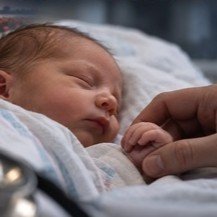

Daniel Westbrooke/PNW News Agency
For years, euthanasia and assisted suicide have been defended around one overriding principle: choice.
A competent adult suffering from an incurable condition should be permitted, advocates argued, to decide when his or her suffering has become unbearable. Whether one agreed with that argument or not, personal autonomy was placed at the center of the debate.
But what happens when the patient never asks to die?
What happens when the patient cannot understand death, cannot request death and cannot possibly consent to it?
That question is no longer hypothetical.
In the Netherlands, physicians can intentionally terminate the life of a newborn infant under narrowly defined circumstances. Dutch government guidelines state that the baby’s suffering must be considered “unbearable” with no prospect of improvement, the diagnosis and prognosis must be certain, the parents must consent, and an independent physician must examine the child.
The Netherlands has gone further still. A separate framework allows doctors to terminate the lives of terminally ill children between the ages of 1 and 12 when they are determined to be suffering unbearably without prospect of improvement and no reasonable alternative exists to relieve that suffering. Parents participate in the decision, and the child is consulted when possible.
This is an extraordinary transformation of the original argument for assisted death.
The question is no longer simply whether someone has a “right to die.”
It is whether someone else has the right to decide that you should die.
And now that same question has surfaced in Canada.
From Canada To The Netherlands
In October 2022, Dr. Louis Roy appeared before Canada’s Special Joint Committee on Medical Assistance in Dying representing the Collège des médecins du Québec, Quebec’s professional medical regulator.
Roy told lawmakers that the organization had considered extending medical assistance in dying to babies from birth to one year old in cases involving extremely serious medical conditions and virtually no chance of survival.
The Collège subsequently clarified its position before the same parliamentary committee.
Its representative said the organization believed MAID for infants could represent “a responsible ethical solution” in cases involving an unavoidable end of life under unbearable circumstances. Its earlier report had contemplated cases involving serious malformations or syndromes with no prospect of relief or survival.
The organization emphasized that it was not proposing killing babies without parental consent and described the idea as an avenue to be explored.
The fact that one of Canada’s major medical regulators has publicly entertained this possibility should make Canadians ask where the boundaries of assisted death ultimately lie.
Because Canada has already moved those boundaries before.

Canada’s Rapidly Expanding MAID System
When Canada legalized MAID in 2016, the law required, among other things, that an eligible person’s natural death be reasonably foreseeable.
That requirement is gone.
In 2021, Parliament expanded eligibility to people whose natural death is not reasonably foreseeable, creating what is now known as “Track 2” MAID. A person therefore does not need to have a terminal condition to qualify under Canada’s current system.
The numbers have risen dramatically.
Health Canada’s latest annual report records 16,499 MAID deaths in 2024. That represented approximately 5.1 percent of all deaths in Canada—roughly one out of every 20.
And another major expansion remains scheduled.
People whose sole underlying medical condition is mental illness are currently excluded from MAID, but that exclusion is set to expire on March 17, 2027 unless Parliament changes the law again.
Terminal illness was once presented as a boundary.
Then it wasn’t.
Reasonably foreseeable death was a boundary.
Then it wasn’t.
Mental illness alone is currently a boundary.
Under existing law, that boundary is scheduled to disappear.
And now Canadian physicians have openly discussed another boundary: infancy.
When Consent Disappears
This is where the debate changes fundamentally.
An adult requesting MAID can articulate his wishes. A newborn cannot.
The infant cannot evaluate treatment alternatives. The infant cannot understand a prognosis. The infant cannot determine that suffering is intolerable. And the infant cannot say, “I want to die.”
Other people must make that determination.
The Dutch system acknowledges this reality by requiring parental consent and independent medical review. But those safeguards do not change the underlying ethical transformation.
Death is no longer being provided because the patient autonomously requested it.
Death is being chosen for the patient.
That should force society to confront a question much larger than euthanasia itself: Who gets to determine when another person’s life contains too much suffering to continue?
The answer becomes especially consequential when disability enters the discussion.
Human beings are notoriously poor at predicting what another person’s life will ultimately be worth. Medical prognoses can be wrong. Treatments improve. Families adapt. People born with severe disabilities can experience love, relationships, joy and meaning that cannot be calculated from a hospital room shortly after birth.
There will certainly be tragic cases in which doctors know an infant has only hours or days to live. Modern medicine already has an answer for those circumstances: aggressive pain management, palliative care, comfort and allowing natural death when further treatment is futile.
There is a profound difference between allowing someone who cannot be saved to die and intentionally causing that person’s death.
Once medicine crosses that boundary, the doctor’s role changes with it.
The Question Beneath All The Others
Christians should be among the first to acknowledge the agony involved in these cases.
Watching a child suffer from a catastrophic condition is unimaginably painful. Parents facing such circumstances deserve compassion, extraordinary medical support and a church willing to walk beside them rather than offer simplistic answers from a distance.
But compassion cannot depend upon declaring some human lives disposable.
Scripture grounds human value somewhere far deeper than independence, intelligence, physical ability or anticipated quality of life.
Human beings bear the image of God.
That means the profoundly disabled infant, the dementia patient who no longer recognizes his children, the person suffering severe psychiatric illness and the healthy adult all possess a dignity that does not rise or fall according to their usefulness or abilities.
That principle becomes especially important when someone is incapable of defending himself.
Canada has not yet legalized euthanasia for infants.
The Netherlands has established circumstances in which doctors may intentionally end newborn lives, and Canadian physicians have now publicly discussed whether a similar approach should be considered.
The most important question therefore isn’t simply where Canada’s MAID law stands today.
It is what principle will stop it tomorrow.
Because once society accepts that death can be a medical solution to suffering, the argument inevitably shifts toward who is suffering enough, who decides—and whether consent must always be part of the equation.
The newborn lying silently in a hospital bed cannot answer any of those questions.
Which is precisely why everyone else must.