


Humanists UK
The Governing Body of Jehovah’s Witnesses has announced a significant change to its long-standing position on the ban of blood transfusions. It is now allowing individual members to decide for themselves whether to accept donated red blood cells, white blood cells, plasma and platelets. While not meaning that Jehovah’s Witnesses can accept full blood transfusions, it does mean that in practice they can now accept almost all modern transfusions – potentially saving thousands of lives.
The change was announced on Friday 18 September in a video statement posted to their own website. While the Governing Body’s announcement reiterated that transfusion of ‘whole blood’ is still prohibited, it said that individual members can now decide for themselves on accepting any or all of four blood components from any donor.

Responding to the announcement John Viney, an ex-Jehovah’s Witness and former member of the Jehovah’s Witness Hospital Liaison Committee, said:
‘This u-turn in the strict Jehovah’s Witness ‘no blood’ policy is not just a ‘clarification’ but a life saving move for any future member who needs a transfusion of any of the main components of blood.
‘What a shame God did not ‘clarify’ it years ago when I was at the bedside of a lady who died for refusing red cell transfusion. Or any of the children who appeared on the front of their Watchtower magazine who died because they were told God required obedience in this matter. This may be explained by Jehovah’s Witness leaders as an update’ but it can’t bring back those thousands that missed the update.’
The statement said:
‘The long-standing refusal of whole-blood transfusions on religious grounds, a core teaching based on the command to ‘abstain from blood’ [Acts 15:20], is unchanged.’
The organisation, which has long interpreted biblical instructions to ‘abstain from blood’ as prohibiting medically administered blood transfusions, now says that decisions about the four primary components are for individual Witnesses themselves:
‘the congregation will not get involved in that decision, and individual Christians should not judge others.’
This represents a significant change in the Jehovah’s Witness doctrine, and amounts to individual Jehovah’s Witnesses being able to choose to accept a blood transfusion in most medical situations. Ostensibly they can now do this without the fear that they will be disfellowshipped or disassociated from the congregation, or risk being shunned by family and friends as a result. It also means they can now donate blood to be given in these components to others.
Almost all modern transfusions use blood components
While the Jehovah’s Witnesses have made several changes to the blood doctrine over the years since the complete ban on blood transfusions was put in place by them in 1945, this recent change is the most significant yet. This is because most blood transfusions in modern hospital medicine today, and particularly in the UK, are not whole-blood transfusions, they are what is called ‘blood component therapy’ – the use of these four blood components which are separated after being donated.
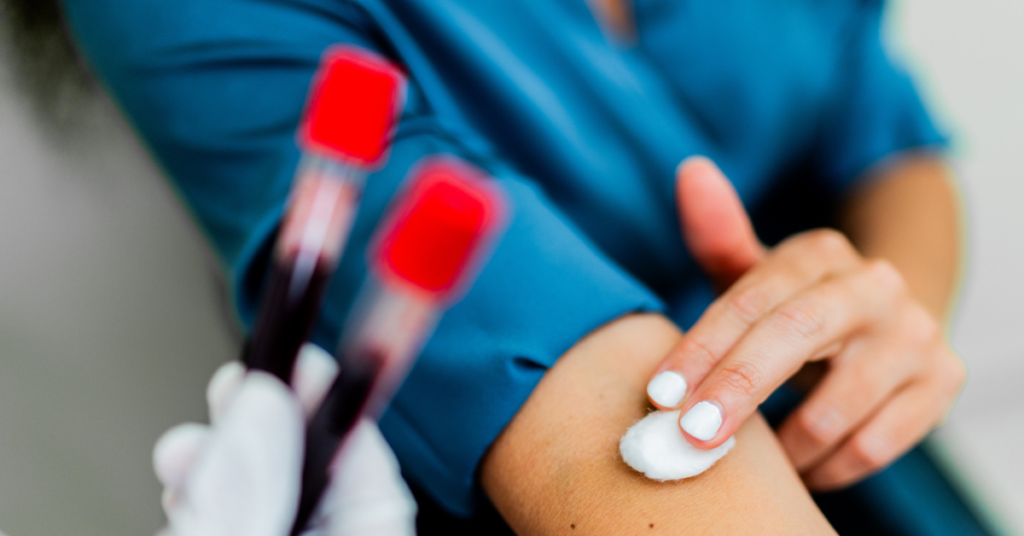
Donated blood, for most medical scenarios, is usually separated into four main components, and a patient is given the component they specifically need. This ‘blood component therapy’ means blood banks can make the most of every blood donation as the components of one donation can be used to help several people. According to the UK Blood Bank, donated blood is separated into the following main components:
- Red blood cells: These carry oxygen and are by far the most commonly transfused component of blood.
- Plasma:The liquid part of blood, containing proteins and clotting factors. It’s used when someone has certain clotting problems or has lost a lot of blood.
- Platelets: Tiny cell fragments that help blood clot.
- White blood cells: These may be given to patients suffering from life-threatening infections whose normal defence mechanisms don’t seem to be responding to antibiotics.
These four components are the same components the Jehovah’s Witnesses themselves describe as the ‘four primary components of whole blood’. And while whole-blood transfusion does still exist, particularly in some major haemorrhage and trauma settings, in the UK, component therapy is the standard approach for most transfusions.
The result is that this recent announcement by the Governing Body covers most medical cases where a blood donation is recommended by a doctor in order to treat them or indeed save the patient’s life. These can now be accepted by an individual Witness as a ‘matter of conscience’.
From prohibition to ‘personal conscience’
It is the framing of this recent announcement that the organisation now states:
‘We recognize that medical decisions involving blood components are a matter of conscience between each Witness and their God, Jehovah.’
Some Jehovah’s Witnesses will undoubtedly continue to refuse these components. They are entitled to do so. An informed adult has the right to refuse medical treatment on religious or other grounds. But Witnesses who decide to accept them will no longer be acting contrary to the Governing Body’s teaching, and without the risk of excommunication. However it remains to be seen whether those who were already excommunicated and shunned for taking blood component therapy transfusions will have those judgements rescinded.
More broadly, it raises a difficult question about institutional responsibility. For decades, the organisation told members that biblical commands concerning blood prohibited the transfusion of these four components. Now the organisation itself gives the theological reason for the change: that the Bible does not comment on these particular products and therefore the Governing Body is not authorised to ‘go beyond the things that are written’. In effect, a rule with potentially life-and-death consequences has moved from organisational prohibition to individual choice.
It raises the question: what happens when a religious organisation changes a life-and-death rule from an instruction to an individual choice?
What about those affected by the previous rule?
There is no reliable global figure for the number of Jehovah’s Witnesses who have died after refusing blood transfusions, still less the number whose deaths would definitely have been prevented had transfusion been accepted.
A 2016 medical review estimated that around 1,000 Jehovah’s Witnesses die each year after refusing blood transfusions.. Although such estimates cannot establish how many of those deaths would have been prevented by a blood transfusion, what can be said is that refusal of blood can materially affect treatment options in circumstances including severe haemorrhage and profound anaemia.
The new policy does not answer how the Governing Body will approach former members who faced disciplinary or social consequences after accepting one of the components that the Governing Body now says should always have been a matter for their own conscience.
That may ultimately be the most consequential question raised by the change.
If a religious organisation can decide today that Scripture leaves a life-and-death medical treatment to the individual conscience, what does that mean for those who were previously told that the same choice was forbidden?