

Colin Ambler/cvnznews.com
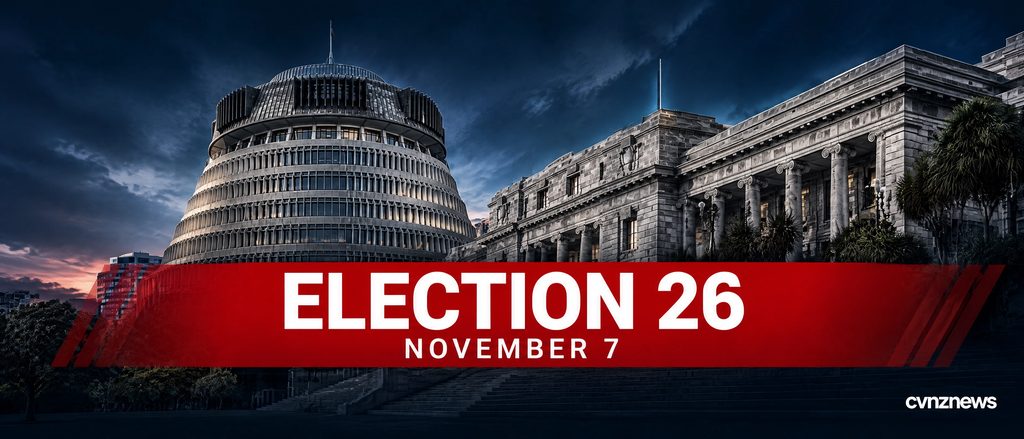
As New Zealand heads deeper into the 2026 election campaign, concerns are growing that political tensions are spilling beyond debate and into intimidation, vandalism and criminal behaviour.
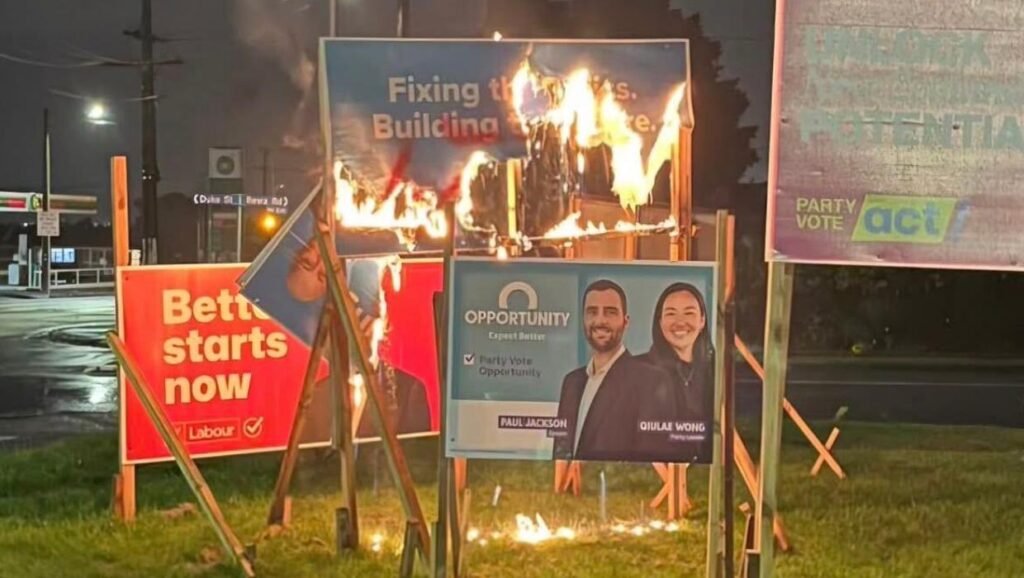
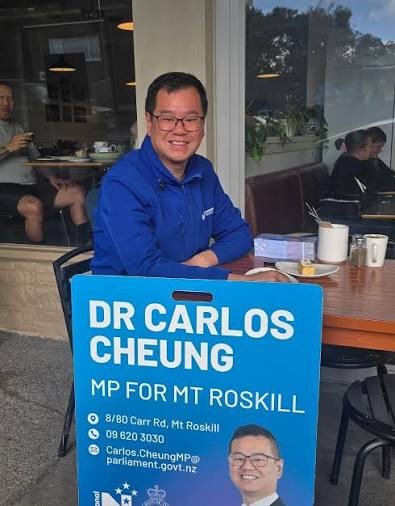
National Party candidate and MP Carlos Cheung has condemned the deliberate burning of one of his election hoardings in Auckland’s Mount Roskill electorate, calling the act “dangerous, reckless and completely unacceptable”.
Photographs posted on social media showed the sign engulfed in flames after it was allegedly set alight on Saturday night following earlier vandalism.
While election signs being defaced is nothing new, the apparent escalation to arson has raised fresh questions about the increasingly hostile tone emerging during the campaign season.
Cheung issued a strong defence of democratic participation, regardless of political differences.
“You may disagree with our views. You may disagree with our candidates. But there is absolutely no place for vandalism, intimidation or criminal behaviour in our democracy,” he said.
He warned that deliberately setting fire to campaign material was far from harmless mischief.
“This is not harmless behaviour. It is dangerous, reckless and completely unacceptable. Deliberately setting fire to signage can put people, property and the wider community at serious risk.”
The incident has been reported to police.
The fire comes amid a growing number of reports involving election hoardings around the country. Earlier this week, police announced charges against a South Auckland man following a series of alleged vandalism incidents involving election signs in Takanini.
Police say they received multiple complaints of political signs being removed or damaged before a suspect was allegedly caught vandalising a hoarding on Great South Road. A 34-year-old man has been charged with several theft-related offences.

In a separate incident last month, a Tauranga man was charged after dozens of political signs were allegedly damaged during a vandalism spree in Pāpāmoa.
The disturbing pattern serves as a reminder that in a healthy democracy, political disagreements must be settled through debate, persuasion and the ballot box, not through intimidation or destruction.
As election campaigning intensifies, candidates from all sides are likely to face scrutiny and criticism. But the right to freely contest ideas, display campaign material and participate in the democratic process remains fundamental to New Zealand’s democratic freedoms.
“Disagree if you must. Debate if you wish. But setting fire to political opponents’ signs is not democracy in action. It is an attack on the democratic process itself.”