


Kaitlin Price/cvnznews.com
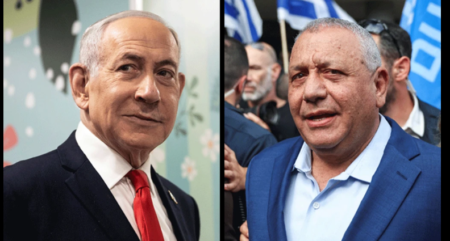
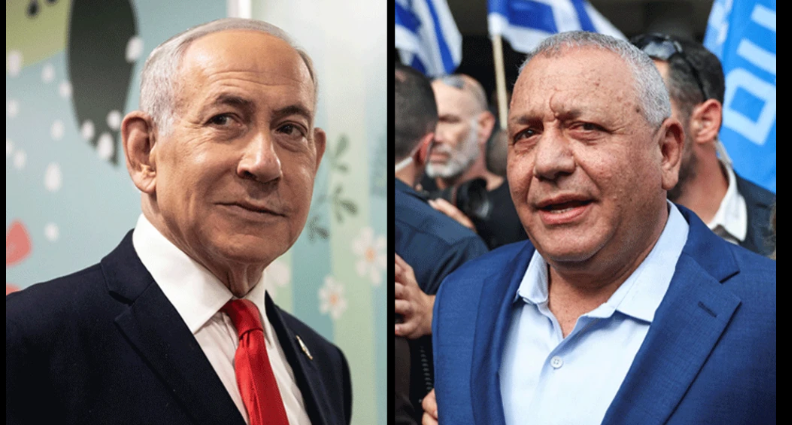
Netanyahu and Eisenkot Locked in Dead Heat
Israel faces a period of political uncertainty after exit polls from the country’s latest election suggested neither Prime Minister Benjamin Netanyahu nor opposition challenger Gadi Eisenkot has secured a clear path to power.
According to three major Israeli television exit polls, the election remains too close to call, with the rival political blocs running neck and neck and both falling well short of the 61 seats needed to form a majority government in the 120-seat Knesset.
Updated projections from Kan 11 and Channel 13 indicated Netanyahu’s bloc and the opposition “change bloc” led by former military chief Gadi Eisenkot were each on track to win 51 seats. A third exit poll from Channel 12 placed Netanyahu’s camp slightly ahead on 52 seats, compared with 50 for Eisenkot’s alliance.
The result leaves Israel facing potentially lengthy coalition negotiations, with no obvious governing majority emerging from the initial numbers. Official results have begun to trickle in from the Central Electoral Committee, but with only a small percentage of votes counted, it could take days before a clearer picture emerges.
Eisenkot, who leads the newly formed Yashar Party, addressed supporters in Tel Aviv after the polls closed, declaring that the Israeli public had voted for change.
“We made history,” he told cheering supporters. “The public decided in favour of change. The Israeli public voted against the continuation of Netanyahu’s term.”
However, with exit polls often proving unreliable in closely contested Israeli elections, analysts caution that the final outcome remains uncertain.
One notable feature of the election was a reported surge in Arab voter participation. Exit polls suggested Arab parties achieved significant gains, with activists describing the turnout as historic.
Mahdi Kabaha, a lawyer and campaigner from the predominantly Arab town of Umm Al-Fahm, said many Arab voters saw the election as an opportunity to influence the country’s direction.
“Arab society showed up and said it clearly: we are here, and we are part of the decision,” he said.
Arab citizens make up around one-fifth of Israel’s electorate, and increased turnout could play an important role in determining coalition arithmetic.
The election is Israel’s first legislative contest since the Hamas-led attacks of October 7, 2023, a backdrop that has profoundly shaped political debate throughout the campaign.
Regardless of who eventually emerges with the upper hand, the fragmented result means Israel is likely to face weeks, and possibly months, of complex negotiations before a new government can be formed.