



Mike Bain and Kaitlin Price/cvnznews.com
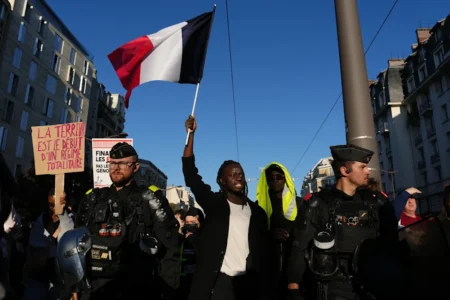
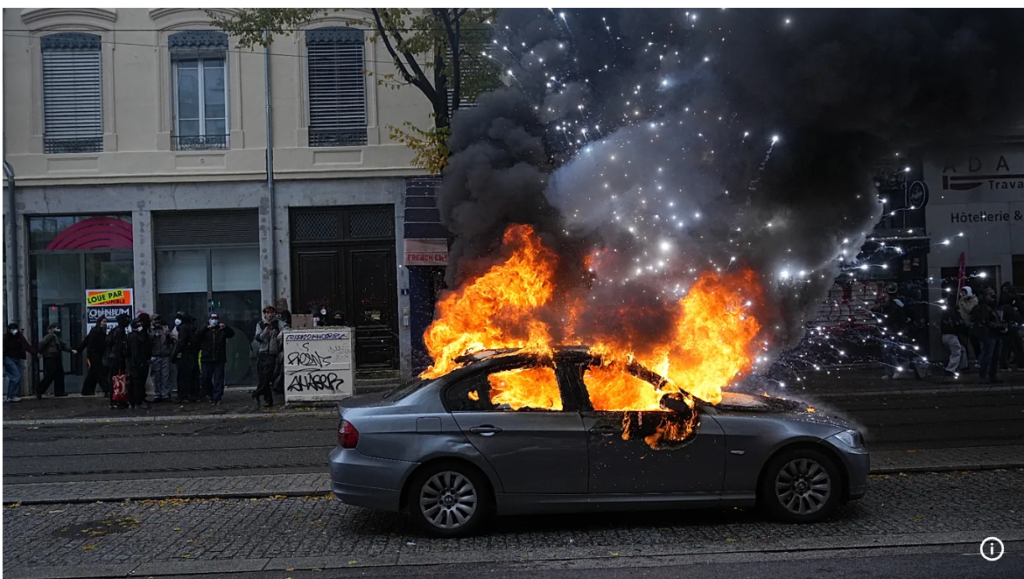
If New Zealanders have ever wondered what the financial cost of the violent unrest seen on television screens overseas might be, France has just provided a sobering answer. Insurers estimate that just one weekend of rioting, looting and property damage linked to cost-of-living protests in October has left a damage bill of around €207 million, equivalent to approximately NZ$410 million.
What is particularly striking is that this figure covers only insured property losses.
It does not include the cost of deploying police, emergency services, court proceedings, medical treatment, lost productivity, public infrastructure repairs or the countless hours spent by authorities responding to the unrest. Those costs are carried elsewhere and ultimately spread through taxpayers and consumers.
According to France Assureurs, the French insurance industry’s representative body, the violence and looting that erupted around demonstrations on October 17 and 18 generated an estimated 5,280 insurance claims worth roughly €207 million (NZ$410 million).
More than 95 percent of the losses involved damage to businesses.
Commercial property damage alone is estimated at €198 million (NZ$393 million) across more than 4,000 claims.
Damage to private property is estimated at around €3.5 million (NZ$7 million), while vehicle-related claims account for another €6 million (NZ$12 million).
France Assureurs president Florence Lustman described the losses as remarkable given that the destruction occurred over little more than 24 hours.
“The cost of the urban violence on 17 and 18 October is particularly high in view of the brevity of the events,” she said.
The comparison with previous episodes of unrest highlights the scale of the damage.
France’s major riots in 2005 generated insured losses of €209 million, roughly NZ$415 million in today’s exchange rates, but that destruction unfolded over four weeks.
Meanwhile the Yellow Vest protests of 2018-2019 resulted in insurance losses of €256 million (about NZ$508 million) spread over several months.
By contrast, October’s damage approached those totals in little more than a day.
The French Government has now stepped in with emergency assistance for small businesses affected by the unrest.
Companies employing fewer than 50 staff can apply for grants ranging from €1,000 to €10,000 (approximately NZ$2,000 to NZ$20,000), depending on the extent of their losses.
Regional committees will assess applications individually, taking into account business interruption, property damage and eligibility for other assistance.
Additional emergency funding has been released by local authorities, while France’s public investment bank is offering interest-free loans of up to €50,000 (around NZ$99,000) to help shop owners repair premises and replace stock, particularly ahead of the Christmas trading season.
The episode highlights an uncomfortable reality often overlooked during periods of civil unrest.
While protesters may be demonstrating against rising costs, inflation and economic pressures, the financial burden created by riots and looting does not simply disappear.
Insurance companies pay the initial claims, but those costs eventually flow through to higher premiums. Governments provide grants funded by taxpayers. Businesses absorb losses where they can. Consumers ultimately face higher prices.
In other words, somebody always pays.
The irony is hard to ignore.
A movement protesting the rising cost of living has generated hundreds of millions of dollars in additional costs that will be borne by businesses, taxpayers, insurance customers and shoppers long after the fires have been extinguished and the headlines have faded.
Editor’s note: Using a rough exchange rate of €1 = NZ$1.98-$2.00, the total insured losses are approximately NZ$410 million.