



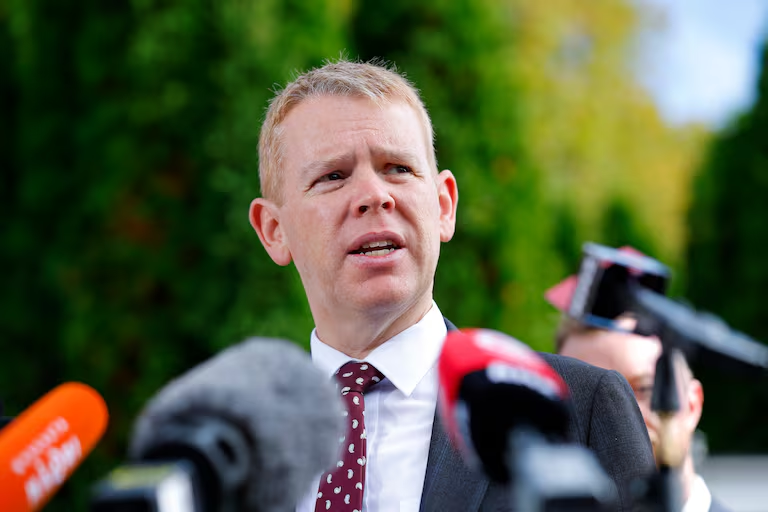
Labour leader Chris Hipkins has used his State of the Nation speech to argue New Zealand is losing ground on living costs, productivity, and climate resilience, warning that “people are working harder than ever and falling further behind.” Speaking to the Auckland Business Chamber, he said nearly 240,000 New Zealanders have left the country in two years, calling it “talent we can’t afford to lose.”
Hipkins outlined Labour’s election-year focus on jobs, health, and homes, including three free GP visits annually, major investment in renewable energy, and a targeted capital gains tax on investment and commercial properties. He said too much capital is tied up in speculation rather than productive industries, promising a New Zealand Future Fund to back local innovation and infrastructure.
National’s Finance Spokesperson Nicola Willis dismissed the speech as empty and repetitive, saying Labour has “not a single new idea for New Zealand.” She argued Hipkins is recycling old policies and doubling down on “spend more, tax more, borrow more,” warning that a Labour–Greens–Te Pāti Māori government would be “an economic wrecking ball.” Willis said National has spent two years “undoing the damage Labour did to the economy” and challenged Hipkins to answer “basic questions” about how his proposals would avoid jeopardising the recovery.
While the political debate over economic direction intensified, the Government also moved to highlight progress on public safety in Auckland’s CBD. Auckland Minister Simeon Brown announced new move‑on powers for Police, calling them “an important tool to address antisocial behaviour that makes people feel unsafe.” Brown said the measures build on the city centre action plan, noting reductions in crime victimisations and 146 people placed into housing since November.
“Auckland’s city centre is a vital part of New Zealand’s economy,” Brown said, adding that improved lighting, CCTV upgrades, and a stronger Police presence are helping restore confidence.
The contrasting messages — Labour’s focus on affordability and opportunity, National’s warnings about economic risk, and the Government’s emphasis on CBD safety — signal an election year where competing visions for New Zealand’s future are already sharply defined.