



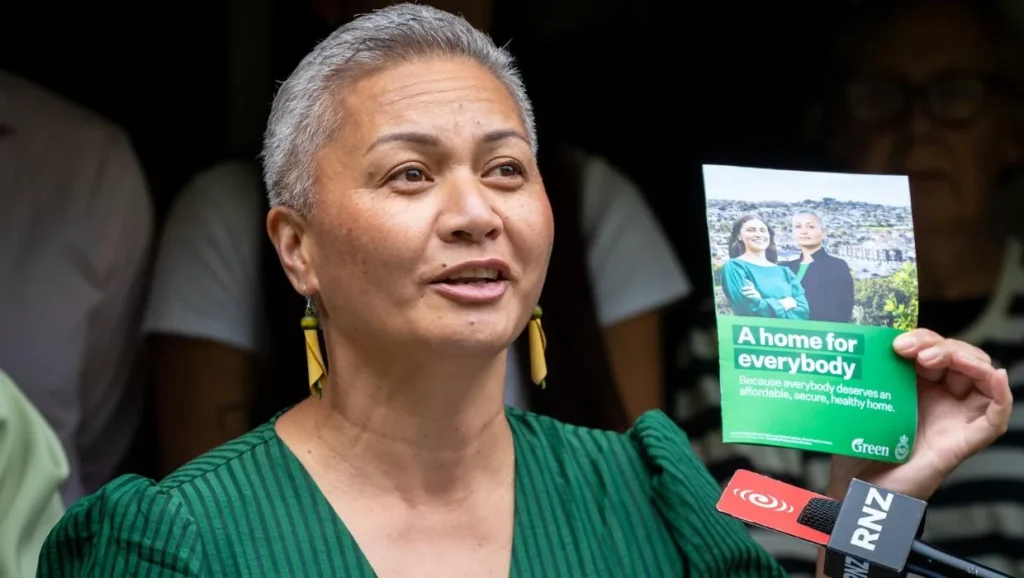
Two sharply contrasting visions for the future of housing have emerged this week, as the Green Party and ACT released competing statements on how to address one of the country’s most pressing social challenges.
The Green Party launched its new campaign, A Home for Everybody, arguing that secure, affordable housing is a basic human right. Co‑leader Marama Davidson said the current situation—where nearly half of renting households spend more than 30% of their income on rent—shows the system is failing too many families. The Greens are calling for stronger renters’ rights, a cap on rent increases, and a large-scale investment in public housing to reduce homelessness and give more people stability.
Co‑leader Chlöe Swarbrick said the solutions are not complicated: “Warm, dry, stable homes are the foundation of a thriving society.” The party believes that reversing tax settings that favour property investors and treating housing as a necessity rather than an investment would help first‑home buyers and ease pressure on renters.

ACT, however, argues that the Greens’ proposals would have the opposite effect. Housing spokesperson Cameron Luxton said rent caps and additional compliance requirements would shrink rental supply, push up waiting lists, and ultimately leave more people without homes. ACT points to recent rent reductions following the reversal of earlier restrictions as evidence that a lighter regulatory approach benefits tenants.
The party instead emphasises reducing red tape in construction, restoring interest deductibility, and creating more flexible tenancy rules to encourage investment and increase the number of available homes. ACT maintains that only by boosting supply—rather than imposing controls—can long‑term affordability be achieved.
While the two parties disagree strongly on the path forward, both acknowledge the same underlying reality: too many people are struggling to find a safe, stable place to live.
For many readers, the debate echoes an ancient principle found in Scripture: “Whoever oppresses the poor shows contempt for their Maker, but whoever is kind to the needy honours Him” (Proverbs 14:31). Whatever policy path is chosen, the moral responsibility remains the same—ensuring that those most vulnerable are not left behind.