



by Tola Mbakwe/ Premier Christian News
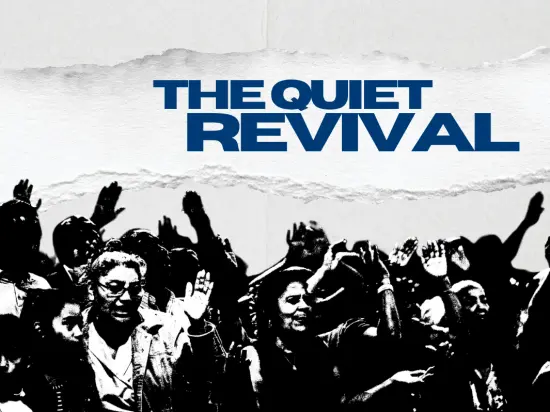
Statistics suggesting a rise in church attendance among the Gen Z generation, coining the widely used term “the quiet revival”, have now been found to be unreliable.
YouGov, which carried out the two surveys in 2024 after being commissioned by the Bible Society, has apologised after admitting it recently found major flaws in its data collection.
It said that, due to human error, a range of quality control technologies were not activated. These systems are designed to filter out respondents outside the country of study, as well as those who attempt the survey multiple times or complete it too quickly or inattentively.
YouGov CEO Stephan Shakespeare said: “YouGov takes full responsibility for the outputs of the original 2024 research, and we apologise for what has happened. We would like to stress that the Bible Society has at all times accurately and responsibly reported the data we supplied to them.”
The Quiet Revival report, published in April 2025, claimed that monthly church attendance among adults in England and Wales rose from 8% in 2018 to 12% in 2024.
Among 18 to 24-year-olds, the increase was said to be even more dramatic — from 4% to 16% — with young men reportedly leading the surge. Attendance among young women in the same age group was said to have risen from 4% to 12%.
The Bible Society has now retracted the report.
Paul Williams, CEO of the charity, said it is “frustrating” and “disappointing” to discover the data underpinning the popular report could be inaccurate, especially after the Bible Society repeatedly sought and received assurances from YouGov about the robustness and reliability of the conclusions.
Williams told Premier Christian News that, although they feel wronged by YouGov, the Bible Society will not take legal action.
“They have acknowledged the problem. They’ve accepted full responsibility. They’ve been clear with us about their mistakes and what they did wrong. I think no great purpose is served by us taking legal action,” he said.
YouGov also admitted it began more closely checking the accuracy of its data following ongoing scepticism from researchers and organisations.
Last month, David Voas, professor of social science at University College London, told the BBC that if the growth suggested in the data were genuine, it would amount to “literally millions of new churchgoers” who would have had to be “very quiet indeed — not to say invisible — to have escaped our notice”. The Bible Society vehemently defended the report at the time.
YouGov has said it will carry out another comprehensive study on the growth of Christianity for the Bible Society free of charge.
Williams said even though the 2024 data is unreliable, it does not necessarily mean a quiet revival is not taking place in the UK. He pointed to other indicators over the past year, including Bible sales soaring, more baptisms, a rise in participation in the Alpha Course, and record numbers of confirmations in the Catholic Church as signs that an interest in Christianity is growing.
Last year, a Savanta ComRes study found that 12% of non-Christian students say they read the Bible at least once a week. A separate study from the research firm also found 50% of all students said that they viewed the Bible as relevant, and 44% find it to be reliable.
Similar stories are highlighted in the Bible Society’s new report, released on Thursday, titled The Quiet Revival one year on: what’s the story?
While Williams explained that he doesn’t want to pit science against stories, as “they both lead to discovering truth,” he said: “We need to shift the emphasis from obsessing too much about precise statistics and move towards asking: what are the stories?
“What’s really happening in people’s lives? What do we see happening experientially, but also in communities, churches, towns and cities across the country, in different denominations and, of course, in other regions?”
Phil Knox, an evangelist and missiologist at the Evangelical Alliance, which also conducted research over the past year supporting the idea of a quiet revival, agreed.
He’s a co-host of a Premier podcast, The Good News People, which shares stories and research of how people are encountering God today.
“If you just take my last few weeks, for example, I was preaching in a church where there was a couple in church, for the first time, [I] couldn’t really explain why they were there. The week before that, I was with a vicar who’s on TikTok; he’s given out almost 3,000 Bibles through people wanting Bibles through TikTok. That’s really significant.
“The week before that, I was with a church leader who has baptised over 200 people in the last five years. The week before that, I was at a new men’s conference with around 400 men. The average age had been under 30, and the organisers were blown away that…all these stories and the stats are pointing towards something really significant.”
However, he cautioned Christians against placing too much weight on data, even when it appears encouraging, emphasising that the urgency of sharing the gospel remains unchanged.
“I think what God is doing at the moment, we are standing on the shoulders of prayerful people who have been praying for a quiet revival for many years. So we need to lean into that.
“I think sometimes we overestimate the impact of our actions and underestimate the impact of our prayers. So we need to keep praying that God’s kingdom come, God’s will be done on earth as it is in heaven…in the UK, as it is in heaven. So we need to do that.”
In addition to commissioning a new survey with YouGov, the Bible Society has carried out extensive research with Gallup, examining how Christianity is reflected across Europe.
“If there’s no quiet revival, then the stories will die away, and the statistics will vanish,” Williams said. “But there’s a reason why this has resonated so much with people, because they’re experiencing it, and I think that’s the reality that as a country we need to grapple with.”
Both sets of results are expected to be released in the autumn.