



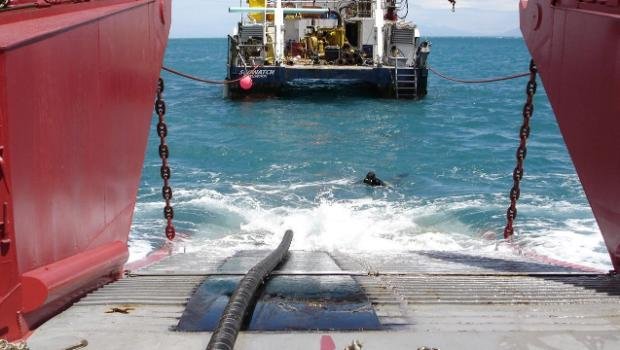
The Commerce Commission is proposing to approve Transpower’s plan to replace and expand the ageing undersea electricity cables that connect the North and South Island power networks — a project carrying a major capital allowance of $1.1386 billion.
The draft decision covers the first stage of a two‑part upgrade to the high‑voltage direct current (HVDC) link, including replacing the existing submarine cables and installing an additional fourth cable. The upgrade also includes replacing the HVDC control system, which manages power flow between the islands.
If approved, the project would protect current transfer capacity and add an extra 200 MW, strengthening New Zealand’s national security of supply.
Associate Commissioner Nathan Strong says the HVDC link is “critical electricity transmission infrastructure” and essential for both reliability and the country’s renewable energy ambitions.
“Installing a fourth cable at the same time unlocks an additional 200 MW of capacity, which can reduce long‑term electricity market costs and enable the development of lower‑cost renewable generation in the South Island,” he says. “This has been shown to provide a long‑term benefit to consumers.”
The existing cables, installed in 1991, are nearing the end of their operational life. As they age, reliability declines and the risk of failure increases — an outage that would take significant time to repair and could drive up electricity costs for households and businesses.
Transpower is seeking early approval so it can secure manufacturing slots with the cable supplier, avoiding delays that would erode consumer benefits. The company has also identified the need for upgrades to supporting infrastructure, including seismic strengthening at termination stations and replacing the Miramar spare‑cable storage facility.
Construction is expected to begin after 2028, with installation in the early 2030s. The investment would be added to Transpower’s regulated asset base and recovered over several decades under the benefits‑based pricing model, meaning costs are shared between electricity consumers and generators.
The Commission is now seeking public feedback before making a final decision.
Submissions close 4pm, 29 April 2026, with cross‑submissions due 13 May 2026.
More information is available on the Commission’s website.