

By Saboor Sakhizada
The US-Iran conflict reflects a fundamental strategic mismatch: Washington seeks swift victory, while Tehran aims for endurance and survival. Escalation and pressure alone have failed to produce decisive results, as Iran absorbs and adapts to challenges over time. A shift toward patient, incentive-based strategies is essential to reshape the conflict’s trajectory and avoid prolonging the war indefinitely.
Despite the removal of senior Iranian officials, Operation Epic Fury has yet to deliver the outcome Washington sought. As of last week, following 21 hours of direct talks facilitated by Pakistan, the US walked away from negotiations with its Iranian counterparts. As US Vice President JD Vance put it, “Iran has chosen not to accept our terms.”
That leaves a more fundamental question: What comes next, where do we go from here and what does “winning” actually mean for Washington in a war defined by endurance?
The tools left in the toolbox are predictable: more military force, tighter constraints, a blockade, diplomacy and negotiation. But escalation is not a strategy. It is a bet. And there is little evidence that a second round of pressure will succeed where the first did not.
This is not a tactical miscalculation. It is a structural one. Washington still acts as if pressure, applied long enough, will force a decisive break. Tehran has already demonstrated the opposite. To persist under the status quo is not resolve. It is denial.
The mismatch is fundamental. The US is fighting to win. Iran is fighting not to lose, and, if necessary, to survive. That asymmetry is not a detail of the conflict. It is the conflict.
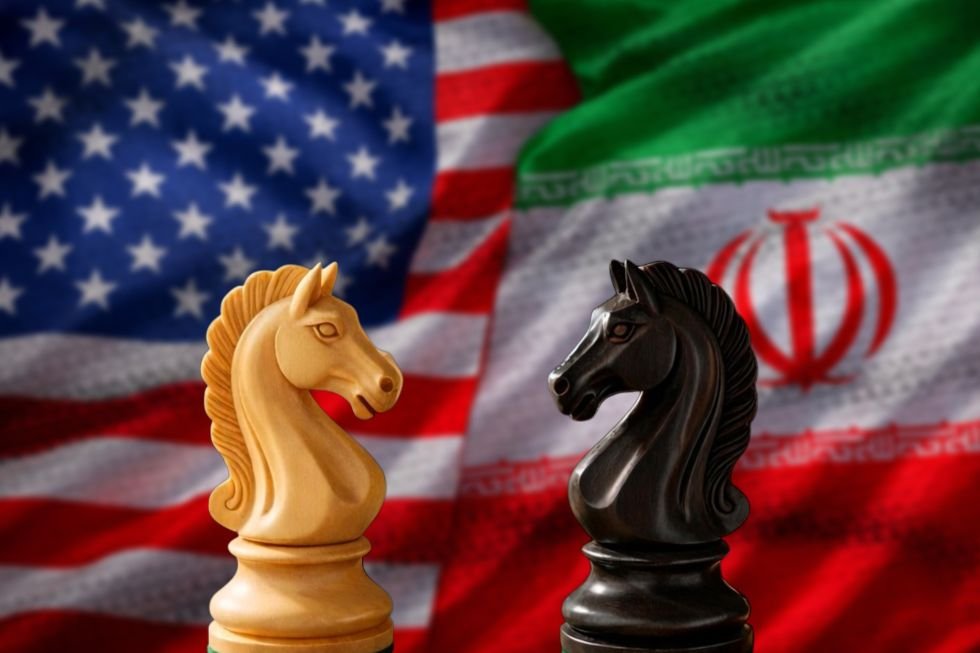
Victory in this war will not be decided by larger bombs or louder threats. It will be decided by how each side defines the game it is playing. Washington seeks a swift resolution with defined outcomes: restored deterrence, a diminished nuclear program and altered Iranian behavior. Iran seeks endurance, measuring success not in victory but in survival: regime continuity, deterrence preserved and pressure absorbed.
One side is playing a finite game. The other is playing an infinite one. This is a contest between speed and endurance, and the difference between them defines the war.
The infinite game and endurance
As American author Simon Sinek argues in The Infinite Game, finite players pursue clear victories and defined endpoints, while infinite players aim to remain in the game, adapting and outlasting. This pattern is not new. In Vietnam, the US pursued a decisive victory while North Vietnam fought to endure. In Afghanistan, Soviet forces sought control, while the Mujahideen’s strategy centered on survival. In the longest US war in Afghanistan, a simple battlefield truth captured the asymmetry: “You have the watches, we have the time.” In each case, outcomes were shaped less by battlefield superiority than by endurance.
This is not only historical. It is structural. As a recent analysis from the Al Jazeera Centre for Studies notes, escalation in the US–Iran conflict hinges less on battlefield dominance than on sustainability. Washington relies on high-intensity strikes and decapitation strategies, while Iran emphasizes decentralization and attrition designed to absorb pressure and extend the conflict over time. If one side is optimizing for rapid resolution and the other for survival, escalation does not resolve the conflict. It prolongs it.
Watch behavior, not rhetoric, and the contrast becomes sharper. Where Washington looks for breaking points, Tehran sees thresholds. Where the US applies pressure, Iran prepares to absorb it. Iranian leaders do not frame endurance as a burden; they frame it as a duty. What appears as strain from the outside functions as structure from within.
This is why the familiar playbook keeps failing. However many leaders Washington removes, Tehran replaces them, disperses authority and hardens its system against collapse. The US operates on a timetable, seeking a resolution. Iran stretches time, decentralizes power and extends the horizon of the fight. One side is trying to end the war. The other is built to ensure it does not end on those terms.
Strategic ambiguity and the need for a new approach
Part of the problem is strategic ambiguity. It remains unclear whether the US is attempting to counter a hostile regime, pursue regime change, or secure broader regional interests. That lack of clarity does not confuse Tehran; it empowers it. Ambiguity allows Iran to stretch the conflict across multiple fronts, adapt in real time and exploit the absence of a clearly defined end state.
A different approach begins with a simple recognition: Pressure alone will not produce surrender. If the objective is behavioral change, the strategy must shift from forcing collapse to shaping incentives over time. That requires pairing pressure with credible off-ramps, defining achievable objectives rather than maximal ones and aligning strategy with an adversary built for endurance. It also requires patience and coalition discipline as much as firepower.
About the Author: Saboor Sakhizada was born in Afghanistan and completed high school in Kabul. At 17, he joined the US mission, contributing to counterinsurgency and district stability efforts through the Counterinsurgency Training Center–Afghanistan and USAID. In 2014, he immigrated to the United States, beginning a new chapter in immigration and refugee resettlement. He later earned both his bachelor’s and master’s degrees from Syracuse University. Today, Saboor leads initiatives serving veterans and military families nationwide. Beyond his professional work, he is an independent writer, researcher and educator committed to amplifying Afghan voices and capturing the human narratives shaped by war, displacement and resilience. He resides in Syracuse, New York.