



By PNW Staff
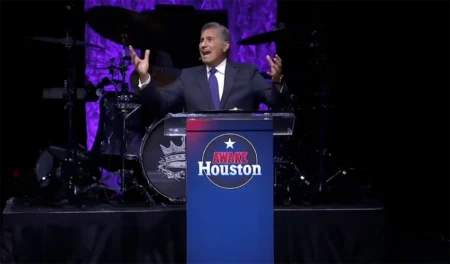
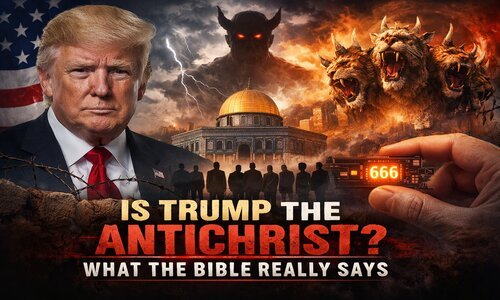
On a recent episode of The Tucker Carlson Show, Tucker Carlson did something few in conservative media have dared to do: he openly questioned whether Donald Trump could, in any sense, fit the biblical profile of the Antichrist.
It wasn’t a throwaway comment. It was a carefully framed warning.
Carlson pointed to Trump’s recent sharing of AI-generated images depicting himself alongside Jesus–imagery he argued crossed into mockery of the Christian faith. From there, he turned to Scripture, invoking the chilling description of the coming “man of lawlessness,” a figure who will “oppose and exalt himself over everything that is worshiped.” Then came the line that electrified his audience: “He will pose as God… He will mock other gods, and put himself in their place.”
And finally, the question that has since echoed across social media posts and podcasts: “Could this be the antichrist?”
For many believers, that question struck a nerve–not because they are convinced, but because Scripture itself warns of a deception so powerful that even the faithful must remain watchful. Carlson is tapping into something real: the Bible does describe a figure marked by arrogance, self-exaltation, and a chilling disregard for God.
But here is where the conversation must shift from emotion to precision.
Because identifying the Antichrist is not about spotting similarities. It’s about recognizing a complete and unmistakable fulfillment of prophecy. And when you actually lay those prophecies side by side with Trump’s life, leadership, and legacy–the argument doesn’t just weaken. It collapses.

Yes, Trump is a deeply polarizing figure. Yes, his personality often leans toward bravado, exaggeration, and self-promotion. Even many of his supporters acknowledge that. But personality alone has never been the biblical standard for identifying the Antichrist. If it were, history would be crowded with candidates–from Nero to countless tyrants who displayed far more cruelty and self-deification than anything seen in modern American politics.
What matters is not whether a leader resembles certain traits. What matters is whether he fulfills the full prophetic profile laid out across Book of Daniel, Book of Revelation, and First Epistle of John.
And that profile is far more specific–and far more global–than many realize.
Start with the most overlooked point: the Antichrist is not merely a powerful leader. He is a world ruler. The Book of Revelation describes a figure given authority over “every tribe, people, language and nation.” This is not symbolic of influence–it is a picture of unprecedented global control. Trump, despite his influence, governs one nation during a time of increasing global division, not unification.
Then there is the geopolitical structure. The Antichrist is tied to a revived system often interpreted from Book of Daniel as a ten-kingdom confederacy emerging from the remnants of the Roman Empire–commonly associated with Europe. Trump’s presidency has been defined not by integration with Europe, but by tension with it. NATO disputes, trade conflicts, and ideological clashes marked his foreign policy–not leadership over a unified continental bloc.
Next comes one of the clearest prophetic markers: a seven-year covenant involving Israel and multiple nations. This agreement–often seen as a false peace–becomes the cornerstone of the Antichrist’s rise. While Trump has brokered historic normalization agreements between Israel and several Arab states, those deals fall far short of the sweeping, time-bound covenant described in Scripture. The scale, scope, and prophetic weight simply aren’t there.
And then there is the religious dimension–arguably the most decisive of all.
The Antichrist does not operate alone. The Book of Revelation describes a second figure, often called the false prophet, who works alongside him to establish a global system of worship. Together, they introduce the “mark of the beast,” a mechanism tied to economic participation–no buying or selling without it. This is not vague symbolism; it is a structured, enforceable system that merges religion, economics, and governance into one.
Nothing in Trump’s policies, proposals, or alliances comes close to this framework. If anything he has found himself more and more at odds with religious leaders such as his current conflict with Pope Leo.
Even more striking is the ultimate claim the Antichrist will make: he will declare himself to be God and demand worship. Not admiration. Not loyalty. Worship. There is a profound difference between political ego and divine self-declaration. However exaggerated Trump’s rhetoric may be, it has never crossed into explicit claims of deity that demand worship.
In fact, if anything, Trump’s public posture–however imperfect–has often leaned in the opposite direction. He has repeatedly voiced support for Christianity, defended religious liberty, and aligned himself with pro-Israel positions that resonate deeply with many believers. His recent comments about participating in the “America Reads The Bible” marathon, including reading from 2 Chronicles alongside staff, may be symbolic–but symbolism matters. It reflects orientation, not opposition.
And that brings us to a critical point many miss: the Antichrist is not simply flawed. He is fundamentally anti-Christ–opposed in essence, not just imperfect in behavior.
Scripture also makes clear that this figure will unleash severe persecution against believers, particularly Jews and Christians. Historically, Trump’s record does not reflect that trajectory. If anything, it reflects the opposite.
So what, then, are we to make of Carlson’s warning?
At its core, it is a reminder–perhaps an important one–that Christians should not place blind trust in any political figure. That instinct is healthy. No leader should be beyond scrutiny, especially when matters of faith are involved.
But there is a difference between discernment and misidentification.
When the label “Antichrist” is applied too loosely, it doesn’t sharpen our awareness–it dulls it. It turns a precise biblical warning into a generalized insult. And in doing so, it risks leaving people unprepared for the real figure Scripture describes: a leader of astonishing charisma, global authority, and deceptive brilliance, who will not merely provoke controversy but will reshape the world itself.
That is not a role currently being played on the American political stage.
So no–Donald Trump is not the Antichrist. But the fact that the question is even being asked should serve as a wake-up call. Not about Trump, but about how easily we can drift from careful biblical understanding into reactionary speculation.
Because when the true Antichrist does rise, he won’t just spark debate.
He will command the world.