



By Mike Bain/cvnznews.com
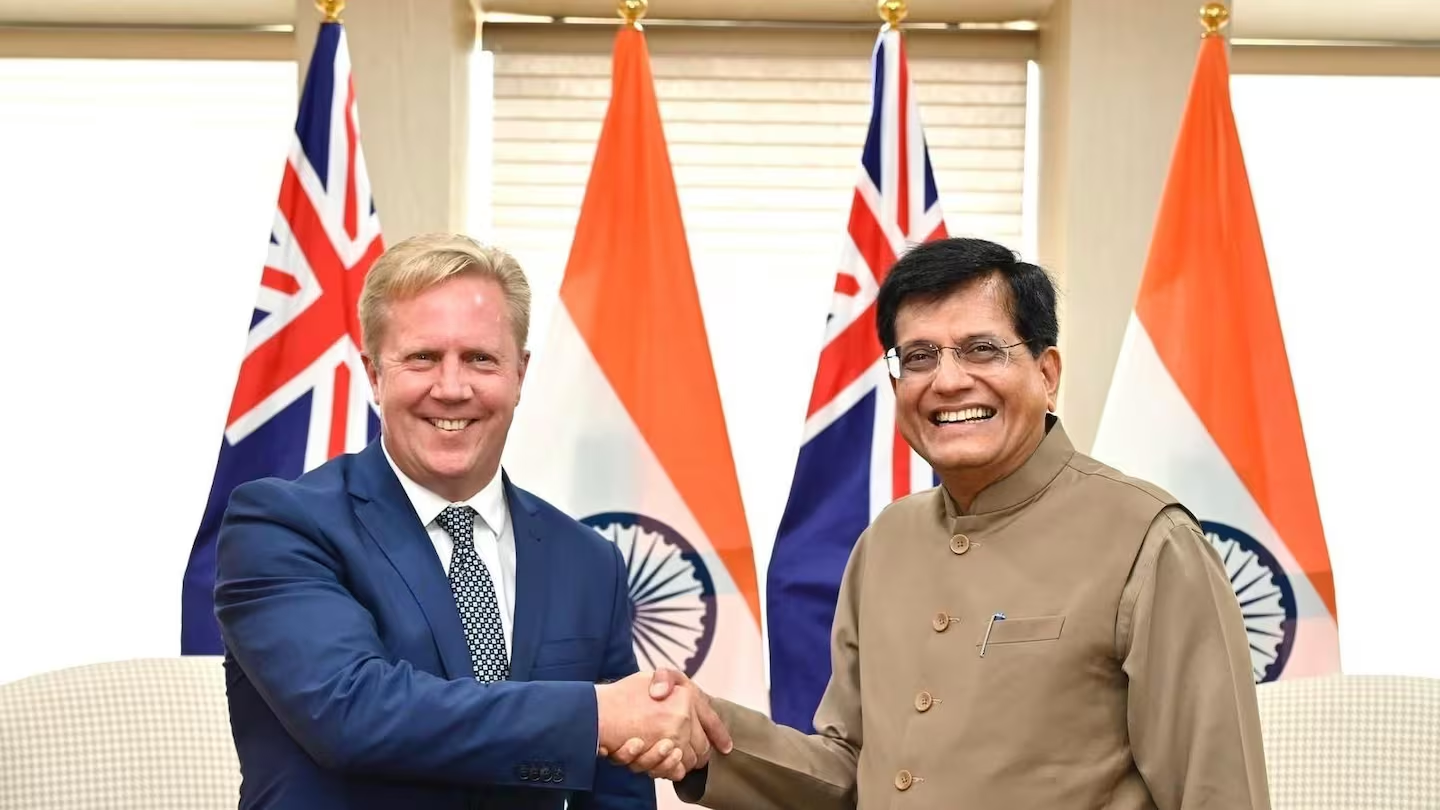
Trade and Investment Minister Todd McClay has departed for New Delhi to formally sign the New Zealand–India Free Trade Agreement, a deal the Government says will unlock major export gains in one of the world’s fastest‑growing economies. The signing delegation includes MPs from across Parliament and more than 30 New Zealand business representatives.
The agreement — long sought by successive governments — will eliminate or reduce tariffs on 95% of New Zealand’s exports, with 57% duty‑free from day one, rising to 82% once fully implemented. Key sectors including sheep meat, wool, forestry, coal, and most industrial products will see immediate or staged tariff removal. Fruit exporters will benefit from large quota increases for apples and kiwifruit, while wine tariffs will fall from 150% to as low as 25% over ten years. Mānuka honey tariffs will drop from 66% to 16.5% over five years.
McClay said the FTA demonstrates the Government’s commitment to strengthening ties with India and supports its goal of doubling export value within a decade. He will also attend an Anzac Day dawn service in India and co‑host a business summit with Indian Commerce Minister Piyush Goyal before travelling to Singapore for further trade promotion.
The Labour Party has now formally announced it will support the FTA, giving the agreement broad cross‑party backing. Labour’s endorsement removes any doubt about the deal’s political durability and signals a rare moment of unity on major trade policy.
While business groups have welcomed the agreement, the Maritime Union of New Zealand has issued a warning about the potential impact on workers. In comments reported by Scoop, the union said that any major expansion in trade must be matched with investment in New Zealand’s port workforce and infrastructure, arguing that supply‑chain resilience cannot be taken for granted.
The union also raised concerns about labour standards in trade agreements more broadly, saying workers should not be “left behind” as exporters gain new market access. Their comments reflect a wider debate about how New Zealand balances economic opportunity with protections for domestic labour and fair‑work principles.
New Zealand has pursued a trade agreement with India for more than a decade, with previous negotiations stalling over dairy access and tariff sensitivities. The conclusion of talks in December 2025 marked a significant diplomatic shift, and today’s signing represents the most substantial advance in the bilateral relationship in years.
For exporters, the deal promises new certainty and long‑term growth potential. For policymakers, it marks a strategic deepening of ties with a rising global power. And for workers’ groups, it is a reminder that trade gains must be matched with investment in people and infrastructure at home.