



by Mike Bain/Colin Ambler/cvnznews.com.
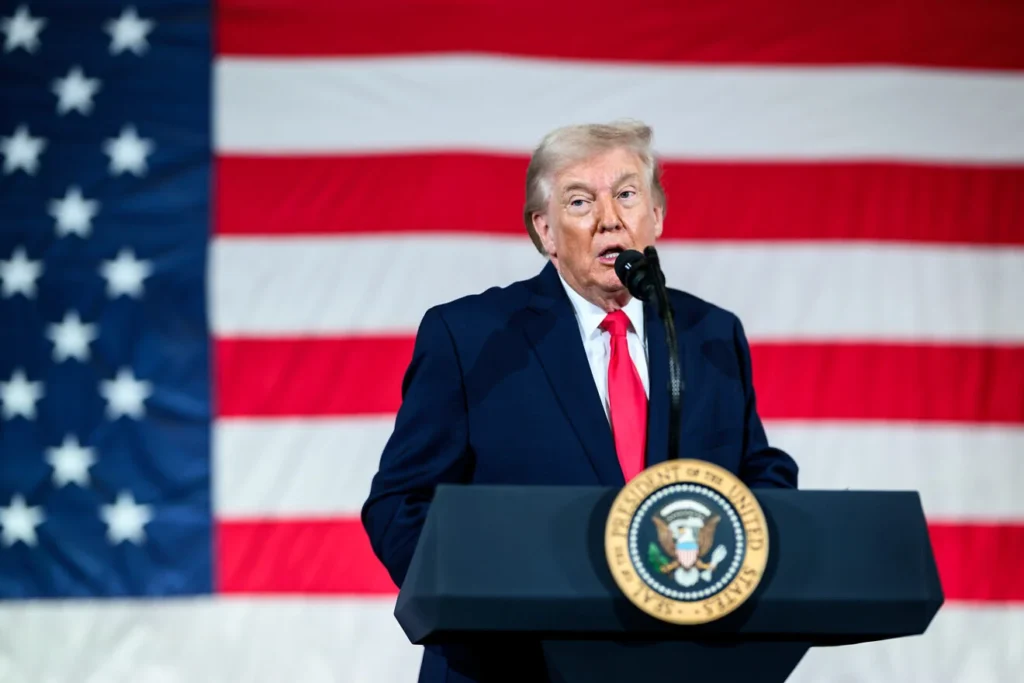
The attempted attack outside the White House Correspondents’ Dinner should have forced a rare moment of moral clarity in American politics.
Instead, within hours of Secret Service agents rushing to protect the President and evacuate guests from a scene of chaos outside one of Washington’s most secure political events, social media did what it now routinely does: it fractured the moment into ideological reaction, spectacle, and–most disturbingly–celebration and dismissal of political violence in some corners of the online left.
This is not about one post or one personality because quite frankly there are too many to list. It is about a pattern that keeps reappearing, despite repeated public backlash, professional consequences, and widespread condemnation.
The Rhetorical Line That Keeps Being Crossed
In recent years, a number of influential progressive-leaning online figures have generated controversy for violent or dehumanizing political language.
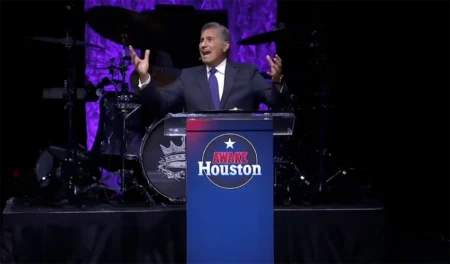
One of the most cited examples is the Left’s new poster boy, streamer Hasan Piker, who has previously used explicitly violent phrasing in political commentary, including:
“Kll the mther***. Let the streets soak in their red, capitalist blood!”
Supporters frame this as performative outrage within internet culture or rhetorical excess in political commentary.
Critics argue something simpler: that when violent imagery is repeated by large audiences without meaningful pushback, it stops functioning as metaphor and begins to normalize a moral vocabulary where political opponents are spoken about in terms of physical elimination.
Even if not intended literally, the effect is cumulative. Language reshapes emotional boundaries. And over time, those boundaries matter.
When Political Satire Stops Feeling Like Satire
The controversy does not stop with online streamers.
Just a day before the White House Correspondents’ Dinner, comedian Jimmy Kimmel drew renewed attention for remarks mocking Donald and Melania Trump, including the line:
“Mrs. Trump… you have a glow like an expectant widow.”
Defenders call it political satire in a tradition of harsh comedic criticism. Critics argue that in an environment already charged with real-world threats, even humor about death and assassination takes on a different weight.
Whether intended as comedy or not, the broader concern is what kind of political atmosphere is being reinforced when public figures repeatedly frame opponents in terms of death, elimination, or mourning.
Institutional Roles and Public Responsibility
The same dynamic reappears in how political tragedy is processed online.
Following assassination attempts or politically motivated attacks in recent years–including incidents involving public figures like Charlie Kirk and others–viral reactions have repeatedly surfaced in which users expressed mockery, indifference, or implied satisfaction that violence had occurred or nearly succeeded.
Perhaps the most controversial reactions, however, come not from celebrities–but from ordinary social media users whose posts have gone viral after the attack.
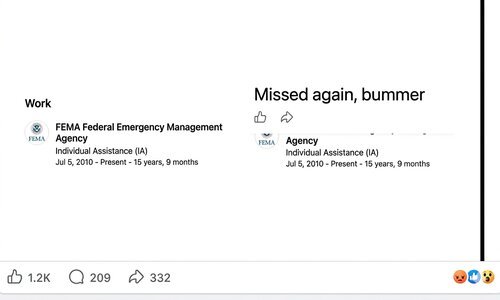
Screenshots circulating widely show individuals identified as public employees or professionals reacting to the failed assassination attempt with phrases such as:
“Missed again, bummer.”
The individual behind the post has been described online as a long-time federal employee with FEMA, prompting intense debate about whether personal political expression of this kind is compatible with public service roles–especially when directed at an attempted assassination of a sitting president.
Others have pointed to similar reactions from educators and healthcare workers, including posts allegedly celebrating or minimizing the seriousness of the attack.
One teacher, according to widely shared screenshots, was reported to have made remarks interpreted as wishing for “better aim” in reference to political violence. An ER nurse associated with political activism has also drawn criticism for already creating legal defense fundraising for the accused attacker on GoFundMe with the offhand remark that he expects millions to be donated.
In each case, the facts of individual context vary and are often disputed–but the viral pattern remains the same: expressions of approval or minimization of political violence circulating faster than any institutional response can contain.
That shift is the real issue.
Even if disciplinary outcomes differ case by case, the underlying question remains unresolved: what does it mean when individuals in public-facing or publicly funded roles treat attempted political assassination as a joke, disappointment, or cause for support?
A Closed Loop of Escalation
What makes this cycle especially dangerous is not just the presence of extreme rhetoric, but its self-reinforcing nature.
Online ecosystems reward emotional intensity. Outrage spreads faster than correction. Provocation travels farther than restraint. And within that structure, violent language becomes a kind of currency–shared, clipped, amplified, and recycled until it feels normal.
That is how escalation happens without formal coordination.
No central authority is required. Just repetition.
A streamer uses violent imagery. Clips circulate. Opponents respond with their own outrage. Screenshots of celebratory reactions to real-world violence emerge after each attack or attempt. Each side sees confirmation of what it already believes. And the cycle tightens.
The Real Line That Has Been Crossed
The most important shift in this environment is not simply political disagreement. It is the increasing emotional acceptability of political violence as commentary, irony, or reaction content.
Once that line is crossed–even inconsistently, even in pockets–the democratic baseline erodes. Because democracy depends on something more fragile than institutions: a shared belief that political opponents must never be physically destroyed, only defeated through argument, persuasion, and votes.
That belief is what is weakening.
And what makes it harder to restore is not just extremists or fringe actors–but the way viral culture repeatedly rewards moments where that boundary is tested, blurred, or broken for attention.
After the White House Gala Attack
The attack outside the White House Correspondents’ Dinner should have been a moment where that boundary was reaffirmed without ambiguity.
Instead, it became another entry in a growing archive of incidents where political violence is not only condemned–but also refracted through ideological celebration, mockery, or justification in some corners of online discourse.
And until that pattern is confronted directly–not selectively, not temporarily, but structurally–it will continue to repeat.
Because the real crisis is not just that political violence exists.
It is that parts of the digital political culture are slowly learning to live alongside it without treating it as an absolute moral red line.