

Supplied By SNAP Aotearoa New Zealand
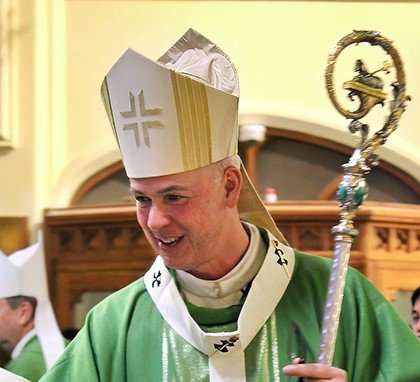
Wellington Archbishop Paul Martin recently encouraged New Zealand Catholics
to contribute more actively to parish life and to foster priestly and religious
vocations. (“Archbishop: Get involved and support the Church’s mission,”
CathNews New Zealand, 1 May 2026) This raises an awkward modern
question: contribute what, exactly?
From the outside, the institutional model of the Catholic Church can appear
remarkably unchanged. Women answer the parish phones, organise the
flowers, coordinate the meals, clean the linens, manage the diaries, and keep
the entire operation functioning quietly in the background.
Meanwhile, men remain visible at microphones and near collection plates, filling
other frontline supporting roles.
One suspects the Archbishop’s appeal for “greater participation” may translate
loosely to more women doing unpaid administration; more men counting the
money; and, ideally, a fresh intake of young men willing to commit to lifelong
celibate clerical culture before fully developing frontal lobes or career options.
The appeal for vocations itself carries a certain irony in post–Royal Commission
Aotearoa. After decades of revelations concerning abuse, secrecy, institutional
protectionism, and clerical dysfunction, the bishops now appear genuinely
puzzled as to why parents are not enthusiastically encouraging sons toward the
seminary.
Historically, vocation stories were often wrapped in romantic language — “the
call,” “discernment,” “service.” Yet today many Catholics quietly recognise
another reality underneath clerical betrayal, insular schooling systems,
emotional delinquency, theological conditioning, and the long-gone prestige
once attached to producing “a priest in the family.”
Curiously, while priests still praise mothers for nurturing vocations, real fathers
today can no longer say, “Yes son, this appears a stable and healthy
institutional environment.”
The irony deepens when one remembers Christ’s own warning in the Gospel of
Matthew: “They tie up heavy, cumbersome loads and put them on other
people’s shoulders, but they themselves are not willing to lift a finger to move
them.” (23:4)
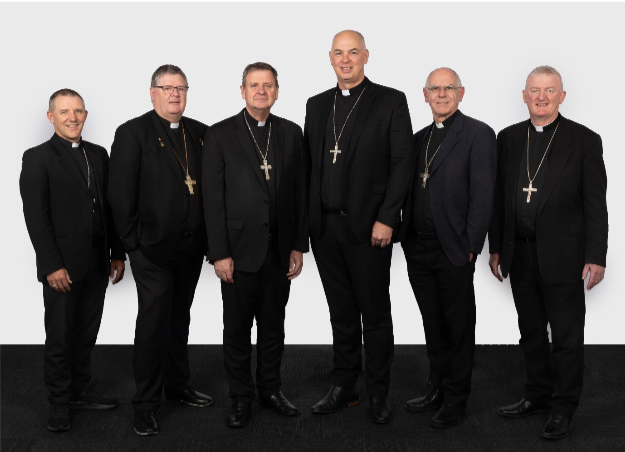
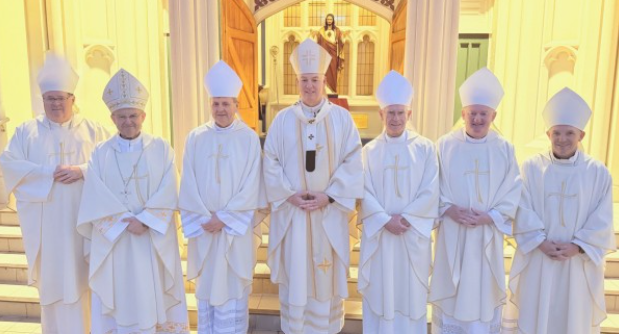
An unfortunate passage to revisit while observing endless clerical photo
opportunities featuring a row of bishops dressed like an episcopal remake
of The Godfather Part IV.
Then there is clerical culture itself — a world of titles, vestments, rituals,
conferences, assemblies, synods, councils, formation retreats, consultation
groups, and strategic gatherings about future gatherings. The modern Church
increasingly resembles a corporate structure that accidentally retained incense.
One cannot help but admire the stamina involved. Bishops traverse Oceania
and Rome with admirable regularity in the name of mission, dialogue,
accompaniment, discernment, listening, and pastoral outreach — all the while
ordinary parishioners wonder whether Zoom was quietly condemned as
modernism sometime after the pandemic.
Meanwhile survivors of abuse continue requesting something comparatively
simple: meaningful accountability, timely apologies, proper redress, and
institutional humility. But these requests somehow remain far more difficult to
organise than international clergy conferences.
The optics are particularly striking in media photographs. Endless shots of that
row of bishops now in coordinated liturgical attire smiling solemnly amidst a
golden light while parish communities merge, shrink, and age around them.
One almost expects a new Netflix title: “Succession: Episcopal Power Edition.”
Christ, notably, did not say: “By their vestments ye shall know them.” He said:
“By their fruits you will know them.”
This inevitably raises uncomfortable questions about exactly what fruits modern
clerical culture has produced — beyond property portfolios, safeguarding
reviews, strategic plans, and increasingly sophisticated media departments.
We have to ask: What exactly is the role of laity in this structure today? This
remains genuinely unclear. Again, lay women, at minimum, appear to keep
parish life operational. But lay men? Outside of finance committees, ushering,
moving chairs, reading notices, some minor pastoral roles, or being gently
encouraged towards the priesthood pipeline, the institutional imagination seems
surprisingly limited.
Perhaps that is the deeper issue beneath Archbishop Martin’s call. He asks lay
people to “contribute more,” while still struggling to articulate a meaningful
model of shared authority that is not ultimately subordinate to clerical power.
Because after everything uncovered in recent years, many Catholics are no
longer asking: “How can we serve the Church?” They are asking: “Why does
the Church still seem structurally designed to serve only the clergy?”
As Austrian-born Catholic priest and social critic Ivan Illich concluded, modern
institutions that become self-referential begin to distort the very purposes they
were created to serve, prioritising their own continuity over their original
mission.
If Archbishop Martin truly wished to renew parish life, he might begin not by
asking for more “contribution” from the familiar few, but by examining how
power, labour, accountability, and visibility are distributed. Until then, his call
sounds less like a shared mission and more like an invoice—sent, once again,
to the same exhausted addresses, as if nothing else in the system required
attention.