


By Mike Bain/cvnznews.com
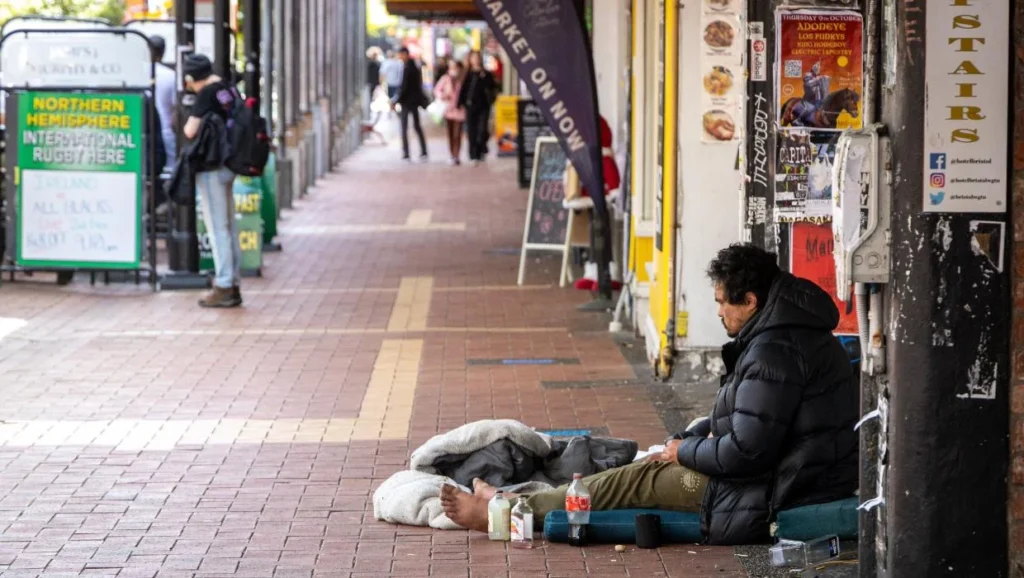
The Government is pressing ahead with new police “move‑on” powers despite warnings from its own agencies that the policy will not reduce crime and risks criminalising homelessness — including children as young as 14.
Both Labour and the Green Party say the legislation reflects a political desire for visible toughness rather than a genuine attempt to address the causes of homelessness. Their criticism lands in a week when officials from Justice, Police, Treasury and Housing all cautioned that the policy is unlikely to work and may increase harm.
Labour’s housing spokesperson Kieran McAnulty says the Government has chosen “a headline‑grabbing law‑and‑order approach” over evidence‑based solutions.
“Moving people on from Queen Street doesn’t solve homelessness. It just shifts the problem from one street corner to another,” he said. “You cannot arrest your way out of homelessness.”
Justice spokesperson Camilla Belich said the bill would allow police to issue move‑on orders to homeless teenagers and fine them if they fail to comply.
“When every major agency warns against your policy and you ignore them all, that tells New Zealanders this is about politics, not public safety,” she said.
Green Party co‑leader Chlöe Swarbrick said the policy will have “disastrous consequences,” arguing that the Government is refusing to invest in the services that actually reduce homelessness.
“It costs $200,000 a year to put someone in prison. The Government won’t spend a fraction of that on support that would actually help people get back on their feet,” she said.
Swarbrick said police have been clear they are not social workers, while social agencies are facing cuts.
“Instead of housing people, the Government is now criminalising them for not having a home,” she said. “This is punching down on the most vulnerable.
Across Scripture, the treatment of the poor, the homeless, and the stranger is not a side issue — it is a diagnostic test of a nation’s moral health.
- “Do not mistreat the foreigner or the fatherless, and do not oppress the widow.” (Deut 24:17)
- “Whatever you did for the least of these brothers and sisters of mine, you did for me.” (Matt 25:40)
- “Woe to those who make unjust laws… to deny justice to the oppressed.” (Isaiah 10:1–2)
The biblical pattern is clear: justice is not measured by how a society treats the powerful, but by how it treats those with no power at all.
Policies that push the vulnerable out of sight may satisfy public frustration, but they do not meet the biblical standard of justice, mercy, or righteousness. Scripture consistently warns against systems that punish people for circumstances they cannot escape.
The central issue is not whether antisocial behaviour should be addressed — it should. The issue is whether the Government is choosing a tool that its own experts say will fail, while ignoring the deeper causes of homelessness: housing shortages, mental health gaps, addiction, and poverty.
The Opposition argues that the Government is choosing visibility over effectiveness, enforcement over compassion, and political theatre over long‑term solutions.
In biblical terms, it is the difference between managing the crowd and ministering to the broken.