





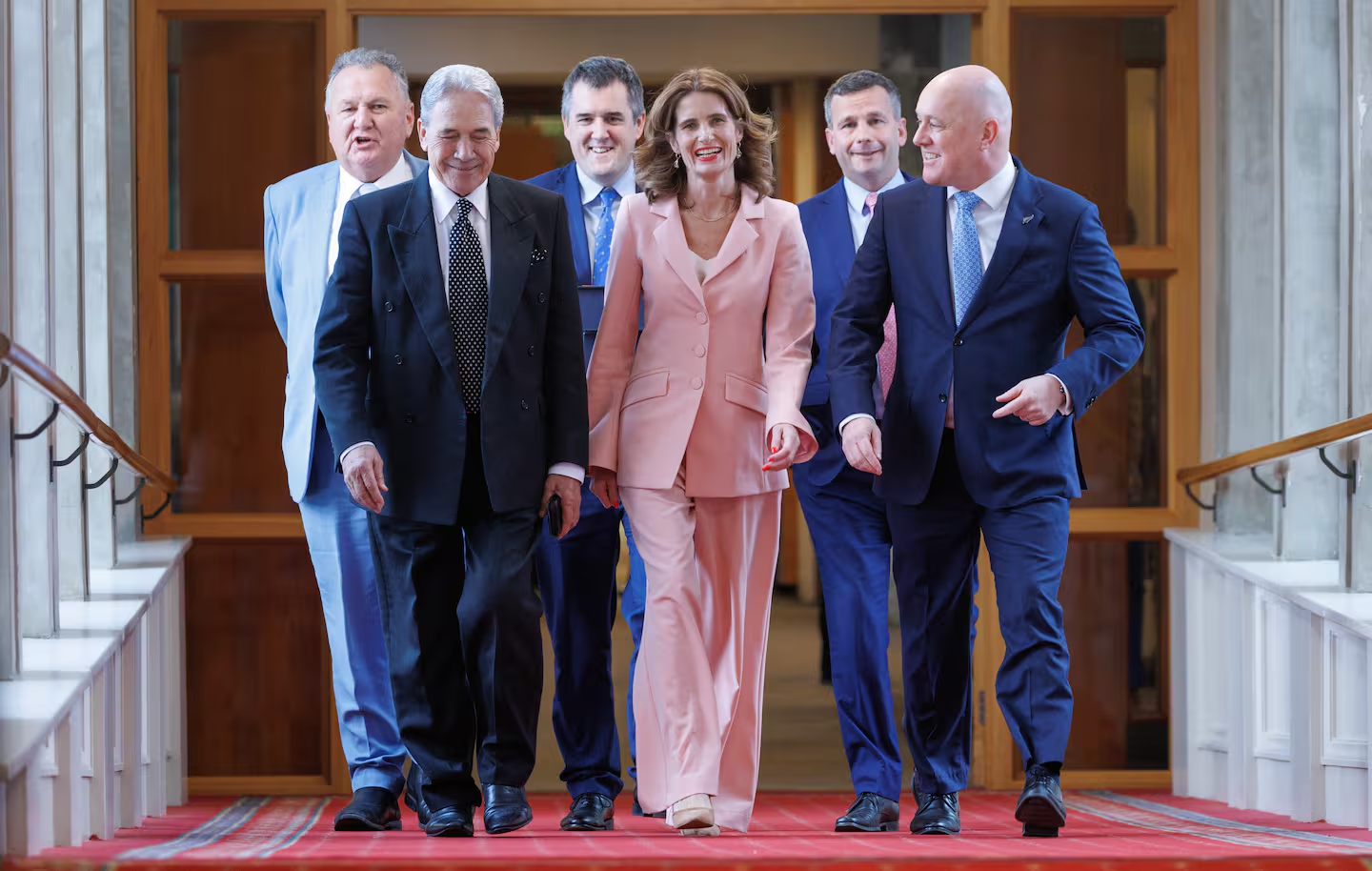
By Mike Bain, Colin Ambler, Sarah McMillan/cvnznews.com
Finance Minister Nicola Willis has delivered her final Budget of the term — a document that pours billions into classrooms, hospitals and major transport links, while quietly tightening the screws on banks and high‑value charitable deductions. It is a Budget built to project discipline, signal momentum, and draw sharp political battle lines heading into election season.
Willis arrived at the lock‑up with a grin, telling reporters she was “a little early — like the surplus”. Against earlier forecasts, the Government now expects to return to a $2.6 billion surplus by 2028‑29, using her preferred ObegalX measure. But the path there is paved with higher‑than‑expected inflation boosting the tax take by $3.1b — a reality that will be felt in households long before it benefits the Crown.
Schools and Hospitals Take Centre Stage
Education Minister Erica Stanford secured $309.6m to build 232 new classrooms for more than 4700 students, alongside $160m for school property maintenance and another $160.4m for operational funding. Up to ten schools will undergo full redevelopment.
Health Minister Simeon Brown held to the Government’s earlier commitment of a $5.5b increase in core health spending over four years. Pharmac receives a $54m top‑up to cover cost blowouts and purchase new medicines. Total health spending climbs to $34.2b next year.
Major hospital redevelopments continue, including a new 158‑bed ward tower at Whangārei Hospital, due in 2031, and further work in Tauranga, Palmerston North and Hawke’s Bay. The eligibility age for free bowel screening drops from 58 to 56, benefiting an estimated 200,000 New Zealanders.
Waikato Motorists Score a Win
Infrastructure Minister Chris Bishop unveiled $7b in infrastructure investment, including $1.8b for the Cambridge–Piarere Expressway, a long‑awaited link he calls “critical” for freight and economic flow between Auckland, Waikato, Bay of Plenty and the lower North Island. The road boasts a benefit‑cost ratio of up to 3.1.
Rail receives $1.075b through to 2030, plus a further $106.9m for track renewals in Auckland and Wellington.
Despite high fuel prices, the Government held off direct relief for households, though it has set aside a $450m fuel contingency fund. Willis signalled she would pause the planned 12c‑a‑litre fuel tax hike in January if prices remain elevated.
Banks Hit With Surprise Tax — And Charities Face a Cap
Banks and financial institutions will face a new levy raising $209m, less than 1% of the big four’s profits but still a notable shift. A loophole allowing shareholders to dodge tax through company loans will be closed, raising $146m over four years.
Charitable donation deductions will now be capped at $100,000, expected to bring in $52.6m — a move likely to spark debate in the philanthropic sector.
Superannuation Sparks Coalition Tension
Willis used the Budget launch to attack NZ First and Labour for refusing to consider superannuation reform, warning that doing nothing “robs everyone under 50”. NZ First’s Shane Jones deferred comment to Winston Peters, while Act’s David Seymour said “the winds of change are blowing”.
Peters did, however, secure a win: a new photo‑ID SuperGold card for more than 900,000 seniors, rolling out in 2028 at a cost of $42m.
Law and Order, Councils and Climate
A $1.3b law‑and‑order package includes replacing the Greymouth and Whanganui police stations and a $477m boost for Corrections to manage a rising prison population.
Councils will receive $400m in incentives for consenting new homes, replacing the earlier GST‑sharing promise. A further $294m funds digitisation of the resource management system — including what Bishop calls a “one‑map future” for planning rules.
Treasury warns child poverty targets for 2028 will be missed, and New Zealand is unlikely to meet its first Paris climate goal without “sizeable offshore” carbon credit purchases — something the Government refuses to do.