



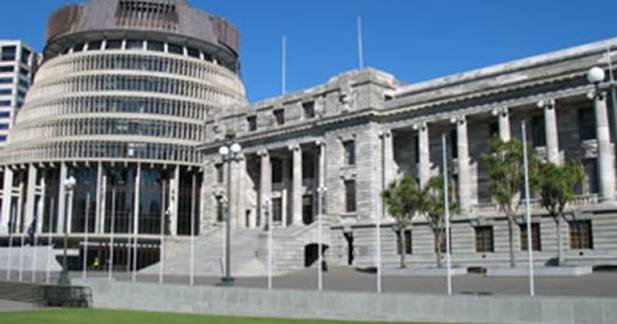
OPINION: Michael Swanson.
Incremental change, critical junctures, and the impact of path dependency.
New Zealand occupies a curious position in the global democratic landscape. It is routinely ranked among the world’s most stable, transparent, and effective democracies, yet its institutional architecture rests on foundations that are, by comparative standards, remarkably thin. There is no written constitution. Parliament is supreme.
A single legislative chamber, elected under a proportional system adopted barely three decades ago, makes decisions that in other countries would require supermajority votes, constitutional amendments, or federal negotiations. The question facing New Zealand is not whether its institutions will change (they will), but whether that change will come through the patient accumulation of incremental reforms, or through the kind of decisive rupture that political scientists call a critical juncture.
The Weight of the Past
To understand where New Zealand’s democracy might go, it helps first to understand why it looks the way it does. The answer lies in path dependence: the idea that choices made early in an institution’s life constrain and shape the choices available later, long after the original conditions that prompted those choices have disappeared.
New Zealand’s institutional DNA was set in the colonial period. Westminster parliamentary sovereignty, imported from Britain, made sense in the context of a settler colony that needed efficient, centralised governance to administer a dispersed population over difficult terrain. The first-past-the-post (FPP) electoral system served a two-party political culture that no longer exists. The absence of a written (singular, codified) constitution reflected both the pragmatic British inheritance and a confidence (perhaps a complacency?) that good government was a matter of culture and convention, not legal architecture.
These early choices locked in pathways. A unitary state became self-reinforcing: no federalism meant no federal courts, which meant no tradition of judicial review, which meant no constitutional bill of rights with real teeth. The Crown-Māori relationship, enshrined in the Treaty of Waitangi but long subordinated to parliamentary sovereignty, was never given the constitutional expression that its foundational status arguably demanded. When the Mixed Member Proportional (MMP) system arrived in 1996 (itself a critical juncture) it was grafted onto an institutional framework designed for majoritarianism, producing a hybrid that works tolerably well but can creak under pressure.
Path dependence does not mean path determinism. Institutions can and do change. But it does mean that reform is always more expensive than it looks, because any change has to negotiate accumulated interests, conventions, and expectations that have grown up around existing arrangements (which makes the change to MMP even more impressive!).
The Case for Incremental Change
The dominant mode of institutional change in New Zealand has always been gradualism, and there is a strong case that this should remain so. New Zealand’s political culture prizes pragmatism over ideology. Its small size and high social trust have historically enabled informal coordination that substitutes for formal constitutional machinery. Select committees have become meaningfully more rigorous. The Treaty settlement process, while painfully slow, has produced durable agreements that a rushed constitutional transformation might have undermined. The Supreme Court, established in 2004 replacing the Privy Council, has quietly developed a more distinctly New Zealand jurisprudence, incrementally, without fanfare.
Incremental reform also carries lower risk. Constitutions are blunt instruments. A written constitution adopted in a moment of political consensus can become a straitjacket when that consensus fades, or can entrench the priorities of one generation in ways that frustrate the next. New Zealand’s flexible arrangements have allowed adaptation (to MMP, to the Treaty settlement era, to growing recognition of Māori constitutional interests) precisely because nothing is irreversibly fixed.
The strongest version of this argument holds that New Zealand’s institutions are not broken. Transparency International consistently places the country at or near the top of its corruption perceptions index. Voter turnout, while declining, remains respectable. Government formation under MMP has been orderly. The case for radical surgery on a functioning body is harder to make than it sounds.
The Case for a Seismic Shift
Yet there are gathering pressures that incremental adjustment may struggle to absorb. The constitutional status of the Treaty of Waitangi remains unresolved in any foundational sense. Māori electoral representation, the Waitangi Tribunal, and Treaty clauses scattered across legislation are significant achievements, but they amount to a patchwork rather than a coherent settlement of the Crown-Māori constitutional relationship. This is not merely a matter of symbolic recognition; it has practical consequences for the legitimacy of governance in a country where tangata whenua have an explicit and prior claim on the land.
There is also the question of democratic resilience. New Zealand’s lack of formal constitutional constraints means that a determined parliamentary majority can move very fast, for better or worse. The speed with which the COVID response was mounted was in many respects admirable. But the same institutional architecture could be used to concentrate power in ways that would be harder to reverse than in systems with harder constitutional brakes. The Human Rights Act and the New Zealand Bill of Rights Act operate as soft constraints at best, subject always to the override of a simple parliamentary majority.
Add to this the creeping delegitimisation of political institutions that is visible across democratic societies, declining party membership, distrust of media, the fracturing of shared informational environments, and the argument strengthens that piecemeal repairs may not be sufficient. Some institutional challenges are structural, and structural challenges may require structural responses.

 https://natlib.govt.nz/
The Paradox of Critical Junctures
History suggests that critical junctures in New Zealand’s democratic development, the introduction of women’s suffrage in 1893, the welfare state reforms of the 1930s, the neoliberal restructuring of the 1980s, and the shift to MMP have often arrived not through deliberate constitutional design but through crisis, exhaustion, or the exploitation of opportunity by determined political actors. The MMP referendum itself was born of public fury at a FPP system that delivered the Muldoon and Lange governments (often) large parliamentary majorities on minority (or at least wafer thin) vote shares.
This is the paradox: New Zealand’s most significant democratic transformations have come suddenly, at moments of political stress, yet the institutional framework has no reliable mechanism for channelling that stress into deliberate constitutional redesign. A citizens’ assembly, a constitutional convention, a Treaty-based co-design process; these are the tools other democracies have used to manage fundamental change in an orderly way. New Zealand has flirted with them but never committed.
Choosing a Path
The choice between incrementalism and transformation is, in the end, a false binary. The real question is whether New Zealand can develop the institutional capacity for deliberate, structured constitutional reflection before a crisis forces the issue. This means investing in civic constitutional literacy, creating legitimate forums for Māori and non-Māori to work through the foundational questions together, and acknowledging honestly that path dependence has bequeathed some arrangements that serve the present less well than the past.
New Zealand’s democratic tradition is genuinely something to be proud of. But pride can shade into complacency. The institutions that have served well are not the same thing as the institutions that will serve well. The long game requires knowing the difference.