




Abby Trivett
Artificial intelligence is no longer simply a Silicon Valley experiment. It has become a global moral and security concern—and now the Vatican is bringing some of the world’s most influential thinkers together to confront it.
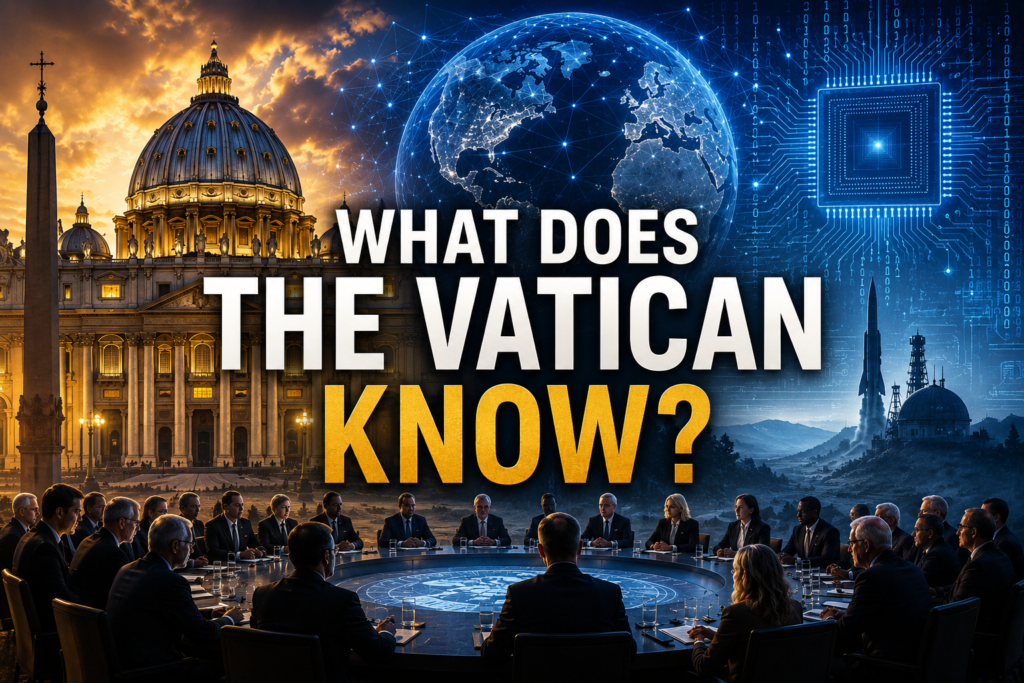
More than 200 participants gathered this week at Borgo Laudato Si’ in the Pontifical Gardens of Castel Gandolfo for the Global Nobel Laureates Assembly on Artificial Intelligence and Nuclear War.
According to EWTN News, the July 14-16 summit is addressing artificial intelligence governance, nuclear disarmament and the risks surrounding autonomous weapons.

The gathering includes 30 Nobel laureates, 20 of the top leading artificial intelligence experts, along with former heads of state and government, according to Vatican News. Representatives from Anthropic, OpenAI, DeepMind, Google and AARU are participating alongside scholars and researchers from prominent institutions around the world.
The scale of this gathering alone should make people pause.
When Nobel laureates, scientists, political leaders, universities and technology organizations all enter the same conversation about artificial intelligence and nuclear war, it suggests the issue has moved far beyond questions of convenience or productivity. AI is increasingly being treated as a matter of international security, moral responsibility and potentially even human survival.
Why is this conversation happening now?
The summit is unfolding as nations face growing instability, international conflict and what Vatican News described as an increasingly complex nuclear landscape. The gathering is inspired by Pope Leo XIV’s encyclical, Magnifica Humanitas, which is dedicated to protecting the human person in the age of artificial intelligence.
Humanity is developing technologies with enormous potential, but the ethical structures intended to govern those technologies are still being debated. The concern is not necessarily that every advancement in AI is inherently dangerous. Rather, the question is whether human wisdom and accountability are being used with the technology.
Alessio Pecorario, an organizer of the summit, told EWTN News that disarmament must involve more than weapons.
“Disarmament in the Church’s social doctrine is not only the disarmament of weapons, obviously, but also the disarmament of spirits; it is the disarmament of the economy,” Pecorario said.
He described AI governance not as another layer of bureaucracy but as a collective effort among business, religious and academic leaders to ensure that human beings remain in “positive control” of the challenges facing the world.
That phrase may be one of the summit’s most important.
The issue is not merely whether machines can perform increasingly sophisticated tasks. It is whether humanity will retain moral responsibility for the decisions made with those tools. Who establishes the limits? Who is held accountable when technology is misused? And what happens when international competition outpaces ethical restraint?
This moment should inspire neither blind fear nor unquestioning enthusiasm. It should inspire discernment.
Humanity is entering a new technological era, and the real question may not be how intelligent its machines can become—but whether those creating and governing them will have the wisdom to remain accountable for what they unleash.



1 Comment
There is another nuance to the phrase”…to ensure that human beings remain in “positive control” of the challenges facing the world.” The fact that they are arrogant enough to think that they are.
I think the gathering is representative that they dont know what they are doing, nor what the future will hold.