



OPINION: Michael Swanson
With the election drawing closer, one of the quieter but genuinely consequential questions hanging over the new Parliament is who will sit in the Speaker’s chair.
It is not a question that gets the same attention as who becomes prime minister, but it shapes how the House runs for the next three years, and this time round there are more moving parts than usual.
The party vote seat problem
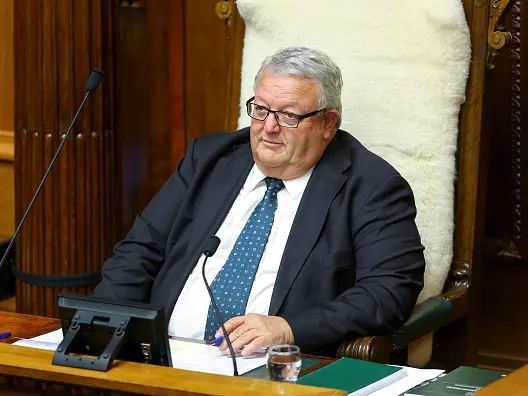
I recently wrote about the party vote problem facing National, and how this problem could reshape the list rankings that determine which MPs actually make it back to Wellington. That matters enormously here, because current Speaker of the House Gerry Brownlee, is (at the time of writing) standing again this year as a list candidate. Brownlee stepped aside from being an electorate MP back in 2020 after losing the Ilam electorate in the red wave, with National’s Hamish Campbell winning the seat back from Labour in 2023.
This sort of arrangement isn’t uncommon under MMP for a sitting Speaker, who by convention steps back from overtly partisan campaigning. But it does mean Brownlee’s return to Parliament rests entirely on National’s share of the party vote and where he sits on the party’s list. If National’s vote share slips even modestly from 2023, and enough list MPs are squeezed out as electorate wins eat into the number of seats available to the list, a veteran figure like Brownlee is not automatically guaranteed a place. It is the same overhang and proportionality question Monday’s article walked through, just applied to one very specific individual.
Brownlee has spent three decades in Parliament, so it isn’t outside the realms of possibility that he changes his mind and chooses to retire instead, but at this stage he appears to be focused on coming back for another stint. Either way, the effect is the same. There is a possibility parliaments new term kicks off without him in the chair, meaning someone new will have to step up.
Who else is in the frame
If the Speakership does come open, the field is wider than it might first appear. The role is elected by the whole House, not just the governing party, so candidates can in theory come from any bench, and recent history shows the numbers, not just party allegiance, often decide who gets it.
Two to rule out immediately are Maureen Pugh and Greg O’Connor. As the current Assistant Speakers, both would be in a good position to take on the role, but for various reasons both have decided 2026 spells the end of their (current) parliamentary careers. Names from further afield, including senior list MPs with long institutional memory, are also the sort of figures whips quietly sound out once an election result is known, even if they are not the obvious front-runners today.
There is only one really clear candidate at this point – the current deputy speaker, Barbara Kuriger.

Barbara Kuriger, the favourite
The name most likely to come up first, though, is the current Deputy Speaker, Barbara Kuriger. She has held the role since December 2023, giving her three years of hands-on experience chairing the House, and she sits in about as safe a National seat as exists, Taranaki-King Country, which the party has held since the electorate was created in 1996. Unlike Brownlee, her return to Parliament is not remotely in doubt, and unlike a fresh appointment, she would need no bedding-in period.
If Kuriger were to become Speaker, she would be only the second woman to hold the role in New Zealand’s history. The first female Speaker of the House, Margaret Wilson, held the role for Labour from 2005 to 2008 during a period when women simultaneously held the country’s top four constitutional offices. Kuriger could assume the role two decades after Wilson assumed the position.
But, Kuriger taking on the top job assumes it is likely to be a National Party MP who takes on the job, and that there aren’t other options who could pop up.

The 1993 precedent, and why a close result changes everything
All of this assumes a reasonably comfortable election result for whichever bloc wins.
History suggests that assumption can break down fast. After the 1993 election, National won government with a majority of exactly one seat. At the time the Speaker could not vote except to break a tie, so if National had appointed a Speaker from its own ranks in the usual way, it would have effectively handed away its majority on the floor. Prime Minister Jim Bolger’s solution was to offer the Speakership to Labour’s Peter Tapsell, a former Cabinet minister who accepted despite misgivings within his own party. Tapsell held the chair for the rest of that term, the first Māori Speaker and the first Speaker from a party other than the government’s since 1943.
While these days the Speaker is allowed to vote in Parliament, there’s still a slightly interesting situation could arise in 2026.
Firstly, National may not want to impact their own numbers when it comes to jobs in the House, and could therefore look to one of their coalition partners for a new Speaker – maybe someone like David Wilson (NZ First) could fit the bill (side note: this is my dream scenario, where Dr David Wilson MP works in tandem Dr David Wilson Clerk of the House). Its an unlikely situation, but can’t be ruled out.
Secondly, and more likely, is the 1993 scenario – reaching across the aisle to a senior/long-serving Labour MP who might take the big chair. There are a few potentials, the likes of Megan Woods or Deborah Russell are probably sitting someone where at the top of the pile. The bigger question in both situations is, would those parties want to take the Speaker’s chair?
This is also not just a National problem as Labour could face a similar conundrum if they find their coalition clinging to a bare-majority in the wake of the election and have to turn to National to take the big comfy chair at the centre of the House.
The big difference to 1993 however, is that the consideration for why you’d do this is different – the Speaker can vote these days, but losing someone to the role of Speaker when your caucus is already feeling the squeeze means you have to find someone senior enough (and someone well versed in the rules) without giving up someone who may be needed to take on Ministerial work. So, not the problem of voting numbers, but more an issue of having the right people to do the right jobs.
It is a genuine precedent, not just a historical curiosity. If the 2026 result produces anything like as tight a margin as 1993, whichever parties forms government would face the same underlying maths problem. It would not be the popular option within a governing caucus keen to reward its own, but it has been done before precisely because the numbers on the floor of the House can matter more than tradition. Finding the right person for the job can have a major impact on how the House works, and how the business of government functions over the next three years.
Whatever happens, the shape of the next Speakership will likely tell us as much about how tight this election turns out to be as it does about who Parliament rates as a fair and capable chair.




1 Comment
Pingback: Have Opportunity missed a trick on tax reform? - cvnznews.com