



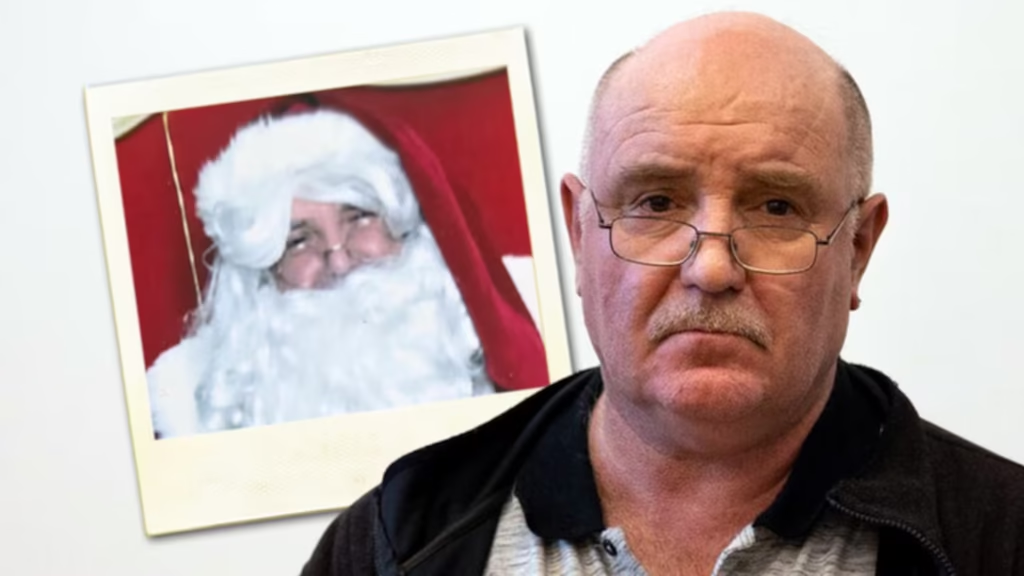
Sarah McMillan/cvnznews.com
The leader of the New Zealand Conservatives says damning findings into the Teaching Council’s handling of convicted child sex offender Timothy Fisher should force a fundamental rethink of the regulator’s priorities, warning that protecting children must come before ideology.

Helen Houghton has called for an urgent safeguarding review after an independent report by barrister Katherine Anderson KC found there were grounds to strike Fisher off the teaching register as early as 2015.
Despite serious warning signs, Fisher continued teaching in a number of schools before later being convicted of sexual offences against children.
“The first responsibility of the Teaching Council is to protect children,” Houghton said.
“It is not to protect the reputation of the profession, avoid difficult decisions, or pursue an institutional agenda at the expense of its core responsibilities.”
The case has shocked many parents and education observers, raising questions about how concerns were handled and whether opportunities to protect children were missed.
For Houghton, the issue goes beyond a single individual. She argues the Fisher case exposes deeper concerns about the priorities of New Zealand’s teaching regulator.
“Parents should be able to send their children to school with confidence that the people entrusted with their care have been properly vetted, are appropriately registered, and have been subject to decisive action when serious safeguarding concerns arise,” she said.

The controversy comes amid wider public debate about the role of the Teaching Council and the standards expected of teachers.
Houghton questioned why teachers expressing views at odds with activist or ideological movements can find themselves facing professional scrutiny, while warning signs surrounding a future convicted child sex offender were not acted upon more quickly.
“We need a regulator that is rigorous when children are at risk, fair when teachers express lawful and professionally appropriate dissent, and accountable when its own decisions fail,” she said.
The Conservative Party is now calling for an urgent review of the Council’s safeguarding processes, stronger vetting and registration requirements, a full examination of decision-making in the Fisher case, and greater transparency in disciplinary procedures.
At the centre of Houghton’s argument is a simple principle.
“Every child deserves to be safe at school. Every parent deserves confidence that safeguarding warnings will be taken seriously,” she said.
The Fisher case has become a stark test of whether New Zealand’s education system is placing child protection where most parents believe it belongs: at the very top of the priority list.