


Colin Ambler/cvnznews.com

Election Hui With Harry Tam Sparks Political Firestorm
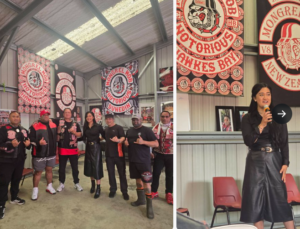
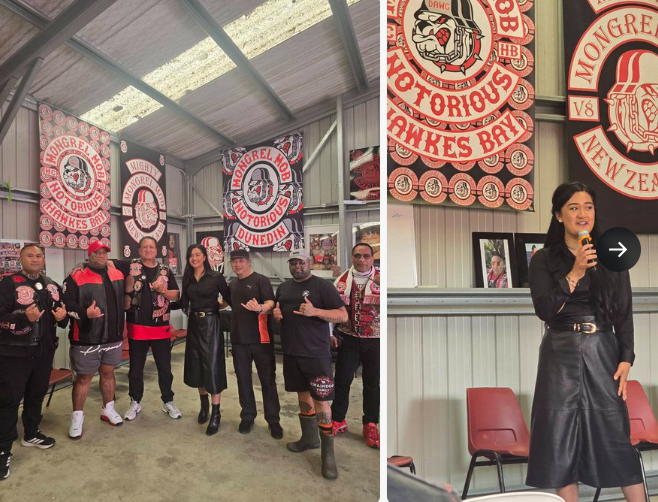
A political storm has erupted after Te Pāti Māori MP Oriini Kaipara and Green Party candidates Hūhana Lyndon and Michel Mulipola attended an election hui at a Mongrel Mob-affiliated venue alongside longtime gang figure Harry Tam.
What organisers described as a discussion about whānau health and wellbeing has quickly become one of the most explosive law-and-order flashpoints of the 2026 election campaign.
National MP Simeon Brown led the criticism, calling the visit “unbelievable”.
“This tells you everything you need to know about what a Labour-Greens-Te Pāti Māori-TOP Government will do on law and order,” Brown said.
Brown warned that a left-wing coalition would scrap National’s gang patch ban, weaken recent law-and-order reforms, and potentially return taxpayer funding to gang-linked organisations.
“This tells you everything you need to know,
National’s Simeon Brown
“Chris Hipkins and his mates clearly haven’t learnt their lesson. They’re ready to put Kiwis’ safety at risk all over again.”
The comments tap into lingering public concern over previous government-funded programmes involving gang figures, including controversy surrounding funding linked to the Mongrel Mob during the Covid era.
ACT MP Nicole McKee was equally scathing, accusing the parties of sending the wrong message to victims of gang crime.
Critics argue that while communities affected by gangs deserve support, election-year appearances at gang-associated venues risk legitimising organisations that many New Zealanders associate with drugs, violence and intimidation.
The backlash was swift.
National’s Paul Goldsmith questioned why political parties seeking to govern the country would choose to campaign at a venue associated with one of New Zealand’s most notorious gangs.
However, those involved have defended the meeting.

Green Party co-leader Marama Davidson said politicians cannot pick and choose which communities they engage with, arguing that meaningful social change requires conversations with all sectors of society.
Meanwhile, Oriini Kaipara stressed that attendance at the hui did not amount to endorsing every action or position of the Mongrel Mob.
Instead, Kaipara said the focus was on health, wellbeing and the challenges facing members of the community connected to the gathering.
Yet for many voters, the optics are proving difficult to ignore.
With crime and public safety already major election issues, photographs of politicians meeting alongside gang figures may become campaign gold for National and ACT.
As the election battle intensifies, one question is already being asked across New Zealand:
Were they engaging with a community in need, or sending a message that gangs once again have a seat at the political table?