

Mike Bain/cvnznews.com
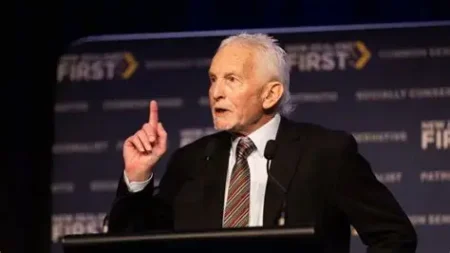
The Michael Laws controversy may ultimately reveal as much about New Zealand’s media culture as it does about Michael Laws himself.
The condemnation of Michael Laws’ remarks about female candidates from The Opportunities Party has been widespread. Laws has apologised. Winston Peters has reportedly reprimanded him. By most measures, the political damage has already been done.
But amid the outrage, another question deserves scrutiny.
Why did comments made publicly on The Platform reportedly remain largely unnoticed for days before suddenly becoming front-page political news?
That question has been raised publicly by Sean Plunket, founder of The Platform, who challenged journalist Henry Cooke on X, asking why the story had been held for a week before publication.
The timing matters because political journalism does not simply report controversies. It can also influence when controversies become politically useful.
Critics of mainstream media have long argued that conservative politicians and parties are often subjected to more sustained scrutiny than their counterparts on the political left. Whether that claim is justified is open to debate, but the Laws controversy is likely to reignite those discussions.
Some observers have also noted that while Laws’ comments generated extensive coverage, allegations and controversies involving figures from other parts of the political spectrum have not always attracted comparable attention.
That does not excuse Laws’ remarks. Nor does it diminish the criticism they attracted.
But journalism itself should never be beyond examination.
The public is entitled to ask not only whether comments were offensive, but also why certain stories are elevated, when they are elevated, and whether similar standards are being applied across the political spectrum.
In an election campaign, those questions are every bit as important as the original controversy.