


Kaitlin Price/cvnznews.com
A wave of hoax bomb threats targeting airlines across Europe has triggered military responses, flight diversions and growing concern among aviation authorities, with at least 27 flights affected this week alone.
European Union officials say it is still too early to determine whether the incidents are linked, but the scale of the disruption has prompted close monitoring by national governments and transport agencies.
EU Transport Commissioner Apostolos Tzitzikostas said any threat against civilian aviation is unacceptable, while cautioning against drawing conclusions about who may be behind the alerts or whether the incidents form part of a coordinated campaign. Recent days have seen bomb threats reported against flights in Italy, France, Bulgaria, the Czech Republic, Denmark, Romania, Austria and Poland.
The latest incidents follow a dramatic day on Tuesday when bomb threats targeting 27 flights forced the temporary closure of an airport in Warsaw and prompted emergency security responses across several countries.
Although every threat examined so far has proved to be a hoax, authorities have treated each alert as genuine until proven otherwise, reflecting the aviation sector’s strict safety protocols.
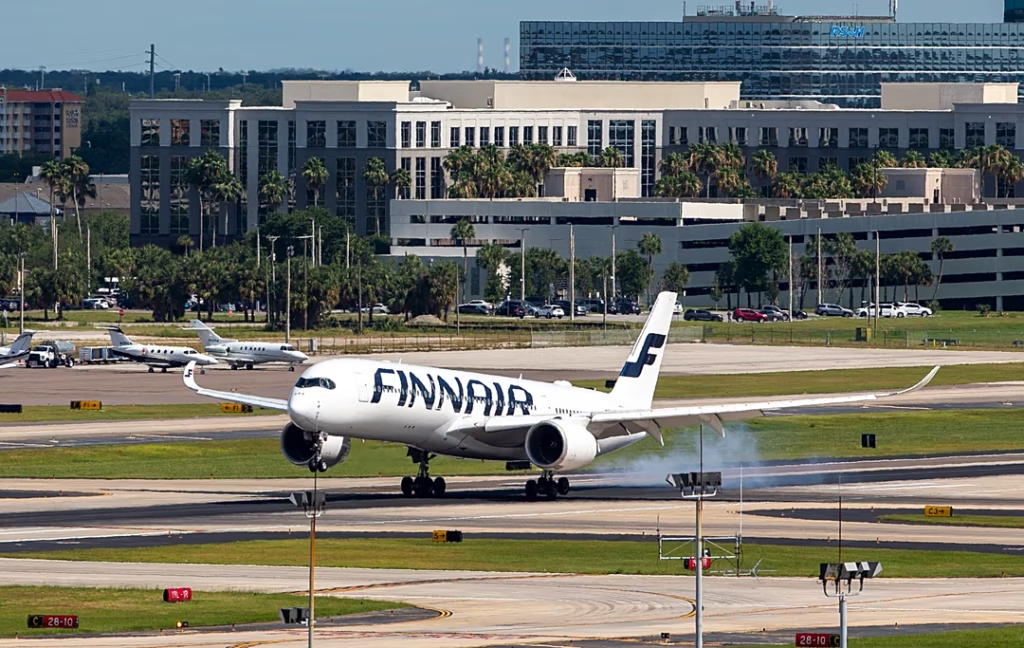
Among the flights affected was a Finnair service from Helsinki to Rome, which was escorted by Italian Air Force fighter jets before landing safely in the Italian capital. Bomb disposal specialists later inspected the aircraft and found no explosive devices.
An Aer Lingus flight travelling from Dublin to Rome was diverted to a military air base in France after receiving a threat. French military aircraft escorted the plane before it landed safely and passengers were assisted with onward travel arrangements.
Low-cost carriers appear to have been particularly affected. Ryanair reported multiple aircraft targeted by threats, including services travelling to Sofia from London, Madrid and Copenhagen. Bulgaria’s air force scrambled fighter jets to escort the flights as they approached Bulgarian airspace. Subsequent inspections found no evidence of explosives.
Wizz Air flights were also caught up in the disruption. One flight from Milan to Warsaw was diverted to Vienna, while another flight travelling to Bucharest completed its journey before being subjected to heightened security checks.
Authorities in Prague and Copenhagen also responded to threats involving arriving aircraft. Czech police described the credibility of the threats as low but activated security procedures as a precaution.
The incidents come against a backdrop of growing concern across Europe about so-called “hybrid threats” that can include cyberattacks, sabotage, disinformation campaigns and attempts to disrupt critical infrastructure. While investigators have not identified who is responsible for this week’s bomb threats, security agencies across Europe are continuing their investigations.
For now, aviation authorities say passengers remain safe, but the unprecedented number of hoax alerts in a matter of days has highlighted the significant disruption that even false threats can cause to international air travel.