




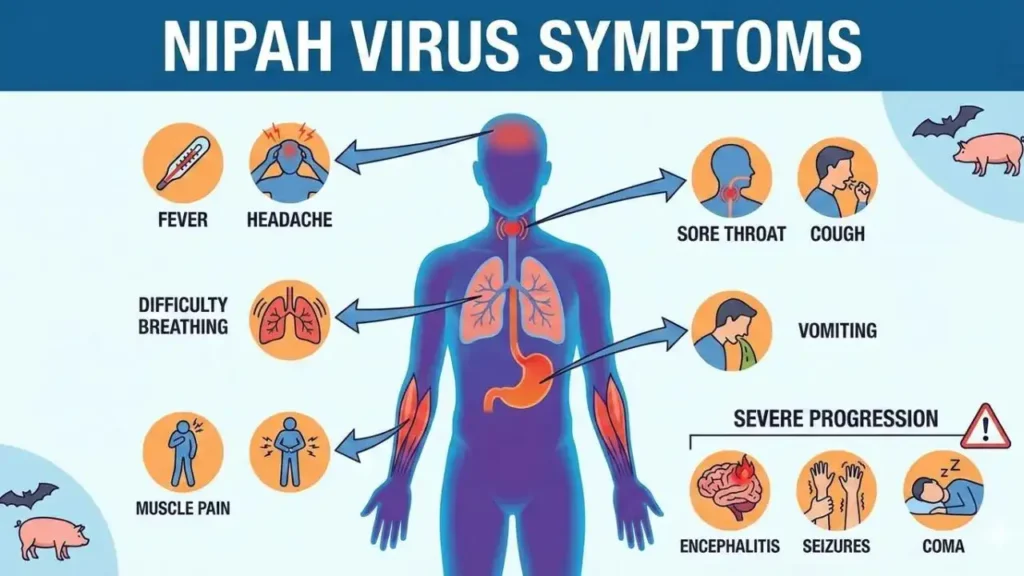
Kiwis travelling through parts of Asia may face Covid‑style screening measures after two cases of the deadly Nipah virus were confirmed in West Bengal, India. The virus, first detected in Malaysia in 1998, is carried by fruit bats and pigs and has a fatality rate estimated between 40 and 75 percent. With no approved vaccine, it is considered one of the world’s most dangerous emerging infectious diseases.
Indian authorities say the two confirmed cases—believed to be healthcare workers—have been contained, with nearly 200 close contacts traced and testing negative. Despite that reassurance, several Asian countries have moved quickly to introduce screening for travellers arriving from India. Airports in Bangkok, Phuket, Singapore and Kathmandu have all activated health checks, with Nepal also screening at land borders.
New Zealand health officials say they are monitoring developments closely. In a joint statement, the Ministry of Health and Health New Zealand said the World Health Organisation currently considers the risk of international spread to be low. New Zealand does not screen specifically for Nipah at the border, but officials say systems are in place to assess any unwell traveller on arrival.
That raises the broader question: if Nipah did reach New Zealand, how prepared are we? Epidemiologist Professor Michael Baker says the likelihood of the virus arriving here is extremely low, largely because human infection typically occurs through direct contact with fruit bats—animals not found in New Zealand. “In New Zealand, we really shouldn’t be at all concerned about this infection because it’s got animal reservoirs,” he said.
Baker acknowledged that Nipah, like Covid‑19, is a zoonotic virus, but stressed that most such infections never develop sustained human‑to‑human transmission. “Very few infections have great potential for transmission between people – and this one doesn’t at the moment.”
Still, the global response highlights a familiar lesson: new viruses can emerge quickly, and early detection matters. For now, officials advise travellers to India—especially West Bengal—to take precautions and avoid contact with bats, while New Zealand continues monitoring the situation and assessing any future border needs.