


On January 18, 2026, a group of protesters entered Cities Church in St. Paul, Minnesota, during a Sunday worship service, chanting slogans against immigration enforcement and disrupting the congregation’s time of prayer and praise.
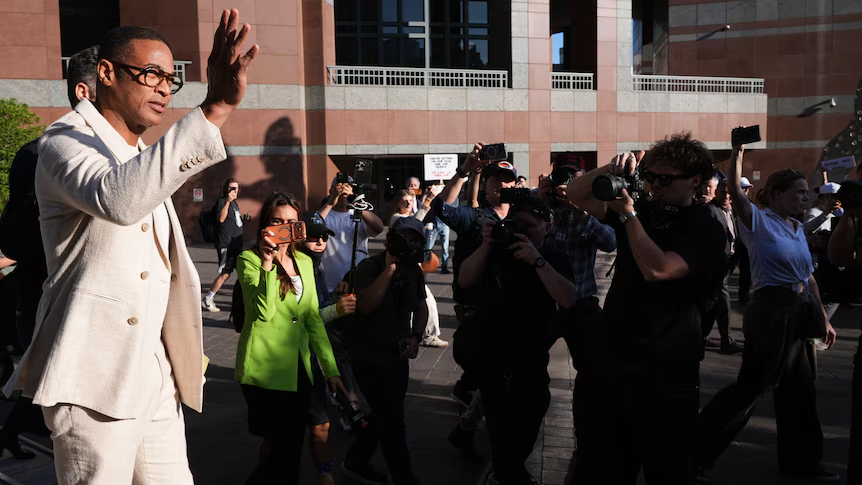
Former CNN anchor Don Lemon, now an independent journalist, was present, livestreaming the event.
Twelve days later, on January 30, federal authorities arrested Lemon in Los Angeles on charges including conspiracy to deprive individuals of their civil rights and interfering with freedom of religion under federal law known as the FACE Act (18 U.S.C. § 248), specifically for allegedly interfering by force or obstruction with someone’s First Amendment rights to exercise religious freedom at a place of worship. Three others have also been arrested for their role in disturbing a church service.
The basis for Lemon’s arrest is that a person cannot commit a crime and then claim to be “reporting” on it as a defense. Entering a private place of worship uninvited and contributing to the interruption of a service crosses into trespassing and disruption—actions that are criminal regardless of intent or profession.
From a Christian viewpoint, this incident strikes at the heart of what the church represents. The Bible describes the gathering of believers as a sacred, orderly act of worship. Paul instructs in 1 Corinthians 14:40 that “everything should be done in a fitting and orderly way,” and in verse 33, “God is not a God of disorder but of peace.” To barge in, raise voices in protest, and halt a congregation mid-service disrespects not only the worshipers but the very purpose of the space: to encounter God in unity and reverence. Freedom of the press is vital, but it does not override the freedom of religion—the right of believers to worship without interference.
What stands out positively here is the speed of the response. Federal charges were brought and arrests made within two weeks, a prompt application of justice. The Scriptures speak directly to this principle. The closest parallel is Ecclesiastes 8:11 (NIV): “When the sentence for a crime is not quickly carried out, people’s hearts are filled with schemes to do wrong.” When wrongdoing is addressed decisively, it sends a clear message: such actions will not be tolerated. Delayed or absent consequences embolden others to follow suit; swift accountability deters future offenses and protects the vulnerable.
This case is a reminder for Christians: we are called to uphold both justice and mercy. The church should be a sanctuary of peace, not a stage for disruption. Authorities who act quickly to safeguard peace deserve recognition, as it reflects the biblical value of timely justice that preserves order and righteousness in society.