


Mike Bain/cvnznews.com
New Zealand has spent years chasing a free‑trade agreement with India — a relationship successive governments have described as “strategic,” “essential,” and “full of potential.” But a new international assessment raises a blunt question: has Wellington been ignoring the obvious elephant in the room?
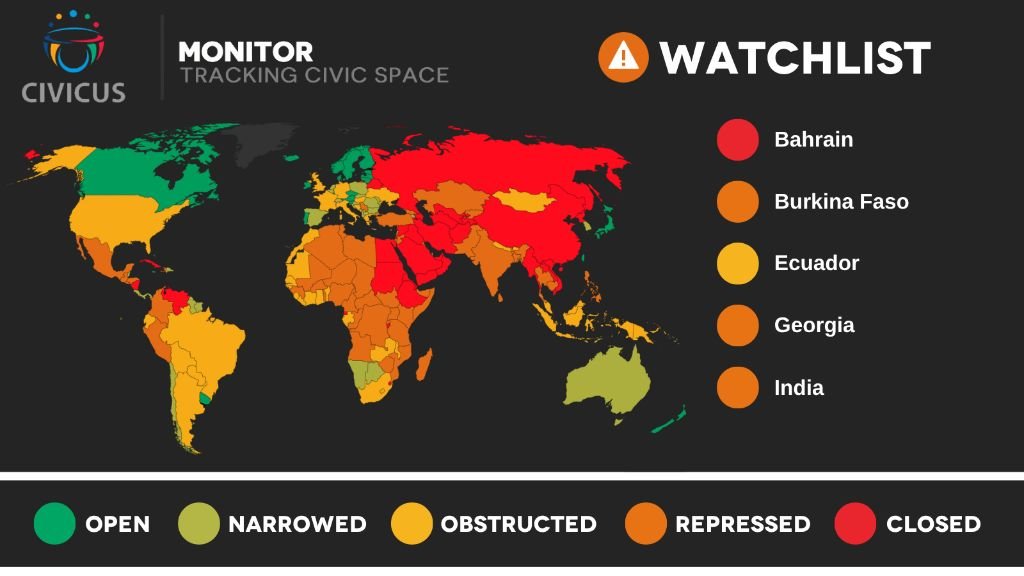
India has just been added to the CIVICUS Monitor Watchlist, flagged for a rapid deterioration in civic freedoms during Prime Minister Narendra Modi’s third term. The country is now rated “Repressed” — the second‑worst category available — placing it alongside states where activists, journalists, and civil society groups face surveillance, harassment, detention, and violence.
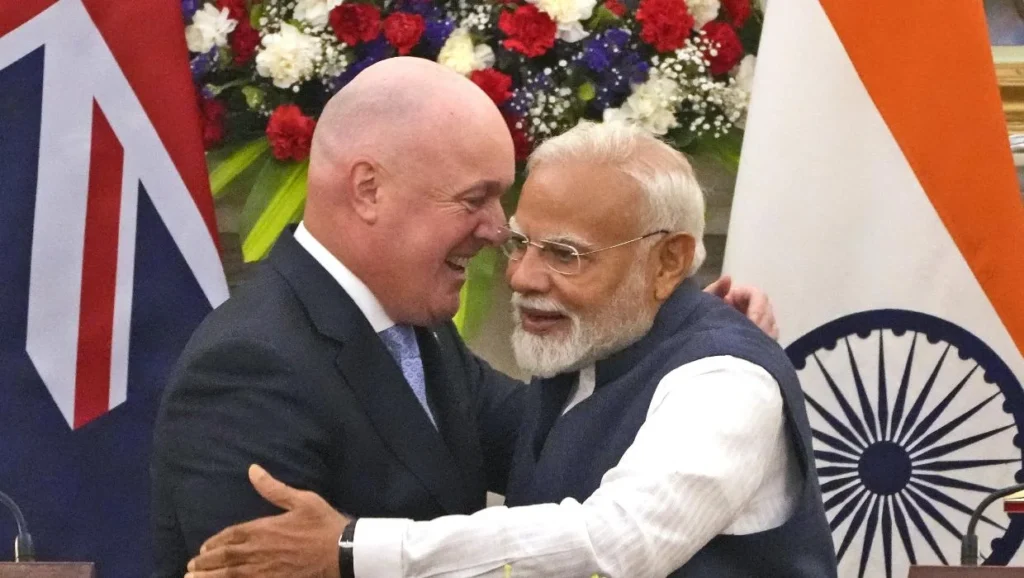
This comes at the very moment New Zealand diplomats continue to court India for deeper trade ties, market access, and political alignment.
The CIVICUS report outlines a grim pattern:
- Activists detained without warrants, some allegedly tortured.
- Anti‑terror laws weaponised against critics, including long‑detained activists Umar Khalid and Sharjeel Imam.
- Police violence against peaceful protesters, including factory workers and youth‑led movements.
- Journalists jailed, investigated under anti‑terror legislation, or attacked after criticism of political leaders.
- Sweeping censorship powers proposed under new IT Rules.
- NGOs strangled by expanded Foreign Contribution Regulation Act controls.
- Severe repression in Jammu & Kashmir, including internet throttling and arrests of publishers.
These are not fringe incidents. They represent a systemic tightening of state control over speech, dissent, and civil society.
Yet New Zealand’s diplomatic language has remained conspicuously soft — emphasising trade, tourism, and “shared democratic values,” while avoiding any public mention of India’s civic decline.
New Zealand risks appearing willing to overlook human‑rights abuses for market access.
New Zealand’s economic strategy has long been shaped by global trends — and few trends are more influential than the rise of India as a geopolitical and economic powerhouse. With China dominating Pacific influence and the US recalibrating its global posture, Wellington sees India as a vital counterweight.
But that strategic calculus has a cost: New Zealand risks appearing willing to overlook human‑rights abuses for market access.
As India’s civic space contracts, the world is watching. The US, EU, and major human‑rights organisations have raised alarms. CIVICUS now places India among the 50 most repressed civic environments on earth.
So the question for New Zealand is unavoidable:
Can a country that prides itself on human rights, democracy, and rule of law continue pursuing a free‑trade deal with a government accused of silencing dissent, jailing journalists, and crushing civil society?
Or put more bluntly:
Has New Zealand been so focused on trade that it forgot to look at what India has become?
This is not about abandoning diplomacy. It is about honesty. And it is about whether New Zealand is prepared to confront the uncomfortable truth that the partner it seeks may no longer resemble the democratic ally it imagines.