



Sarah McMillan/cvnznews.co
The Commerce Commission’s decision to take PD Mart to court sends a message that should have been obvious from the start: if you’re selling products in New Zealand, especially products for children, safety standards are not optional.
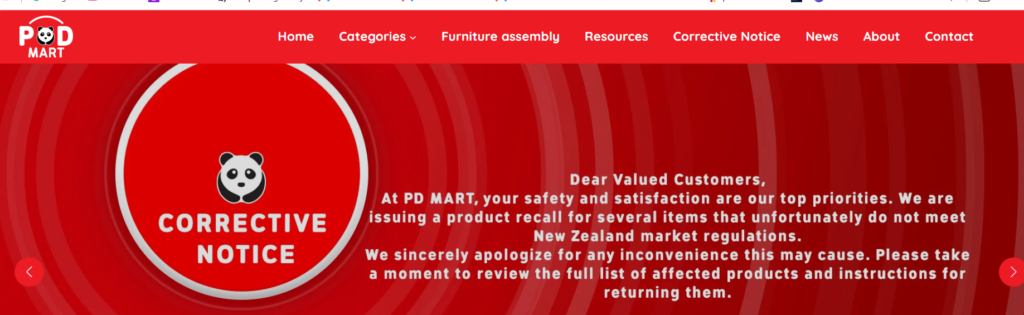
According to the allegations, officials repeatedly discovered non-compliant goods in PD Mart stores over an extended period, including children’s toys, baby walkers and car seats. That wasn’t a one-off mistake. The Commission says the problems continued across multiple inspections, raising serious questions about the retailer’s systems and commitment to consumer safety.
Parents shopping for bargains have every right to assume that products sitting on New Zealand shelves have met basic legal requirements.
Nobody expects a $5 toy to perform like a designer brand. But every parent should expect it won’t pose a danger to their child.
That’s why product safety laws exist.
The issue isn’t affordability. New Zealand families are under enormous financial pressure and many rely on discount retailers to stretch household budgets. The issue is whether companies are fulfilling their legal and moral obligation to ensure the products they sell are safe.
The allegations concerning children’s products are particularly disturbing. Young children cannot assess risk. They depend entirely on adults, manufacturers and retailers to protect them. When that chain breaks, it is children who carry the consequences.

The Commission’s claim that PD Mart lacked adequate systems, processes and staff training points to a wider problem. As overseas discount retail chains expand aggressively across New Zealand, regulators will need to remain vigilant that rapid growth does not come at the expense of consumer safety.
Low prices are welcome.
Unsafe products are not.
The same principle applies whether a product costs $2 or $200. A parent buying a toy, a baby walker or a car seat should never have to wonder whether it complies with New Zealand safety standards.
Commerce Commission General Manager Rebecca McAtamney put it plainly: consumers should not have to choose between price and safety.
That’s exactly right.
New Zealand consumers deserve affordable products. They also deserve confidence that what they purchase won’t put their children at risk.
If the allegations are proven in court, the case should serve as a warning to every retailer operating in this country. Competition is welcome. Bargains are welcome. Cutting corners on safety is not.
Because when it comes to products designed for children, “good enough” simply isn’t good enough.