


Kaitlin Price/cvnznews.com
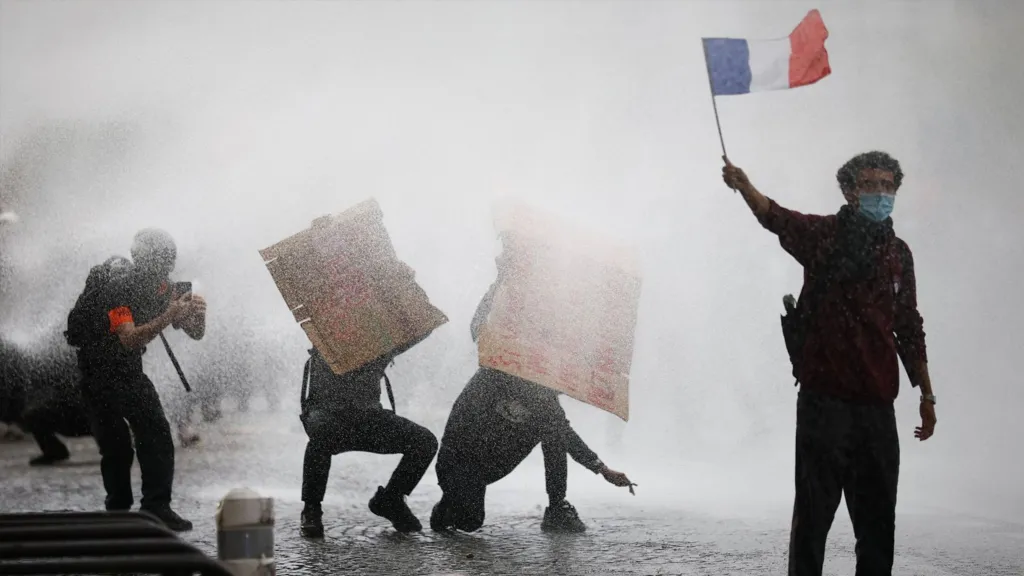
France has long been famous for mass protests, but the scenes witnessed over the weekend looked less like democratic dissent and more like a nation wrestling with deep political and social fractures.
More than 550,000 people took part in demonstrations across France, with protests originally driven by concerns over rising living costs, deteriorating public services and demands for greater investment in schools. While many demonstrations remained peaceful, authorities arrested around 1,800 people as widespread rioting, looting and vandalism broke out in Paris, Marseille, Lille and other cities.

Burnt-out vehicles, shattered shopfronts, torched public buildings and looted stores left many French communities counting the cost by Sunday morning.
Yet behind the images of destruction lies a larger and more significant question.
Are these genuinely grassroots student protests, or are they becoming a political weapon ahead of France’s presidential election next year?
According to reports highlighted by the BBC, French Prime Minister Sébastien Lecornu has accused elements of the radical left of exploiting legitimate student concerns for electoral advantage as campaigning intensifies ahead of the 2027 presidential contest.
The students’ grievances are real enough.
Across France, young people have complained of teacher shortages, overcrowded classrooms, ageing school buildings and mounting pressure within the education system. Thousands have participated in school blockades and demonstrations for weeks.
However, as the movement has grown, it has also attracted support from workers’ unions, veteran “Yellow Vest” activists and political figures seeking to channel public anger into electoral momentum.
French President Emmanuel Macron has reportedly acknowledged students have legitimate concerns while warning they are being “exploited” by political forces.
That concern may not be unfounded.
History repeatedly shows that protest movements can become attractive vehicles for political actors. A demonstration about schools can quickly become a referendum on government. A protest about classrooms can evolve into a campaign for power.
The weekend violence appears to reinforce that fear.
Many of those involved in looting luxury stores, attacking public buildings and setting fires appeared far removed from the students campaigning for better education. Shop owners told reporters they believed opportunists and professional agitators had seized upon the unrest for their own purposes.
For Christians, the situation offers an important reminder.
The pursuit of justice is legitimate. Peaceful advocacy for better schools and opportunities for young people is commendable. But when anger becomes a tool for political manipulation, and when protest descends into lawlessness, the original cause is often the first casualty.
As France heads towards a presidential election, the question is no longer simply what students want.
It is who stands to gain from their anger.

1 https://link.amazon/B01jEW8Z1
2 https://link.amazon/B071d3oQY
3 https://link.amazon/B0jffuNUe
4 https://link.amazon/B0bNP0Q6o