



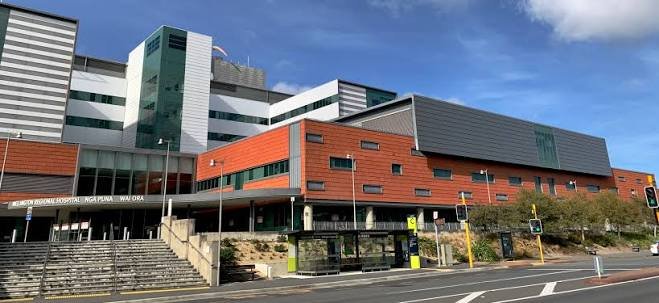
Mike Bain/cvnznews.com
For years, New Zealand’s health system has been defined by a familiar tension: world‑class clinicians working inside ageing infrastructure, stretched staffing, and budgets that always seemed to arrive one crisis too late. So when Wellington Regional Hospital switched on a new multi‑million‑dollar linear accelerator — a LINAC machine capable of targeting tumours to within a millimetre — it wasn’t just a technical upgrade. It was a signal that something in the national approach is finally shifting.

Health Minister Simeon Brown says the new machine is the first of two replacing older units that have simply reached the end of their life. The price tag is steep — $12.6 million for both — but the payoff is precision cancer treatment for thousands of patients every year. These machines are not plug‑and‑play gadgets; they’re multi‑tonne instruments installed inside concrete bunkers, supported by specialist software, scanners, and highly trained staff. They’re the kind of investment that only happens when a government decides to stop patching holes and start rebuilding foundations.
And that’s the bigger story.
Across the country, new LINAC machines have already been rolled out in Auckland, Dunedin, New Plymouth, and Whangārei. Hawke’s Bay is next. Budget funding has been allocated for business cases in South Auckland, Nelson, and Christchurch. It’s not a one‑off announcement — it’s a pattern.
For a sector that has lived through decades of under‑investment, that pattern matters.
Radiation oncologists are clear: the upgrades are welcome, overdue, and still not enough. Only a third of New Zealanders who could benefit from radiation therapy currently receive it. Facilities haven’t kept pace with rising cancer diagnoses. Staff are working longer hours than their counterparts overseas. Machines alone won’t fix that.
But here’s the uncomfortable truth that often gets lost in political point‑scoring: health systems are never perfect. They are never finished. They are never fully funded. They are only ever maintained, improved, or neglected.
Right now, despite the gaps, New Zealand is in an improvement phase.

Money is being targeted at the parts of the system that have fallen furthest behind — cancer treatment, diagnostic capacity, regional access. Health New Zealand is experimenting with staffing models, sharing expertise between regions, and trying to build workforce pipelines that match the pace of technological upgrades. It’s not glamorous work, and it won’t produce overnight miracles, but it is the kind of slow, structural investment that health experts have been asking for.
The critics are right: hundreds of patients still miss out on radiation therapy they should receive. The workforce is still stretched. The system still creaks.
But the upgrades are real. The funding is real. The direction of travel is finally pointing the right way.
And in a sector where progress often arrives in millimetres — just like the beam of a LINAC machine — that deserves to be acknowledged.
.