

Emmanuel Nwachukwu/Partner News Agency.
On a spring night in the mid-1990s, a teenage Ibrahim Alhassan awoke to a voice calling for Christians to step out of their dormitory rooms at Sani Dingyadi Unity Secondary School in Sokoto state, northwest Nigeria. A group of Muslim boys then ordered about 10 Christian high school students, including Alhassan, to crawl on their knees. The Muslims then beat them with sticks from a dongoyaro tree as the Christian boys crawled down the school hallways and out into the open fields.
“They called us infidels,” Alhassan said. “To hate them was the easy thing. But I still loved them.”
Alhassan grew up in a devout Christian home from the Zuru tribe in Kebbi state, 85 miles southwest of Sokoto. He enjoyed playing soccer with Muslim boys from the Hausa and Fulani tribes. Sometimes Alhassan tried to lead Christian prayer before a game.
“These were boys I grew up with, and I tried to build good relationships with them,” he said. “Unfortunately, boarding school showed me a different side: Their religion radicalized them, and they wanted to dominate everything and everyone.”
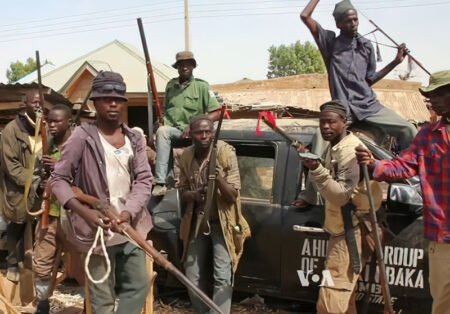
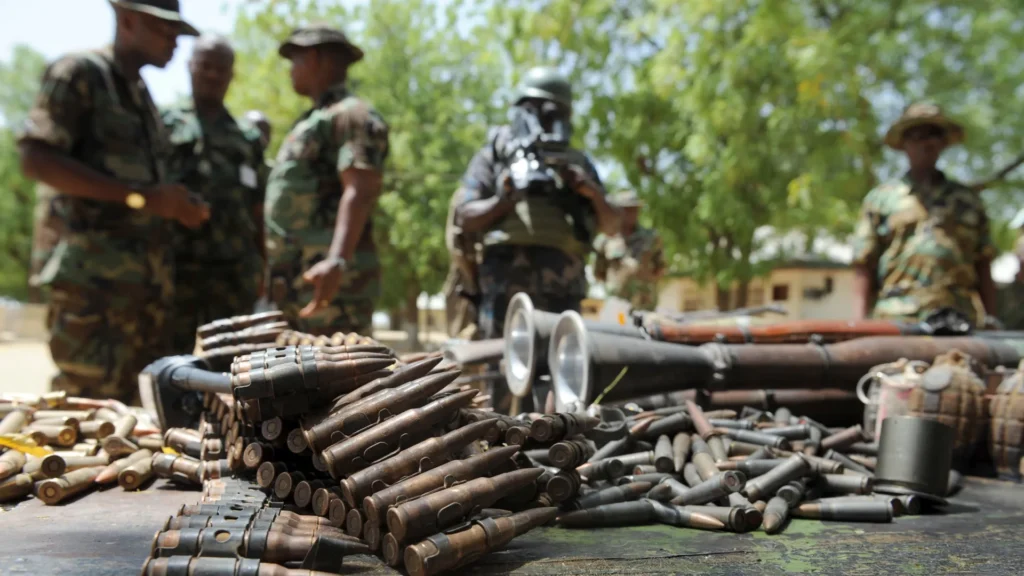
The Nigerian government has struggled to curb violence in the northern region plagued with Islamic terrorism, attacks by Muslim herdsmen, and mass kidnapping. Last year, the West African country launched Operation Safe Corridor, focused on disarming extremists as well as deradicalizing, rehabilitating, and reintegrating repentant terrorists back into society. Several states have launched programs aimed at restoring stability in the region.
The program faced public backlash from politicians and communities impacted by the violence. Some Christian victims have criticized terrorist rehabilitation initiatives for neglecting victims’ rights, questioning whether such programs can measure genuine repentance.
In June, the Borno state government offered amnesty to 720 Boko Haram terrorists and reintegrated them—along with over 990 spouses and 2,000 children—after a three-month deradicalization program. The governor of the northeastern state, Babagana Umara Zulum, said he “agreed to forgive and accept their sons who were willing to drop arms and embrace peace.”
But on July 7, the Nigerian senate passed a resolution to abolish the government’s program. Adams Oshiomhole, a senator from Edo state, argued the amnesty scheme “does not make common sense.”
The House of Representatives joined the backlash the next day, with one lawmaker saying, “Those who invade communities, kidnap innocent Nigerians and kill security personnel do not deserve rehabilitation.” Representatives raised concerns that some graduates of the program may be feeding information back to terrorist leaders.
Alhassan hopes Christians in Nigeria will step in as lawmakers debate a way forward: “The government has to come up with ways to put a stop to terrorism, while the church must remember that for us, our Christ can truly change hearts.”
Nigeria ranks fourth in the 2026 Global Terrorism Index and recorded the largest increase in global terrorism with an increase of over 45 percent in fatalities last year. Islamic State West Africa Province (ISWAP) and Boko Haram activities accounted for 80 percent of terrorist deaths in Nigeria. Multiple school kidnappings and the June massacre of Christians in Benue state shook faith in the government’s response.
James Wuye, a pastor and cofounder of the Interfaith Mediation Center, a grassroots organization for peace building between Christians and Muslims in ethnic-religious conflict zones, told CT he seeks to address Christians who want to strike back. Some feel they should use reprisals to show Muslims they, too, know how to be violent.
“Christians should not react that way,” Wuye said. “Self-defense is constitutionally guaranteed, but we don’t want to go beyond defense and become the aggressors.”
The Kaduna state government recently appointed Wuye to its committee on deradicalization. He told CT Western and traditional methods may produce temporary successes but fail to yield long-lasting transformation.
“Different measures [for deradicalization] will come out of this,” he said. “But what works is [basing] these programs on Scripture.”
European deradicalization efforts have long been criticized as ineffective. According to CBS News, a German court released on a suspended sentence the 21-year-old man now suspected in the July 25 attack on Berlin Pride crowds, opting to send him to an extremism rehabilitation program for high-risk offenders. He allegedly committed the attack before his third scheduled evaluation despite showing red flags in the first two.
According to a UN report, terrorist groups like Boko Haram and ISWAP recruit and radicalize Muslims as young as 12 through economic enticement and online propaganda. Deradicalization isn’t easy.
Ismail Almasih, a former Muslim, told CT he always wanted to be a jihadist. He grew up reading biographies of figures such as Osama bin Laden; Islamic scholar Usman dan Fodio; and Bilal ibn Rabah, a contemporary of the prophet Muhammad regarded as the first Black Muslim.
“The books taught me that one could be an educated jihadist,” he said. “So I took school seriously. I wanted to be like Osama bin Laden.”
Almasih debated Christians about religion at his majority-Muslim high school in northwest Katsina state. In one debate about Muhammad and Jesus, he gave what he called an embarrassing performance.
“I knew that I lost the debate,” he said. “[So] I beat the hell out of the Christian.”
He lied to a teacher, saying the Christian boy had insulted Muhammad. The teacher ordered the Christian to cut the school grass with a cutlass.
A year or two later, Almasih failed his final high school exam and began doing drugs. His family and friends abandoned him, and he failed repeatedly to beat the addiction on his own. After he moved to Benin City, Edo state, in southern Nigeria to work, local Christians reached out to him with goods and clothing. A Christian missionary gave him shelter after Almasih’s Muslim landlord kicked him out. Almasih later became a Christian.
Almasih, who is now a missionary with Calvary Ministries CAPRO ministries, regularly meets bandits and terrorists. Some tell him they are trying to abandon terrorism, fleeing the very groups for which they once fought. He hands them audio Bibles on cassettes and sometimes gathers them to watch movies about the Bible.
“We always try to preach the gospel to them,” he said. “That’s what saved me, and that is what will save them.”
Alhassan agrees the answer must focus on the gospel. After becoming a professional soccer player in 1996, he quickly began sharing his faith with Muslim teammates. When they wanted to begin practice with Islamic prayers, he would insist on a Christian prayer afterward: “I wasn’t radical or trying to challenge them, but I always had the passion to help them know Jesus.”
After injuring an ankle and both knees in the early 2000s, Alhassan turned his focus to ministry. He now runs a one-year discipleship program for former terrorists in Jos, northern Nigeria, launched in 2017 through the Evangelical Church Winning All.
Most residents who join the program are Christian converts, but some are Muslims who say they are open to hearing about Jesus. The center hosts 25 live-in students who take classes on spiritual growth, Christian formation, Christology, and apologetics. Both single and married participants can attend, so Alhassan provides counseling for couples as well.
“Extremism is often a way for them to get out of poverty, they think,” said Alhassan. “It only gets them into more problems.”
His ministry addresses this financial need by teaching residents reading, writing, and entrepreneurial skills such as tailoring, soap making, baking, and cream production to help them get jobs after leaving the program. But many ex-Muslims face suspicion from Christians who won’t hire them, and some face death threats or shunning from Muslim families. He doesn’t want such hardships to land them back in poverty.
Alhassan said some have approached the program sincerely, but others have proved to be spies. In 2022, the Department of State Security (DSS) raided the training center, accusing Alhassan of forcibly converting 21 students. Alhassan said these students had scaled the security fence—intended to keep threats out, not students in—and reported to Izala, a radical Muslim society. After questioning both students and staff all day, the DSS concluded the students’ claims didn’t hold up, Alhassan said: “They then released us.”
Alhassan said he doesn’t force students to become Christians, nor does he accept anyone younger than 18. “We discovered that some of them have just come to spy or even kill us,” he said. “This is risky work. Sometimes it is hard to differentiate between the real and fake ones.”
Two years ago, a group of Christians sent a 29-year-old ex-Muslim to the center. The staff soon discovered he was a drug addict. Although the center doesn’t usually deal with drug-related issues, Alhassan said they were willing to take him in. However, within days he tried assaulting a young girl at the center. “He confessed it wasn’t just him but a coordinated plan with others,” he said. “We had to send him out.”
Now, the center accepts only students recommended for admission by “guardians”: pastors, Christians, and church organizations.
Alhassan said he tries not to focus on the failures. He recalls the first family the ministry helped—a former bandit with his wife and three children. The center had to create a new program around them that included education for the children. They left able to read and recite the Bible in their native Hausa language.
Many students are baptized by the end of the program. Some residents enroll in seminary and become pastors. Others integrate back into the churches that sent them to his ministry in the first place.
Still, some pastors and churches won’t accept into fellowship the very people they send him to help.
“We [Christians] don’t see them as part of us but as a problem to be avoided,” Alhassan said