


Mike Bain/cvnznews.com
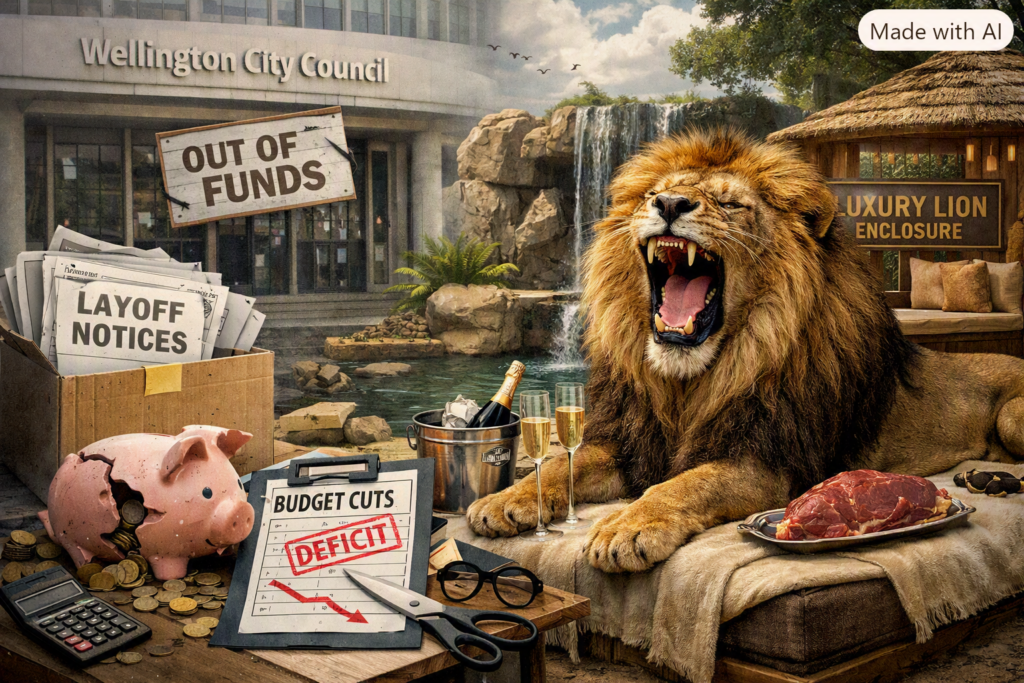
Wellington City Council has spent the week telling staff it’s a “very difficult time” as 141 roles are disestablished and $4.4 million in savings are carved out of the 2026/27 Annual Plan. Forty‑one of those roles were vacant, but 100 staff are directly affected, with no guarantee they can be redeployed into the 94 new positions being created. The message from the top: tough choices, tight budgets, and a commitment to “reducing rates increases”.
Yet, in the very same news cycle, Wellington Zoo has asked the Council for $14 million to build a new lion enclosure — a project three times larger than the savings target that triggered the restructure.
The parallel is hard to miss.
On one side, the Council is telling staff and ratepayers that financial pressure demands cuts, restructures, and “efficiency”. On the other, a major capital project — one not related to core infrastructure, safety, or statutory obligations — is being floated with a price tag that dwarfs the savings being extracted from frontline teams.
For affected staff, the optics are brutal: millions saved by reducing people, while millions more may be spent on a discretionary zoo upgrade.
For ratepayers, the contradiction is equally stark. If the Council is truly in belt‑tightening mode, why is a $14m enclosure even on the table? And if the zoo project is essential, what does that say about the necessity of cutting human roles to save a third of that amount?
Both stories speak to a deeper tension inside Wellington’s governance: a city trying to balance ambition with austerity, but struggling to explain why some priorities survive while others are sacrificed.