
European Correspondent.
The Night the Freezers Turned: A Cyberattack Hit Europe’s Food, And the Timing Is Too Strange to Ignore.
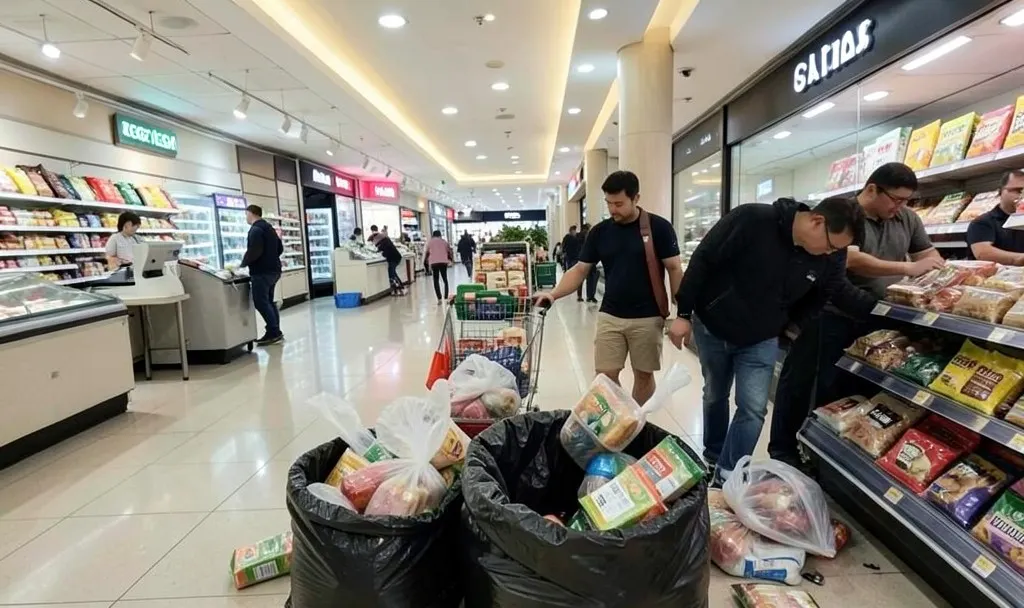
Last morning, in supermarkets across Belgium, workers did something nobody should ever have to do. They filled shopping carts and bin bags with food — not to stock the shelves, but to throw it all away.
Pizzas. Peas. Everything that went soft overnight.
Because someone, or something, switched their freezers off. And in some cases, cranked them all the way up to 50°C, that’s 122°F, hotter than a summer day in Seville.
I’ve been staring at this story since it broke, and the more I read, the less it looks like a random crime. It looks like a message. Let me walk you through what happened and then, more importantly, let’s talk about what nobody in the mainstream is asking.
What Actually Happened Overnight
It started quietly. No alarms. No smashed windows. No demands. Just a silent takeover of the cold.
Workers walked into their stores Monday morning and found the refrigeration systems had been hijacked from the outside. Frozen food left in a puddle. Chilled stock ruined. And in Sweden and Estonia, freezers pushed so hot they could have cooked the contents.
The countries hit, confirmed by Euronews and Newsweek:
- Belgium — about 40 Delhaize stores, 15 Carrefour, 15 Intermarché, five Spar locations, plus an IKEA and a major butchery group. Roughly 75 stores in total.
- Sweden — ICA and Coop stores. One ICA had its freezers pushed to +50°C.
- Estonia — a Selver store’s fridges set to +50°C; staff caught it within minutes.
- Ireland — 13 SuperValu stores, chilled and frozen food binned.
- Netherlands — 17+ businesses, including butchers, local shops, and a frozen-food storage site.
- Finland — K Group supermarkets under investigation; a hack hasn’t been ruled out.
- Luxembourg — Delhaize shut down its ordering systems entirely as a precaution.
That’s at least six European countries, hit almost in sync, overnight, Sunday into Monday.
And now here’s the part that should make the hair on your neck stand up, because we know how they did it, and that makes it worse, not better.
The refrigeration contractor for the Belgian stores, a company called Sabcobel, went on the record. Their CEO said the attackers didn’t break anything. They simply flipped the units’ evaporators into defrost mode, a normal, built-in maintenance function every commercial freezer already has. An attacker who can trigger it and hold it there turns a routine feature into a spoilage weapon. No malware spectacle. No stolen data. Just a legitimate command, sent to hundreds of fridges at once, from somewhere far away.
In other words, they gained access to the company’s central control system, ran Linux commands, and changed the default freezing temperature to defrost mode.
This Has Happened Before
Back in August, freezers at more than six US military base stores were flipped to defrost overnight. The Pentagon now treats it as a suspected cyberattack.
Then on 11–12 October, hundreds of French supermarkets, Intermarché and Coopérative U, were hit. Fridges pushed to 50°C. Some reports described stores catching fire.
And now this, the exact same mechanism, the same destructive setpoint, twenty-one days later, across six more countries.
Count that again: the French attack was the warning shot, and the industry had three weeks to close the hole. The Belgian contractor admits they were “working very hard to protect customers’ fridges against this vulnerability” during those three weeks. The fix, their CEO says, requires physical hardware changes, “that requires investment.”
It still happened. On a continental scale. Overnight. So far? No claim of responsibility. No ransom demand. No manifesto.
That silence is the loudest part of this entire story. Hackers who want money usually ask for money. Hackers who want attention usually brag. This is neither. Which means it’s something else entirely.
The Timing Nobody Wants to Talk About
Now hold on. Let me lay two things side by side.
Less than two weeks before the fridges died, governments across Europe were suddenly, urgently, telling their citizens to prepare and stock up:
- EU – a bloc-wide strategy urging 450 million citizens to keep at least 72 hours of food, water, medicine, flashlights and radios at home. The Commissioner behind it named the threats openly: war, cyberattacks, climate shocks, disease.
- UK – relaunched its “Be Ready” campaign on October 22, with floods and cybersecurity threats named specifically.
- France – renewed its warning on October 27: six liters of water per person, non-perishable food, cash, battery radio, documents.
- Netherlands, Germany, Sweden, Norway – three days to ten days, depending on the country. Japan’s new disaster agency issued its own guidance on November 2, the same morning the fridges died.
More than thirty countries now carry some version of this advice.
And here’s the detail that stopped me cold: every single country hit last night already falls under that 72-hour advice.
So let me ask the obvious question, the one the evening news is too polite to ask:
Isn’t it strange that the food chain gets attacked right after the governments tell you to stock up on food?
I’m not going to pretend I have the answer. But the numbers don’t feel like weather. They feel coordinated. Not in a tinfoil-hat way, in a “wait, that’s a hell of a coincidence” way.
The Honest Version First (Because It Makes the Question Sharper)
Before we go one level down, let me be straight with you, twice over.
First: investigators say there is not yet proof this is one coordinated campaign. A shared software supplier, the Danish firm Danfoss, whose systems ran in both the French and Belgian attacks, could mean a single vulnerable vendor is the real culprit, and different actors simply walked through the same open door. That is the sober, official reading, and you deserve to hear it.
But now notice what the sober reading actually tells us. One software platform, one flaw, and an attacker can reach into hundreds of stores across six countries in a single night, touching food, not data. The mundane explanation isn’t comforting. It’s a map of how soft the whole system is. And the question that matters isn’t whether it was one hand or six. It’s this: if the door was known to be open for three weeks, and everyone knew, why did nobody close it, and what else shares perhaps have access to that same door?
Food. Energy. Water. Ports. All of it runs on the same class of forgotten, internet-connected controllers that nobody patches because nobody thinks of a freezer as a computer.
The Deep Dive: The Motives the Mainstream Won’t Touch
What follows is analysis, the kind independent researchers are pondering on in corners of data-tracking analysis, not something any government has confirmed. Treat it as questions, not answers. But they’re good questions.
1. The “Stress Test” Theory. Some researchers believe this wasn’t meant to destroy food. It was meant to test response. How fast do stores notice? How fast do governments react? How do supply chains behave under a multi-country shock? A quiet, ransom-free, blame-free hit is the perfect stress test. You learn everything. You lose nothing. And nobody knows it was a drill.
2. The Acclimatization Play. This is the one that keeps me wondering the most. There’s a growing belief, mostly in our independent circles, that scarcity is being introduced slowly, on purpose. First: the stock-up advice. Then: a visible attack on the food chain. Then: empty shelves during a “crisis.” This act MAY enforce citizen to stock-up if there’s no serious initial response to the advise for them to stock-up. Each step makes the next step feel normal. By the time a real shutdown arrives, you’re already conditioned to accept less, to queue calmly, to comply. You don’t panic at the ration card because you’ve been rehearsing for it.
3. Who Profits From Ruined Inventory? Follow the money. Thousands of tons of food destroyed. Insurance claims filed. “Supply shortages” reported. Prices nudged upward. Food inflation benefits certain players, and a sudden, unexplainable “supply shock,” even a manufactured one, can reshape markets in days. No group has claimed this. Which means we’re not supposed to look for a beneficiary. But there always is one.
4. The Control-Grab Behind the Curtain. A silent, cross-border attack on food infrastructure, with no culprit, is the ideal justification for sweeping new “cybersecurity” powers over critical systems. Food. Energy. Water. The kind of measures that let governments monitor, control, or shut down supply chains with a signature, or regulatory policy instead of a debate. Some fear the attack and the legislation are two halves of the same plan. A crisis, and then the “solution” that was already written.
5. The ESG / Climate Angle. A quieter theory, but real: forced food waste on this scale pushes populations toward lower consumption of meat, dairy, and frozen goods, whether they want to or not. If freezers keep getting hit, habits shift. Some see climate policy’s fingerprints on “accidents” that happen to reduce consumption.
6. The Bigger Shutdown on the Horizon. And then there’s the one that ties it all together, the one your gut already whispered when you read that dozens of countries are now telling citizens to stock up. The theory is simple and terrifying: the food chain is being softened up before something much larger. Not a cyberattack for its own sake, an opening move. Financial. Systemic. A warning shot, to see who’s paying attention.