



Opinion: Lisa Te Morenga
Over the past few weeks, there’s been some fairly complex kōrero on Māori social media about strategic voting and roll‑swapping.
It hits the mark because Māori voters are strategic. We understand the MMP game, perhaps better than most. We know to give our party vote to the party that can shape parliament the way we want it to look, and we know that our electorate vote should go to the candidate we think will best represent local issues. Or, just as importantly, the candidate who’s our aunty or uncle.
For those of us on the Māori roll, there’s also been kōrero about strategic voting in the Māori electorates to create an “overhang”. The theory here is that if you give your electorate vote to an independent, or someone unlikely to enter parliament via a party list, like Tākuta Ferris or Mariameno Kapa Kingi, the result will be more Māori in parliament.
At the last election, there was a two‑seat overhang because Te Pāti Māori won six electorates while their party vote entitled them to only four seats. Those extra seats did make it harder for National to form a coalition, but they didn’t shift the balance of power. In reality, that knife‑edge probably strengthened the bargaining power of ACT and New Zealand First — and we all know the results of that for Māori.
Importantly, the overhang likely didn’t increase the total number of Māori in parliament. If Labour and the Greens had won those Māori seats, we might have ended up with a similar number of Māori MPs — just from different parties.
The premise of strategic voting is that it assumes you can predict how other voters will behave.
That’s a gamble, and gambles often fail.
It’s unwise to expect that your preferred candidate will definitely make it into parliament on the list and that it’s safe to give your vote elsewhere.
If you want to change the government — and there is plenty of disaffection from those fed up with attacks on Māori, the environment, working people, people with disabilities, and the unemployed — don’t muck around with technicalities, overhangs, and narrow margins. The best shot at change comes from a clear voter mandate. That requires a majority of the combined party vote going to the Greens, Labour, and Te Pāti Māori.
As for your electorate vote, it’s important to remember that electorate MPs get significant pūtea for travel, offices and staff so they can properly represent their communities. That’s why it’s important to choose the candidate you genuinely believe will use those resources to benefit your community.
Vote for the electorate candidate you think will do the best job, and the party with the strongest policies for ensuring people have what they need to live well.
The perils of roll swapping
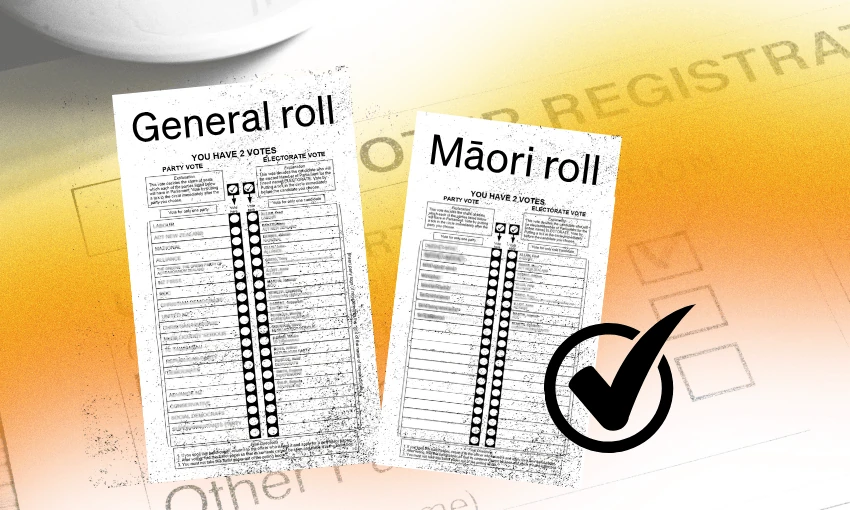
What about roll‑swapping? Another idea doing the rounds is moving from the Māori roll to the general roll to influence outcomes in general electorates where the margins between major-party candidates are narrow.
The argument here is that Māori voters in these areas may have a greater influence on the creation of a left-leaning government, if that is their preference, than staying on the Māori roll. Because the number of Māori seats is now fixed until 2032, and Māori voters are free to swap rolls at any time, as often as they like, the risks of such strategic voting is perceived to be low.
But I’m staying on the Māori roll, because to me it’s an important political statement about Māori seats and our representation. It honours the promises made to our tūpuna when the Māori seats were created in 1867, at a time when Māori were largely excluded from voting.
Those seats were established because the Crown wasn’t upholding Te Tiriti and had excluded Māori from political power. They still matter because they guarantee Māori representation in a system that has never served us well. They remain one of the few enduring acknowledgments of our status as tangata whenua within the Westminster system.
Even though the current government says it won’t review Māori seats until 2032, that could change. Last time the seats were reviewed, we were close to gaining another seat. If too many of us shift to the general roll, we risk losing that opportunity — or even the seats themselves. Those who want them gone are watching the numbers.
Staying on, or moving to, the Māori roll sends a clear message: These seats are ours, and they’re here to stay.
But the most important thing for this election is the simplest. Get every whānau member enrolled and voting.
About the Author: Dr Lisa Te Morenga (Ngāti Whātua Ōrākei, Te Uri o Hua, Ngāpuhi and Te Rarawa) is a professor at the Research Centre for Hauora and Health at Massey University. Her research focuses on nutrition and Māori health, especially in relation to dietary interventions to prevent metabolic disease.
She is the Green Party candidate for Te Tai Tonga.