



By Jon Brown/US Correspondent.
The children of the late Arkansas man whose grassroots effort led to “In God We Trust” adorning U.S. paper currency told The Christian Post that their father’s providential story shows “one person, with the Lord’s help, can make a difference.”
Matthew Rothert Sr., a Presbyterian furniture manufacturer and avid coin collector born in 1904, was at church in Chicago on June 21, 1953, when he believed the Holy Spirit impressed upon him the idea that “In God We Trust” should feature on American banknotes as it did on coins, according to his daughter, Alice Rothert Nelson.
“The collection plate was going around, and he felt God tell him that the coins had ‘In God We Trust,’ but it was the bills that went all around the world,” she told CP. “And he believed he should get ‘In God We Trust’ on the bills of the paper money, and so that started the campaign.”
‘The Lord seemed to tell me to do this’
“In God We Trust” was first engraved on U.S. coins during the Civil War, after Mark Richards Watkinson, a Baptist minister from Pennsylvania, petitioned then-Treasury Secretary Salmon P. Chase at the end of 1861 to promote “the recognition of the Almighty God in some form in our coins” amid the fading illusion of a short, relatively bloodless conflict.
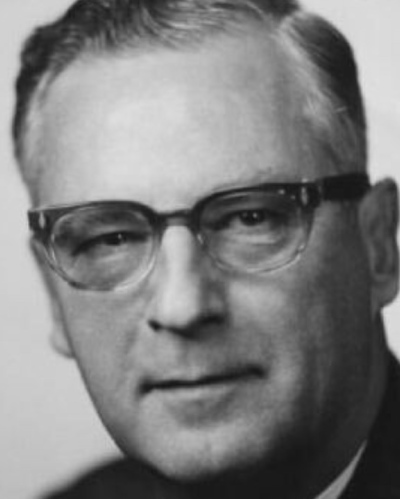
“You are probably a Christian. What if our Republic were now shattered beyond recognition? Would not the antiquaries of succeeding centuries rightly reason from our part we were a heathen nation?” asked Watkinson, who saw the increasingly brutal, intractable war as a divine chastening that could destroy the country.
Expressing hope that honoring God in such a public way “would relieve us from the ignominy of heathenism,” Watkinson wrote: “This would place us openly under the divine protection we have personally claimed. From my heart I have felt our national shame in disowning God as not the least of our present national disasters.”
Salmon P. Chase and James Pollock, a Presbyterian minister then serving as director of the U.S. Mint, agreed with Watkinson, ultimately leading Congress to pass a law in April 1864 allowing “In God We Trust” on the one- and two-cent pieces. They passed another in March 1865 to place the words on all gold and silver coins, which was the last act President Abraham Lincoln signed before his assassination.
Nearly a century later, the motto gained renewed attention when the U.S. found itself embattled again during the global tensions of the Cold War. Seeing its simple declaration of faith as a necessary contrast to the atheist communism that animated the Soviet Union, Rothert followed Watkinson’s example. He gave speeches, rallied support and fired off many letters to officials, including President Dwight D. Eisenhower and Treasury Secretary George W. Humphrey, urging them to add the phrase to paper money.
“The Lord seemed to tell me to do this. He put the idea so strongly in my mind that I worked on it until I accomplished my goal,” Rothert said during a 1987 interview with National Enquirer when he was 83. “I realized the circulation of American coins was limited to the boundaries of the country, while U.S. paper money circulated worldwide. It looked like Americans were saying they trusted in God only a few cents’ worth!”
‘All the stars aligned perfectly’
“Daddy wrote lots of letters, Mother wrote lots of letters. He knew the right people in the right places,” said Alice Rothert Nelson, who remembers her mother, Janet, typing up thousands of letters for her father to send to public officials, organizations and other individuals about his currency initiative, which he prayerfully pursued in earnest starting in late 1953.
Treasury Secretary George W. Humphrey reportedly advised Rothert in 1954 that while he personally favored the idea of placing “In God We Trust” on the currency, it would require an act of Congress.
As a businessman and member of several organizations, including the American Numismatic Association, Rothert established personal connections with some of the politicians who would play a pivotal role in helping his vision succeed.
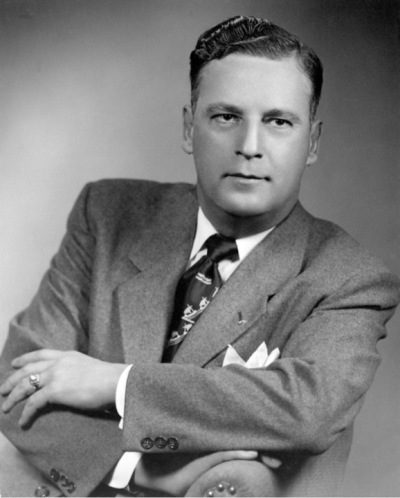
As founder and president of the Camden Furniture Company in small-town Camden, Arkansas, Rothert came to know Mike Monroney, who was also in the furniture business and served as a U.S. senator from Oklahoma from 1951 to 1969. Also among his friends were Oren Harris in the U.S. House of Representatives, as well as Arkansas Senators John L. McClellan and J. William Fulbright, all of whom expressed support for Rothert’s mission.
Harris had been planning to introduce legislation to place “In God We Trust” on the currency until a Florida congressman beat him to it by filing H.R. 619 on Jan. 5, 1955. Fulbright had just become chairman of the Senate Committee on Banking and Currency, which positioned him to fast-track the House bill when it reached the Senate that June. Monroney was also a high-ranking member of the committee and acted as its main champion and floor sponsor after promising Rothert he would get the bill to a vote before the end of the legislative session.
In an unusually swift and bipartisan action, the bill was on Eisenhower’s desk by July 11, 1955. Changing the master dies and printing plates at the Bureau of Engraving and Printing to include “In God We Trust” would typically have been too cost-prohibitive, but they were already set to be replaced that year to accommodate a new printing process.
“In God We Trust,” which Congress unanimously went on to establish as the official national motto in 1956, first appeared on $1 silver certificates on Oct. 1, 1957.
Rothert’s daughter, Hope Rothert Taft, suggested to CP that her father’s connections, the political position of his friends and the remarkable timing could only have been orchestrated by God.
“You can see how all the stars aligned perfectly to make this happen,” she said. “Who would have ever thought that a small businessman from the small state of Arkansas could make something so big happen?”
‘All the credit to the Lord’
Hope, who married into the famous Taft political family and served as first lady of Ohio from 1999 to 2007, said when she tells her father’s story to others, she offers a dollar bill as an object lesson in how God can use anyone to accomplish His purposes.
“I use it as an encouragement to let people know that they can make a difference. It doesn’t matter where they come from or what size of a family, or whether they’re well-known or not. They can make a difference, like my father did.”
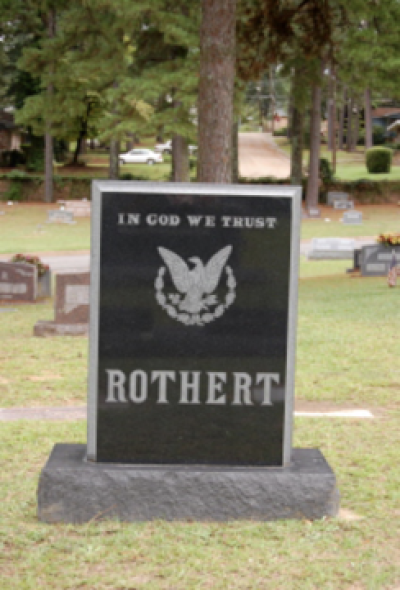
According to a 1955 letter Rothert wrote that was shared with CP, the idea that came to him as he passed the offering plate in 1953 was more than mere symbolism. He ultimately viewed his efforts as inextricable with evangelizing those under a God-hating communist regime, noting that American paper money “was one item that easily pierced the Iron Curtain and could carry the message throughout the entire world, to all nations.”
“I’m immensely proud of the role I played, but I give all the credit to the Lord because He put it in my mind,” he told National Enquirer.
Rothert’s children noted that their father grew concerned before his death in 1989 that the U.S. was increasingly pushing God to the periphery.
Matthew Rothert Jr. said his father once had a conversation with atheist activist Madalyn Murray O’Hair, whose case led to the U.S. Supreme Court ruling school-sanctioned prayer and Bible reading unconstitutional in 1963. Her legal attempt to undo his legacy by having “In God We Trust” removed from the currency failed in 1978.
Rothert Jr. believes if his father were alive today to speak to Americans on the 250th anniversary of their independence, he would unabashedly remind them to gratefully live out the national motto he championed.
“Personally, I think that my dad would be outspoken about serving the Lord and realizing that all we have comes from Him, regardless of what the people against him would say,” he said.