


By Michael Swanson.
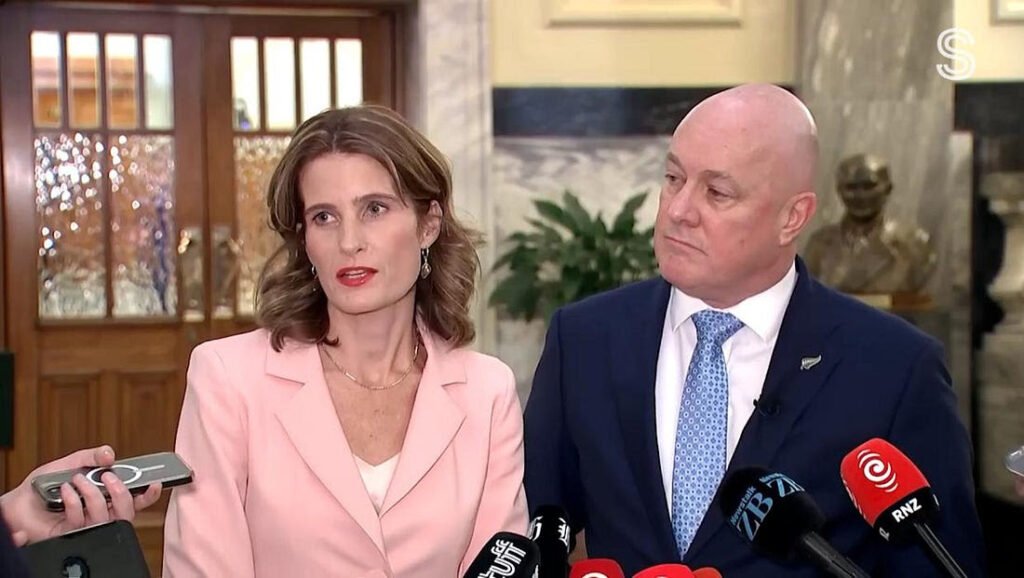
With the November election now firmly in view, Finance Minister Nicola Willis delivered a Budget that didn’t follow the traditional election-year playbook and in doing so, placed a very large bet on New Zealand voters.
No targeted tax cuts. No headline handouts designed to nudge polling numbers in the right direction. Willis preached prudence and discipline, with no “sugar hits” for voters, instead focusing on some directly targeted spending with a laser focus on reaching surplus earlier than forecast. It was, as Prime Minister Christopher Luxon himself framed it, a “grown-up” Budget. Whether voters agree with that characterisation, or feel rather more like they’ve been sent to bed without supper, is the central question that will define the next five months of New Zealand politics.
The Gamble Itself
The core of National’s fiscal argument rests on a single statistic: the books will return to surplus in the 2028/29 financial year, with a forecast operating balance of $2.6 billion, a sharp turnaround from the $900 million deficit Treasury was forecasting for the same year back in December, arriving a full twelve months earlier than the Government had previously promised. Its an achievement Willis and Luxon will almost certainly spend the next five months making sure no one forgets.
But achieving surplus ahead of schedule comes with costs that opponents will amplify just as loudly. The fiscal strategy has been characterised as “hold the line and hope for the best,” with the Government’s position relying on $2 billion of public sector cuts from 2028 onwards, cuts that have not yet been fully planned out. That vagueness is a political liability, and Labour is already exploiting it.
The Issues
Three issues emerging directly from the Budget look set to drive the campaign debate hardest.
The first major fault line is cost of living. What has disappointed many analysts is the lack of investment in cost-of-living relief for families, with the Budget relying on medium-term economic improvement to address those challenges. High fuel prices are expected to weigh on household spending and business activity over mid-2026, causing unemployment to rise to 5.5% in the June 2026 quarter. The Budget does include some targeted fuel support, but it acts as a short-term cushion rather than stimulus, while maintaining a tight overall fiscal stance. On housing, the Ministry of Social Development faces spending cuts including the scaling-down of support services for emergency housing and solo parents seeking employment, an easy target for an opposition trying to paint the Government as indifferent to those doing it toughest. The Greens, for their part, have gone harder still, noting that children living in poverty (adjusted for housing costs) still sit at almost 20 percent. That statistic will feature on more than a few campaign billboards between now and November.
The second flashpoint is superannuation, where Willis did something unusual: she used an election-year Budget to raise an inconvenient truth.  Willis said she wanted to “dwell on” the rising superannuation bill, calling it “not a tomorrow problem, it’s for today,” noting the annual cost will rise to more than $30 billion by 2030, up from less than $20 billion in 2023. She made no changes this term, but the signal was pointed, notably aimed at coalition partner NZ First, which has ruled out any changes to the pension age. The Budget recognises the increasing cost of the ageing population but, like many previous budgets, avoids any significant response to it though Willis indicated this will be an election issue and that policy is to be announced. If National goes to voters with a proposition on the retirement age, it transforms the campaign entirely. If it doesn’t, it has simply handed the opposition a line about broken promises and unfinished business.
The third is the public service job cuts. The Government confirmed it plans to cut around 8,700 roles from the public service, with most planned for after the November election, though the savings are already banked in this year’s Budget. That sequencing is politically notable: National wants the fiscal credit now and hopes the electoral pain arrives later. Labour is unlikely to let that pass quietly. Hipkins pointed to the planned cuts as examples of the Government making life harder for Kiwis, arguing that cutting these roles will affect social workers, police, housing and healthcare, and hurt regional economies. I’m still highly sceptical they’ll even “achieve” even close to that 8,700, which will create all sorts of issues for budget promises down the track.

Labour’s Dilemma
The opposition’s response to the Budget reveals as much about Labour’s predicament as it does about the Government’s record. Hipkins and finance spokeswoman Barbara Edmonds declined to confirm what Labour would keep or cut, promising patience as they analysed the Budget documents. The Greens have been blunter in their frustration, suggesting Labour lacks the courage of its convictions.
The political calculus is genuinely difficult. Willis’s reprioritisations have wedged Labour, making it very difficult for the party to promise anything without also promising new taxes or increased debt. Of a total Budget package of $3.8 billion a year on average, $1.7 billion has been funded by cuts and reprioritisations. To restore public sector jobs, reverse housing support cuts, and address child poverty, Labour would need to find substantial new revenue, which almost certainly means tax rises. That’s precisely the territory National wants the campaign fought on.
In the short term, there is pressure on Labour to just announce something. Their message this year has been that announcements will be made after the budget and the state of the books is known. Well, that time has now come. There will be an expectation that Labour will soon start to unveil ideas, policies, and a vision for what their plan for the future is.
The Polling Picture
The numbers heading into Budget week were already tight. Roy Morgan’s April poll showed the National-led Government on 47.5% and the Labour-Greens-Te Pāti Māori opposition on 48%, effectively tied, with National itself at just 25.5%, its lowest level since being elected in 2023. A separate Taxpayers’ Union-Curia poll confirmed the softness of National’s personal vote, placing National at 29.8%, still under 30%, while NZ First surged 3.9 points to 13.6%. The coalition’s internal dynamics, with NZ First growing stronger at National’s expense, add another layer of complexity to an already fragile governing arrangement.
Polls in the coming week will be fascinating as they start to show the impact of the budget, and set the scene for what’s to come.
The Coming Months…
Beneath its surface boringness, this Budget is a really big gamble. Willis is betting that beyond a general fear that Labour will tax them more, voters will put the macroeconomic picture and the fiscal interests of the Government above the interests of their own household.
It is not an irrational bet. Surplus earlier than expected is a deliverable. Discipline in an inflationary environment is economically defensible in the minds of many. And a Labour party still scrambling to produce a costed fiscal plan faces its own credibility questions.
But elections are rarely won on spreadsheets. They are won on feeling, and right now, the feeling in many New Zealand homes is one of pressure, not relief. If Willis can convince voters that today’s pain is tomorrow’s dividend, National wins. If Hipkins can convince them the pain was unnecessary and the dividend is a mirage, Labour could. That argument, in all its forms, is what the next five months will be about.
This article was first published by The Periodical.