



Colin Ambler/cvnznews.com
What happens when the line between human and machine doesn’t blur — it disappears?
In Sweden, the future isn’t arriving.
It’s already under the skin.
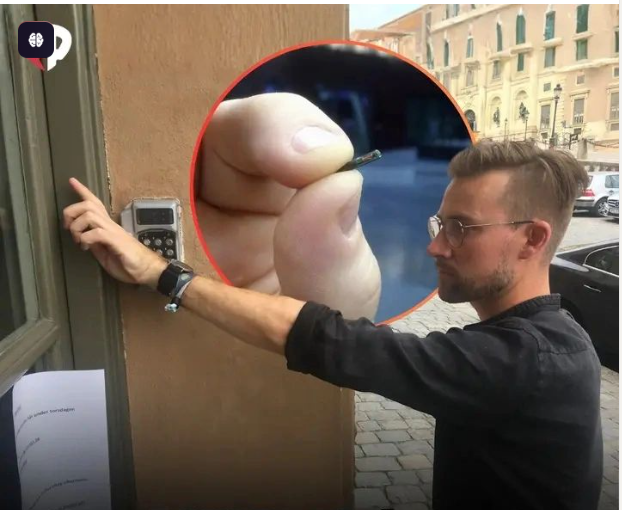
Over 4,000 people is Sweden have microchips implanted in their hands to open doors and make payments.
Thousands of Swedes are lining up to have a microchip — the size of a grain of rice — injected between their thumb and index finger. A quick jab, a moment of pressure, and suddenly your body becomes your keycard, your wallet, your ID, your train ticket. Doors unlock at a wave. Payments go through with a flick of the wrist. Your digital life, fused to your flesh.
Supporters call it harmless. Efficient. The next step in human evolution.
But step back for a moment.
Look at what’s actually happening.
A technology once dismissed as dystopian fantasy is now being implanted into people’s bodies with barely a second thought. What used to be the stuff of sci‑fi warnings is now marketed as a lifestyle upgrade — a “convenient” way to store your credentials, access your workplace, or pay for your morning commute.
And the world is watching.
Because beneath the sleek tech and the Scandinavian cool lies a deeper question:
At what point does convenience become control?
When your hand becomes your pass, your wallet, your identity — what happens when systems fail? When companies change terms? When governments tighten rules? When opting out becomes harder than opting in?
The implants themselves may be simple. But the implications are anything but.
Sweden’s microchip pioneers are pushing humanity into a new era — one where the boundary between person and platform is no longer theoretical. It’s physical. Permanent. And spreading faster than anyone expected.
The future is no longer in your pocket.
It’s in your hand — whether you’re ready or not.