
Colin Ambler/cvnznews.com
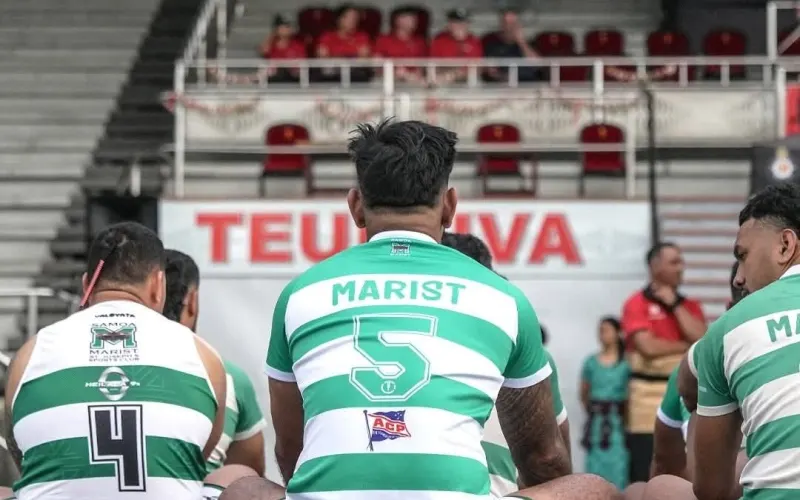
The death of Marist Saints rugby league player Saveatama Faamavaega Saveatama during a weekend match in Vaiala has ignited a national conversation in Samoa — not just about safety at sports events, but about culture, discipline, and the expectations of Fa’asamoa in a modern sporting environment.
Footage of the brawl, showing players continuing to fight while Saveatama lay unconscious, spread rapidly across social media. Police have confirmed the videos are now part of the investigation, though no charges have yet been laid.
The incident has unsettled Vaiala, a village where rugby fields are woven into daily life and where sport is often seen as an extension of community identity. Vaiala’s female representative, Sileoleoga Patu Wilson, said it was the first time she had heard of a death connected to a game in the village.
“This is deeply concerning and we need to make sure this doesn’t happen again,” she said.
Wilson said the tragedy highlights a growing tension: young people are increasingly exposed to aggressive sporting culture, yet village expectations around respect, restraint, and Fa’asamoa remain unchanged.
“For me, it’s important to encourage our young ones to stay away from such behaviours,” she said. “Spectators interfering with games is becoming common across the country. That needs to stop.”
Calls for police to attend community matches have grown since the incident, but Acting Police Commissioner Leiataua Samelu Afamasaga says the solution cannot rely on officers being physically present.
“There is no law requiring police to be at all games,” he said. “There are more than 20 matches happening at the same time. We cannot be everywhere.”
Leiataua said discipline should already be embedded within rugby clubs and villages through Fa’asamoa — the cultural code of respect, hierarchy, and communal responsibility.
“This mentality that discipline is only possible when police are around shouldn’t be a thing,” he said. “It should already be there with or without police supervision.”
He also cautioned that even police presence cannot guarantee prevention.
“If a brawl breaks out and there are four officers present, they won’t be able to stop it. Police or no police, nothing works unless everyone works together.”
Samoa’s villages traditionally manage behaviour through councils, chiefs, and bylaws. But as rugby league and rugby union expand — with more fields, more clubs, and more informal competitions — the cultural boundaries around sport have blurred.
Wilson said villages still have the authority to deal with misconduct, but police presence at games, as seen in earlier years, could help reinforce expectations.
“We have our village councils and chiefs and bylaws that deal with such matters,” she said. “But we would appreciate it if police officers were present at the fields during the games like how it was back then.”
The incident has exposed a deeper cultural question: When sport becomes more competitive, more heated, and more public, who is responsible for maintaining discipline — the village, the clubs, or the police?
The death has prompted Samoa to confront the intersection of tradition and modernity. Rugby league is fiercely loved, but the behaviour seen in the videos — players fighting while a man lay unconscious — has shocked communities accustomed to the values of respect, restraint, and collective responsibility.
Police are continuing to appeal for anyone with footage to come forward, saying the material could prove crucial in establishing what happened and supporting justice for Saveatama’s family.
As Samoa reflects on the tragedy, one message is emerging from both police and village leaders: discipline cannot be outsourced — it must be lived, taught, and enforced within the community itself.