


Graham Faulkner.
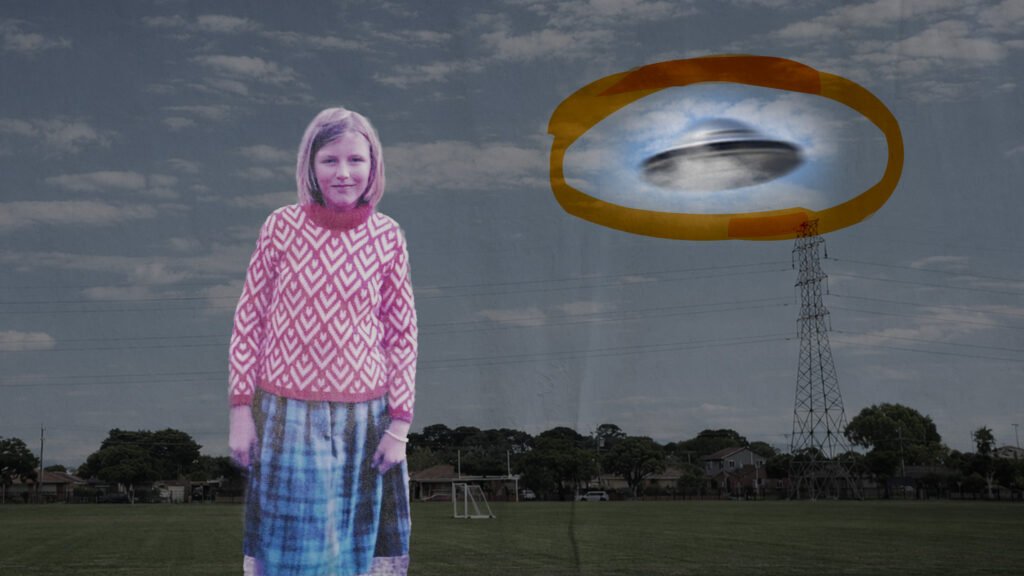
Are aliens among us, or are people seeing a lot of demons lately?
Many prominent Catholics seem to believe the latter. In March, Vice President JD Vance said on The Benny Show that he believes UFOs are demons. Father Chad Ripperger, one of the most famous Catholic exorcists in the world, made the same argument on the Shawn Ryan podcast. More recently, Monsignor Stephen Rossetti, another Catholic exorcist with a large social media following and head of the St. Michael Center for Spiritual Renewal, said, “There’s no question in my mind—again, this is not de fide—it’s my personal belief that probably many, if not most, of these [UFO] sightings are in fact demons.” Those comments aired in a video released on May 29.
At the time, Rossetti was the exorcist of the Archdiocese of Washington, D.C. On June 3, the Archdiocese of Washington announced that these views had cost him his position. Cardinal Robert McElroy, the archbishop of Washington, said: “Statements made by Monsignor Rossetti linking UFOs and demonic presence and the Center’s recent use of social media gravely undermine the Church’s very precise teaching on the devil, demons, and exorcism.” But it is unclear how Rossetti and his social media channels contradict Roman Catholic teaching.
Evangelicals can learn lessons about not letting our imaginations run wild, especially when our words carry authority
For example, the Catholic Church commissioned a study in 1975 called Christian Faith and Demonology. It is intended to be an exhaustive summary of the church’s teaching on Satan and the demonic. It covers the New Testament, the church fathers, the church’s authoritative councils, and modern considerations. One purpose is to guard the Catholic Church against the “present-day difficulty” of questioning the reality of the devil, under-emphasizing the importance of spiritual warfare, and demythologizing the Bible.
To put it positively, it affirms the importance of the defeat of Satan by Jesus Christ on the cross. Jesus’s confrontation with Satan is not the central storyline of Scripture, but it is vitally important. The survey distinguishes between human sin and the sin of Satan and fallen angels, as well as Satan’s temptation of Adam and Eve to sin. Satan and his “demons are the adversaries of Redemption.” The document seeks to “remind the faithful of their [Satan and demons] existence and activity.”

Rossetti’s comments appear to fall in line with this teaching. After all, he clearly affirms the existence and importance of Satan and the demonic. He did not attempt to demythologize the Bible. He shared his view of UFOs and demons to wake up his viewers to the spiritual realities around them. The manifestation of demons as UFOs is an illustrative example of the invisible world breaking into the physical world. Plus, the Catholic Church has no official teaching on UFOs and demons.
Rossetti concluded by quoting the Apostle Paul to interpret the significance of the matter: “We do not wrestle with flesh and blood but against … the cosmic powers over this present darkness” (Ephesians 6:12). However, Christian Faith and Demonology also states, “It is easy to fall victim to imagination and to allow oneself to be led astray by inaccurate accounts [of demonic activity] distorted in their transmission and incorrectly interpreted.” Perhaps this was Rossetti’s great sin?
Did Rossetti’s comments give McElroy a guise to get rid of him for political reasons?
The matter is complicated, and the speculations are legion. For one, McElroy cited no specific de fide (infallible according to Rome church doctrine) that Rossetti contradicted, nor did he offer a corrective interpretation. Secondly, Rossetti has a conservative reputation. McElroy is notoriously progressive. He has close ties to Pope Francis, and in 2023, he wrote an article in America Magazine where he argued for LGBTQ inclusion in the Eucharist. There, he called LGBTQ exclusion a “demonic mystery.” Did Rossetti’s comments give McElroy a guise to get rid of him for political reasons? Thirdly, that Vance and Ripperger made the same assertion as Rossetti without reprimand muddies the situation even more. Should we expect their public church discipline soon? Demonic and ecclesial mysteries abound.
Evangelicals can learn some lessons while watching this unfold. Most importantly, we ought to consider whether sci-fi lenses have colored our cosmology and reading of Scripture. Yes, Satan is called the “prince of the power of the air” (Ephesians 2:2), but we should pause before ascribing unknown aerial activity to him. This is especially true in the age of the most advanced air technology in human history and when governments have a concerted interest in hiding from the world what military technology they possess. Furthermore, the comments of a pastor or priest always carry authority regardless if one is speaking de fide or not. Those with such authority should remember James’ warning of their greater judgement (James 3:1).
Rossetti’s main point does serve as a helpful reminder for evangelical Christians: We are in a spiritual battle. We are commanded to resist the devil (James 4:7) and to stand against his schemes (Ephesians 6:11). We would also do well not to fall victim to imagination—and to avoid leading others to do the same.
About The Author: Graham Faulkner is PhD candidate in New Testament interpretation at The Southern Baptist Theological Seminary. His research interests focus on spiritual warfare in the Gospels and Acts, as well as magic and the occult in Greco-Roman antiquity.